Paper leaks need comprehensive education reforms, not just strict laws: Mayawati
Synopsis
Mayawati's response to the Lok Sabha's anti-paper leak Bill cuts to the core of a recurring national failure: punishing leakers after the fact does nothing for the students already destroyed by the system. Her call for structural education reform — from affordable loans to better government schools — frames this as a class issue, not just a law-and-order one.
Key Takeaways
BSP chief Mayawati on 29 July said stricter laws alone cannot solve India's paper leak crisis.
The Lok Sabha passed a Bill prescribing harsher punishments for paper leak offences, which Mayawati called a 'hurried response.' She called for reforms including more affordable educational loans , improved government schools , and a systemic overhaul of education.
Paper leaks have, in some cases, driven affected students to suicide , according to Mayawati.
She criticised Parliament's debate on the Bill as dominated by political point-scoring rather than substantive solutions.
Mayawati argued the crisis must be resolved in a way that benefits all 1.4 billion citizens , not just the privileged.
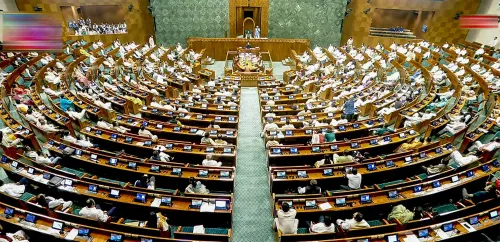
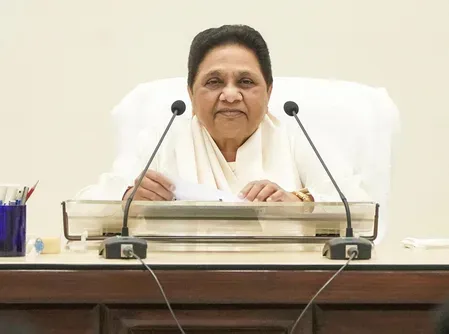
Bahujan Samaj Party (BSP) chief Mayawati on Wednesday, 29 July argued that enacting tougher legislation alone cannot provide a lasting solution to the recurring menace of examination paper leaks in India. Her remarks came in direct response to the Lok Sabha clearing a Bill that prescribes stricter punishments for those found guilty of leaking question papers.
What Mayawati Said
In a post on X, the BSP leader stated: 'Lok Sabha has passed stringent penal provisions as a remedy to the menace of paper leaks. Whether such legislation would solve the root problem is a question. Many people view it as a hurried response when several other measures also need to be implemented urgently and strictly.'
She pointed out that the proposed law is reactive in nature — focused on punishing offenders after a leak has already occurred — rather than addressing the structural conditions that make such crimes possible. 'The fundamental question remains whether enacting one law after another can truly resolve such a complex problem,' she said, urging the government to explore additional and more effective measures.
The Human Cost of Paper Leaks
Mayawati noted that repeated paper leak incidents have devastated the futures of countless young students across the country. In the most extreme cases, she said, affected students have been driven to take their own lives — underscoring the gravity of a crisis that extends well beyond administrative failure.
She also highlighted a deep inequality at the heart of the problem: while children from affluent families can often secure educational opportunities through financial means, millions of deserving students from economically weaker sections are denied the chance to realise their potential despite talent and hard work.
Reforms Mayawati Is Calling For
The BSP chief called for wide-ranging structural reforms in the education sector, including making educational loans more affordable and welfare-oriented, improving the quality of government schools, and overhauling the broader education system from the ground up. She described paper leaks as merely one visible symptom of far deeper systemic failures.
Mayawati said the crisis in India's education system requires sustained, honest efforts driven by genuine political will and good intent. Only then, she argued, can the country progress in a manner that benefits all 1.4 billion citizens rather than a privileged few.
Parliament Debate Fell Short, Says BSP Chief
Expressing disappointment at the quality of parliamentary debate on the anti-paper leak Bill, Mayawati said discussions were largely marked by political point-scoring and allegations among parties rather than a serious, solution-oriented exchange. This comes amid growing public anger over a series of high-profile exam paper leak controversies that have rocked competitive recruitment and university entrance processes in recent years.
Notably, this is not the first time that legislative action on exam integrity has been criticised as insufficient without accompanying systemic reform. As pressure mounts on the Centre and state governments to act, the BSP's intervention signals that the political debate around education accountability is far from settled.
Point of View
However stringent, does not touch teacher quality, exam administration infrastructure, or the economic desperation that makes students — and sometimes officials — vulnerable to exploitation. The BSP's framing of this as a class issue, where the affluent can buy their way around a broken system while the poor cannot, is the more uncomfortable and more accurate diagnosis. Parliament's point-scoring debate, as Mayawati rightly noted, suggests that the political class is more interested in being seen to act than in the harder work of systemic reform.
NationPress
28 Oct 2026
Frequently Asked Questions
What did Mayawati say about the anti-paper leak Bill passed by Lok Sabha?
Mayawati said the Bill, which prescribes stricter punishments for paper leak offences, is a 'hurried response' and that legislation alone cannot resolve the root causes of the problem. She called for comprehensive education sector reforms alongside any punitive measures.
What reforms did Mayawati demand to address paper leaks?
The BSP chief called for making educational loans more affordable and welfare-oriented, improving the quality of government schools, and overhauling the broader education system. She argued these structural changes are essential to prevent paper leaks rather than merely punish them after the fact.
Why did Mayawati criticise the parliamentary debate on the Bill?
She expressed disappointment that discussions in Parliament were dominated by political point-scoring and allegations among parties, rather than a serious, solution-focused exchange on how to protect students from recurring exam integrity failures.
How have paper leaks affected students in India?
According to Mayawati, repeated paper leak incidents have destroyed the future prospects of countless young students, and in some extreme cases driven them to suicide. She highlighted that students from economically weaker sections are disproportionately harmed, as they lack the financial means to secure alternative educational opportunities.
Who is most affected by paper leaks, according to Mayawati?
Mayawati argued that students from economically weaker sections bear the heaviest burden, as they cannot rely on financial resources to navigate a broken system the way affluent families can. She said the crisis must be addressed in a way that benefits all 1.4 billion citizens.