Mayawati slams UPI charges as 'capitalist tax', warns of burden on common people
Synopsis
BSP chief Mayawati has fired the first prominent opposition salvo against India's incoming 0.4% UPI MDR charge, branding it a 'profiteering capitalist tax' despite its official framing as a merchant-side fee. With UPI clocking over 14 billion transactions a month, any cost revision is a political lightning rod — and Mayawati's intervention signals this could become a rallying point for the opposition before the next election cycle.
Key Takeaways
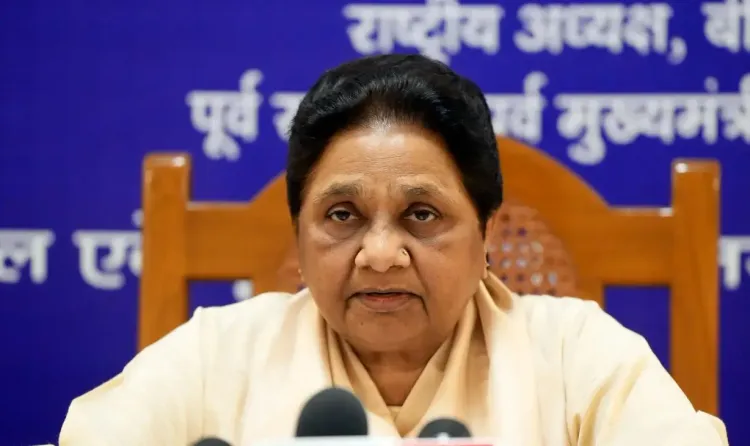
BSP chief Mayawati on 18 September 2026 criticised the government's proposed UPI charge on X .
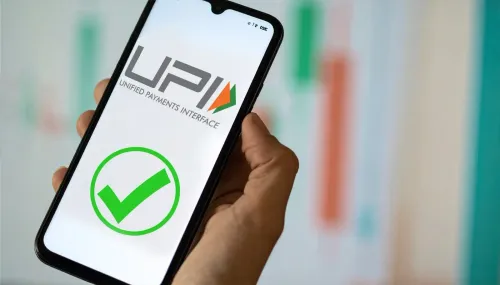
India will introduce a 0.4% MDR on person-to-merchant UPI transactions above ₹2,000 from 15 October .
Mayawati called the charge a 'profiteering capitalist tax' and said it will ultimately raise costs for ordinary citizens.
She also flagged widespread poverty, inflation, and unemployment, urging more welfare-oriented government policy.
On the UP smart schools plan for 14,500 schools at ₹300 crore , she questioned whether ₹2 lakh per school is adequate for basic infrastructure.
Bahujan Samaj Party (BSP) chief Mayawati on Friday, 18 September sharply criticised the government's proposed Merchant Discount Rate (MDR) on select UPI transactions, warning that the new charge — set to kick in from 15 October — would ultimately squeeze ordinary citizens already grappling with poverty and inflation. Her remarks came via a post on social media platform X.
What the New UPI Charge Entails
Starting 15 October, India is set to introduce a 0.4 per cent MDR on certain person-to-merchant UPI transactions exceeding ₹2,000. The charge is designed to be absorbed by businesses rather than individual consumers. Proponents argue this structure shields end-users, but critics contend that merchants will eventually pass costs downstream.
What Mayawati Said
In her post on X, Mayawati described the proposed system as resembling a 'profiteering capitalist tax,' despite the government not formally labelling it as one. 'After initially promoting UPI digital transactions, the government's new system of charging fees on such transactions appears to people to be akin to a profiteering capitalist tax, which is understandable and likely to cause public unease and anger,' she said.
She added: 'While this system of imposing additional financial burden on the public is not accepted as a "tax," no matter what name is given to this system, which will be implemented on October 15th, it will ultimately be the common people who will be hit hard, and their expenses will increase.'
The Broader Welfare Argument
Beyond the UPI charge, Mayawati used her post to raise wider concerns about the state of public welfare, pointing to what she described as entrenched poverty, runaway inflation, and persistent unemployment facing a large section of India's population. She argued that government policy must tilt toward welfare rather than commercial interests. 'If the government doesn't care about the hardships and suffering of the people, then who will?' she asked.
UP Smart Schools: Cautious Welcome
The BSP chief also commented on the Uttar Pradesh government's plan to upgrade roughly 14,500 schools into 'smart schools' at a total outlay of approximately ₹300 crore. While welcoming the initiative in principle, she questioned whether a per-school allocation of around ₹2 lakh would be sufficient to meet even basic infrastructure needs — including proper roofing, benches, chairs, books, toilets, playgrounds, and sanitation — before any 'smart education' delivery could be meaningful.
Context and Political Significance
Mayawati's intervention comes as the UPI charge debate gains momentum ahead of its proposed implementation date. India's UPI ecosystem processed over 14 billion transactions monthly as of mid-2026, making any revision to its cost structure politically and economically significant. This is not the first time opposition leaders have framed digital payment charges as regressive; similar pushback emerged in 2022 when MDR restoration was debated. The BSP's stance signals that the charge could become a focal point for opposition consolidation ahead of upcoming state elections.
Point of View
Not consumers. The real question — which she gestures at without fully articulating — is whether merchants will absorb the cost or pass it on through price adjustments, particularly in the informal economy where UPI has deepest penetration. The government's decision to revive MDR after years of zero-charge UPI promotion is itself a reversal that demands scrutiny; framing it as anything other than a policy U-turn risks obscuring accountability. The BSP's framing as a 'capitalist tax' is polemical, but the underlying concern about regressive incidence in a high-inflation, low-income context is legitimate and under-examined in mainstream coverage.
NationPress
18 Sept 2026
Frequently Asked Questions
What is the new UPI charge that Mayawati is opposing?
Starting 15 October 2026, India will impose a 0.4% Merchant Discount Rate (MDR) on select person-to-merchant UPI transactions above ₹2,000. The charge is to be paid by businesses, not individual users, though critics argue costs could eventually be passed on to consumers.
Why does Mayawati call the UPI charge a 'capitalist tax'?
Mayawati argues that regardless of its official label, the charge will ultimately increase expenses for ordinary people who are already struggling with poverty and inflation. She posted on X that the system 'appears to people to be akin to a profiteering capitalist tax' and that renaming it does not change its impact.
Who will actually pay the new UPI MDR charge?
Under the proposed structure, businesses — not individual consumers — will absorb the 0.4% MDR on eligible transactions. However, economists and opposition leaders have raised concern that merchants, especially small traders, may factor the cost into pricing over time.
What did Mayawati say about Uttar Pradesh's smart school plan?
She welcomed the UP government's announcement to upgrade 14,500 schools into smart schools at ₹300 crore, but cautioned that the allocation works out to roughly ₹2 lakh per school — questioning whether that is enough to meet even basic needs like roofs, benches, toilets, and books before any digital education initiative.
What is the political significance of Mayawati's statement?
The intervention marks one of the first prominent opposition attacks on the UPI charge ahead of its 15 October implementation. With UPI deeply embedded in daily commerce and India heading toward multiple state elections, the charge debate could become a broader opposition rallying point on cost-of-living concerns.