Meghalaya steps up Bangladesh border vigil as daily infiltration attempts surge

Synopsis
Meghalaya's Deputy Chief Minister Prestone Tynsong has revealed that infiltration attempts from Bangladesh are being detected 'almost every day' along the state's 443-km frontier — and the government is now mobilising Village Defence Parties and traditional community heads to plug the gaps where fencing is absent and terrain defeats conventional patrolling.
Key Takeaways
Meghalaya held a high-level security review on 29 September 2026 with the state government, police, and BSF to address rising infiltration attempts from Bangladesh .
Deputy CM Prestone Tynsong said unauthorised crossing attempts are detected 'almost every day' along the 443-km border.
Incomplete or absent fencing in East Khasi Hills and West Jaintia Hills districts was identified as a major operational gap.
Village Defence Parties (VDPs) have been activated in border villages to supplement formal security agencies.
Traditional community heads in border areas are being engaged to report suspicious movements promptly.
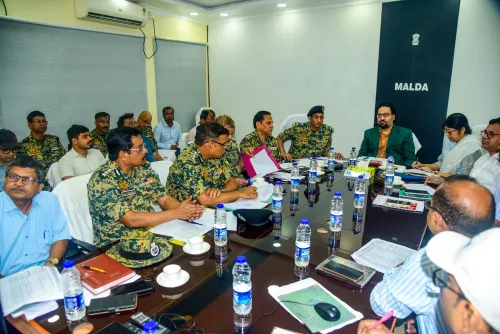
Meghalaya on Tuesday, 29 September 2026 convened a high-level security review involving the state government, police, and the Border Security Force (BSF) to assess infiltration attempts along the 443-km international border with Bangladesh, with authorities directing immediate intensification of ground-level surveillance. Deputy Chief Minister Prestone Tynsong disclosed that unauthorised crossing attempts are being detected 'almost every day', signalling a persistent and escalating challenge for agencies guarding the frontier.
Key Developments from the Security Review
The multi-agency meeting zeroed in on strengthening coordination between the civil administration, the Meghalaya Police, and the BSF, while identifying vulnerable stretches that require immediate attention. Tynsong directed all agencies to heighten vigilance, particularly in areas situated close to the international boundary where detection risks are highest.
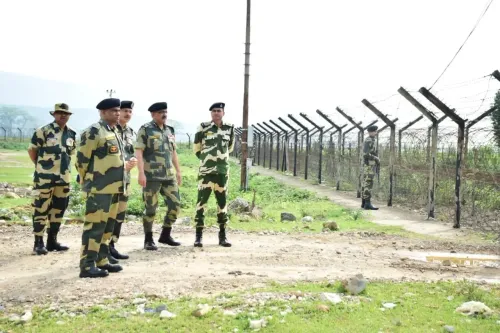
Officials flagged incomplete or absent border fencing as a critical operational gap — a problem compounded by the heavily forested, hilly terrain across sections of East Khasi Hills and West Jaintia Hills districts. These geographical conditions limit round-the-clock patrolling and make conventional fencing projects difficult to execute and maintain.
Village Defence Parties and Community Surveillance
Village Defence Parties (VDPs) have been activated in border villages to act as a first line of alert alongside formal security agencies. According to Tynsong, the administration is also engaging traditional community heads in border areas, tasking them with reporting suspicious movements promptly. This community-integrated model reflects an acknowledgement that terrain limitations make technology- and force-alone approaches insufficient.
Notably, local participation has been identified as especially critical in areas where fencing gaps and difficult terrain leave conventional monitoring inadequate — making community trust a security asset in its own right.
The Border Challenge: Scale and Context
Meghalaya's 443-km border with Bangladesh is among the more challenging segments of India's northeastern frontier. Much of it cuts through hilly, forested zones where infrastructure deployment is slow and costly. In recent years, movement across porous stretches has remained a persistent security and administrative concern, with agencies repeatedly stressing the need for multi-layered coordination between the BSF, state police, and local communities.
The border issue has taken on added significance amid broader concerns over illegal migration from Bangladesh. Security agencies have maintained heightened vigilance at vulnerable locations, but the combination of incomplete fencing and difficult terrain continues to create operational blind spots.
What Happens Next
The Meghalaya government is seeking to build a stronger multi-layered security mechanism along the frontier, combining formal BSF and police presence with activated VDPs and community-level intelligence. Completing fencing in the most vulnerable stretches of East Khasi Hills and West Jaintia Hills is expected to remain a priority. The pace of infrastructure rollout and the effectiveness of community-led surveillance will be the decisive variables in whether infiltration attempts can be brought under meaningful control.
Point of View
But for what it reveals about the structural limits of India's northeastern border infrastructure — incomplete fencing, difficult terrain, and chronically under-resourced local policing. Activating Village Defence Parties is a pragmatic stop-gap, but it places national security obligations on civilian communities with limited training and legal authority. The deeper question mainstream coverage is missing is why, years after border fencing was flagged as incomplete, the gaps in East Khasi Hills and West Jaintia Hills remain unfilled. Without a credible timeline for physical infrastructure, high-level meetings risk becoming a cycle of reviewed-but-unresolved security alerts.
NationPress
30 Sept 2026
Frequently Asked Questions
Why is Meghalaya intensifying surveillance along its Bangladesh border?
Meghalaya is stepping up border surveillance because infiltration attempts from Bangladesh are being detected almost every day, according to Deputy Chief Minister Prestone Tynsong. A high-level security meeting on 29 September 2026 directed agencies to intensify ground-level vigilance, particularly in areas with incomplete fencing and difficult terrain.
How long is the Meghalaya-Bangladesh international border?
Meghalaya shares a 443-km international border with Bangladesh. Much of this frontier passes through hilly, forested terrain that poses serious operational challenges for fencing, patrolling, and round-the-clock surveillance.
What are Village Defence Parties and what role do they play?
Village Defence Parties (VDPs) are community-level bodies activated in border villages to supplement formal security agencies such as the BSF and state police. In Meghalaya's border strategy, they serve as a first-alert layer, particularly in areas where difficult terrain and fencing gaps limit conventional monitoring.
Which districts in Meghalaya are most affected by border vulnerabilities?
East Khasi Hills and West Jaintia Hills districts have been specifically identified as having vulnerable stretches where fencing is incomplete or absent. The hilly and forested terrain in these districts makes patrolling and infrastructure deployment especially challenging.
How does this security review fit into the broader context of India-Bangladesh border concerns?
The meeting comes amid ongoing concerns over illegal migration and cross-border movement from Bangladesh, a subject of recurring political and security debate in India's northeastern states. Meghalaya authorities have repeatedly stressed multi-layered coordination between the BSF, state police, and local communities as a response to the porous nature of stretches along this frontier.