Army-BSF Synergy Seminar 2026 in Shillong targets border coordination
Synopsis
The Army and BSF gathered senior officers from four northeastern frontiers in Shillong for a dedicated synergy seminar — a rare institutional signal that espionage, illegal immigration, and terrain-driven gaps along the 4,096 km India-Bangladesh border are being treated as a shared, not siloed, security problem.
Key Takeaways
The Army-BSF Synergy Seminar 2026 was held in Shillong on 30 September 2026 , hosted by 101 Area, Eastern Command .
The BSF guards 4,096 km of the India-Bangladesh border , with 78% ( 3,232.2 km ) currently fenced.
A further 174.5 km of the border — covering water bodies, marshes, and dense forest — is considered unfenceable.
Espionage and sabotage were flagged as key concerns; the border has reportedly been used by foreign agencies to gather intelligence on Indian military assets in the northeast.
The Eastern Command confirmed the seminar focused on operational coordination, joint synergy, and integrated border management, posting the update on X .
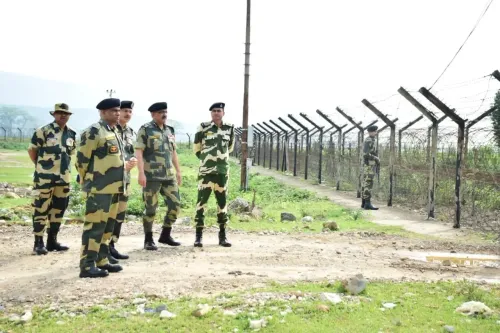
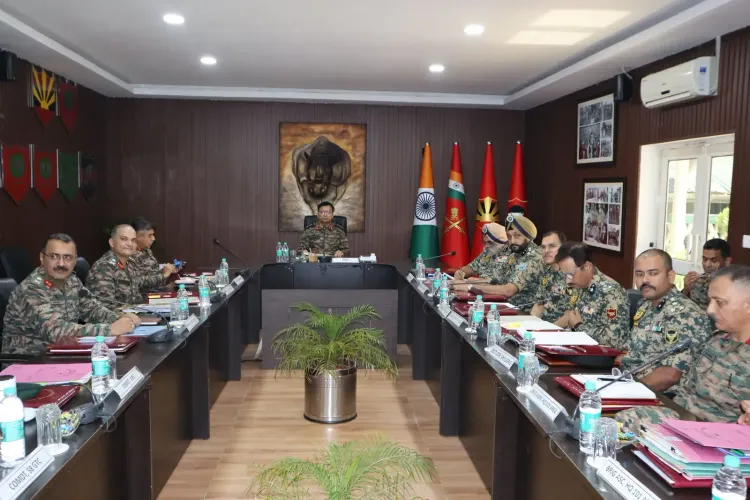
The Indian Army and the Border Security Force (BSF) convened a high-level joint seminar in Shillong on 30 September 2026 to sharpen operational coordination along the sensitive India-Bangladesh border. The 'Army-BSF Synergy Seminar 2026', hosted by the 101 Area of the Army's Eastern Command, brought together senior officers from the BSF's Meghalaya, Guwahati, Mizoram, and Cachar and Tripura Frontiers.
The Border: Scale and Terrain Challenges
The BSF is responsible for guarding 4,096 km of the India-Bangladesh border — one of the longest and most complex frontiers in the region. The breakdown by state is significant: 2,217 km falls under the South Bengal and North Bengal Frontiers of West Bengal, while 856 km lies in Tripura, 443 km in Meghalaya, 318 km in Mizoram, and 262 km in Assam.
The terrain makes management particularly demanding — a mix of riverine stretches, dense forests, and hilly tracts where conventional fencing is either impractical or impossible. According to the Ministry of Home Affairs, approximately 3,232.2 km, or about 78% of the border, has been fenced. A further 174.5 km — comprising water bodies, marshes, and dense forest — is considered virtually unfenceable.
Surveillance, Intelligence and the Espionage Threat
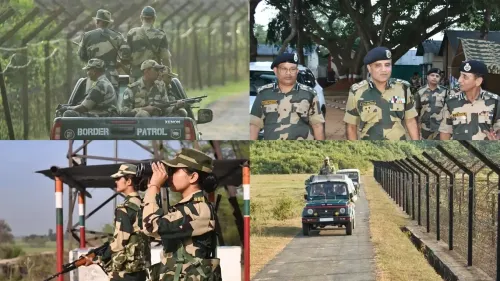
Beyond physical barriers, the BSF has increasingly deployed advanced surveillance equipment to monitor criminal activities and illegal immigration. Espionage and sabotage remain pressing concerns for both forces, according to officials familiar with the matter.
The border has reportedly been used in the past by agencies of other countries to gather intelligence on Indian military assets and troop movements in the northeastern states. The 101 Area of the Army — which plays a critical role in combat logistics and operational maintenance for units stationed along the northern border — is particularly keen to keep movement details confidential, officials said.
An official cited at the seminar underscored the stakes: 'Regular sharing of intelligence is key to effective border management. In the past, forces inimical to India's interests have used this border. It is a difficult border to manage, given the terrain, similarities in languages and cultures, and other factors. A coordinated effort is required for better handling of the situation.'
What the Army's Eastern Command Said
The Eastern Command posted on X that the seminar was aimed at 'enhancing operational coordination, strengthening joint synergy, improving information sharing and fostering an integrated approach to effective border management.'
While the Army does not directly manage the India-Bangladesh border, several of its vital installations and assets in the northeastern states lie in close proximity to the frontier, making sustained coordination with the BSF operationally essential.
Broader Strategic Context
This seminar comes amid heightened scrutiny of India's northeastern borders, where the convergence of porous terrain, shared linguistic and cultural ties across the border, and the presence of hostile non-state actors has historically complicated enforcement. The joint exercise reflects a growing institutional push to move beyond siloed operations toward an integrated security architecture in the region. With cross-border threats evolving — from illegal immigration and smuggling to espionage — closer Army-BSF cooperation is likely to become a recurring feature of India's northeastern security posture.
Point of View
Given how close key military logistics assets sit to the frontier. The espionage concern is the sharpest signal here: it suggests the threat has moved beyond smuggling and immigration into active intelligence collection against Indian military positions, which is a qualitatively different challenge. What is missing from the public readout is any indication of a formal, binding coordination protocol; past joint exercises have not always translated into sustained information-sharing architecture. Whether this seminar produces a standing mechanism or remains a periodic dialogue will determine its actual security value.
NationPress
30 Sept 2026
Frequently Asked Questions
What was the Army-BSF Synergy Seminar 2026?
It was a joint strategic seminar held in Shillong on 30 September 2026, hosted by the 101 Area of the Army's Eastern Command, to improve operational coordination between the Army and the BSF along the India-Bangladesh border. Senior officers from the BSF's Meghalaya, Guwahati, Mizoram, and Cachar and Tripura Frontiers participated.
How long is the India-Bangladesh border and how much is fenced?
The India-Bangladesh border stretches 4,096 km in total. According to the Ministry of Home Affairs, approximately 3,232.2 km — around 78% — has been fenced. A further 174.5 km, covering water bodies, marshes, and dense forests, is considered practically unfenceable.
Why is the Army involved in India-Bangladesh border management?
The Army does not directly manage the India-Bangladesh border, which falls under the BSF's mandate. However, several critical Army installations and assets in the northeastern states lie close to the frontier, making coordination with the BSF essential for operational security, particularly around espionage and sabotage threats.
What specific threats were discussed at the seminar?
Officials highlighted espionage, sabotage, illegal immigration, and criminal activity as primary concerns. The border has reportedly been used in the past by foreign agencies to gather intelligence on Indian military assets and movements in the northeastern states.
Which BSF frontiers were represented at the Shillong seminar?
Senior officers from four BSF Frontiers attended: Meghalaya, Guwahati, Mizoram, and Cachar and Tripura. Together, these frontiers cover the northeastern segments of the 4,096 km India-Bangladesh border.