Ministerial Meeting Focuses on Energy Security and Power Reforms
Synopsis
On March 20, a crucial meeting at the Bharat Electricity Summit 2026 addressed India's energy security and power sector reforms. Union Power Minister Manohar Lal emphasized the significance of collaboration between the Centre and states to enhance power generation and distribution.
Key Takeaways
Energy security is crucial amidst global uncertainties.
India's installed power capacity has surpassed 520 GW .
Collaboration between Centre and states is essential for efficient power distribution.
Nearly half of India's power capacity comes from non-fossil fuel sources .
Technological advancements, including smart metering, are transforming the sector.
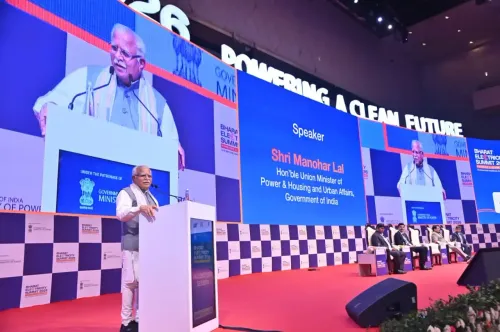
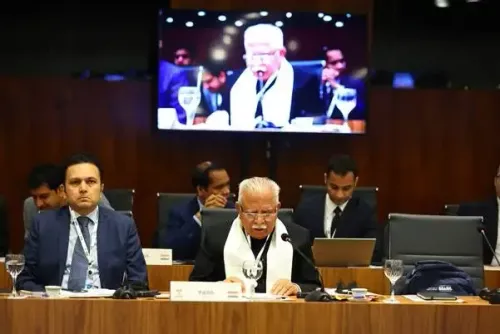
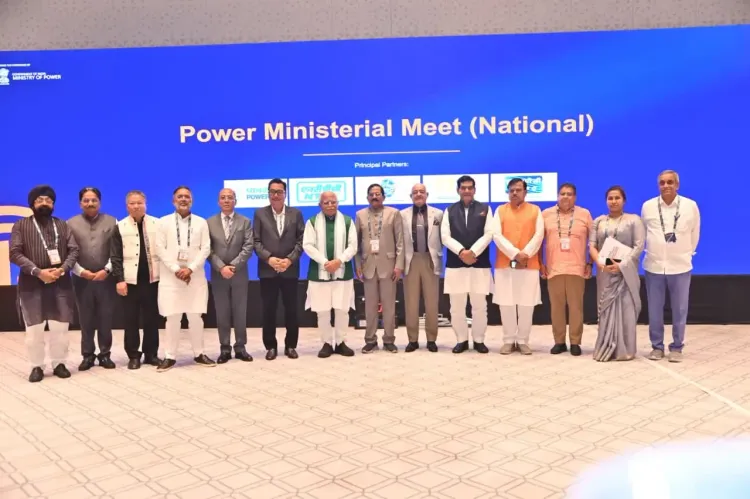
New Delhi, March 20 (NationPress) On the second day of the Bharat Electricity Summit 2026, a national meeting was convened, led by Union Power Minister Manohar Lal, to engage in discussions surrounding energy security, sector reforms, and strategies for future growth.
During his address, the minister emphasized that the summit would be pivotal in realizing the vision of "Viksit Bharat 2047", underscoring the power sector's critical role in fostering economic growth and enhancing infrastructure.
He highlighted that India has surpassed 520 GW of installed power capacity, alongside notable advancements in the performance of distribution companies (Discoms), the deployment of smart meters, and a reduction in power shortages.
He urged for improved collaboration between the Centre and states to guarantee affordable and efficient power generation, transmission, and distribution.
The minister placed significant emphasis on energy security in light of global uncertainties, advocating for an increase in per capita consumption and expediting the transition towards renewable energy, while also acknowledging the importance of nuclear power as a clean energy alternative.
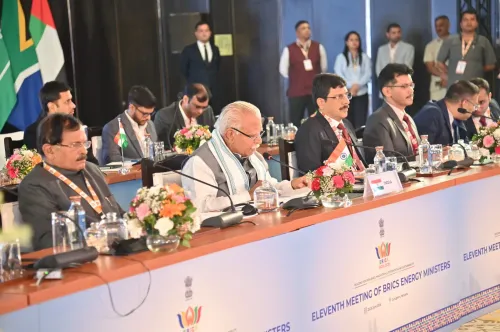
This meeting was co-chaired by Minister of State for Power and New & Renewable Energy, Shripad Naik, and attended by senior officials, including Power Secretary Pankaj Agarwal, MNRE Secretary Santosh Kumar Sarangi, and Energy Ministers from various states and Union Territories.
Naik discussed the transformative impact of technology and artificial intelligence on the sector, citing smart metering as a vital reform. He mentioned that nearly half of India's installed capacity now derives from non-fossil fuel sources and pointed to the draft National Electricity Policy as a framework for long-term development.
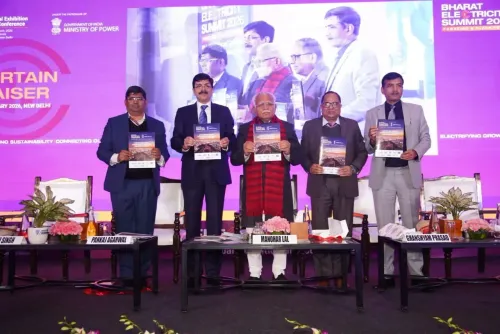
During the session, the Ministry of Power unveiled two significant reports for FY25 — the Consumer Service Ratings of Discoms (CSRD) and the Distribution Utilities Ranking (DUR).
The CSRD report assesses utilities based on consumer service benchmarks such as billing, grievance resolution, and transparency, revealing that 6 Discoms received an A+ rating, 21 earned an A, and 27 achieved a B+ rating, as per government data.
Meanwhile, the DUR report offers a thorough evaluation of distribution utilities concerning financial, operational, and service performance, with 66 utilities participating in this latest assessment.
Point of View
This initiative not only aims to ensure efficient power distribution but also sets the stage for sustainable growth in the sector.
NationPress
22 Sept 2026
Frequently Asked Questions
What was the main topic of discussion at the ministerial meeting?
The ministerial meeting focused on energy security, sector reforms, and future growth strategies in the power sector.
Who chaired the meeting?
The meeting was chaired by Union Power Minister Manohar Lal.
What is the significance of the Bharat Electricity Summit 2026?
The summit is seen as a crucial platform to achieve the vision of 'Viksit Bharat 2047' and enhance the role of the power sector in economic growth.
What key reports were released during the meeting?
The Ministry of Power released the Consumer Service Ratings of Discoms (CSRD) and the Distribution Utilities Ranking (DUR) reports.
How has India improved its power capacity recently?
India has crossed 520 GW of installed power capacity and made advancements in Discom performance and smart meter deployment.