Mirwaiz raises alarm over rotten meat crisis, demands food safety accountability in Kashmir
Synopsis
Kashmir's chief cleric used the region's most prominent pulpit to demand answers on a food safety crisis backed by hard numbers: 12,183 kg of rotten meat destroyed in a single year, 68 officers policing 20 districts, and labs running at near-half capacity. With the MMU devoting Friday sermons across Jammu, Kashmir and Ladakh to the issue, the food adulteration problem has moved from a regulatory footnote to a religious and civic flashpoint.
Key Takeaways
Mirwaiz Umar Farooq delivered a food safety sermon at Jama Masjid, Srinagar on 20 November 2026 , coordinated with mosques across Jammu, Kashmir and Ladakh .
Approximately 2,000 kg of rotten meat was recently seized at Budgam Railway Station , reportedly transported from Delhi .
Legislative Assembly data shows more than 12,183 kg of rotten meat was destroyed in J&K during 2025–26 up to December 2025 ; 7,665 kg of substandard cottage cheese was seized in Jammu and Samba .
Only 68 Food Safety Officers serve J&K's 20 districts ; 11 of 19 technical posts in each food-testing lab are reportedly vacant.
Youth unemployment in J&K stands at 26.2% against a national average of 15.3% ; Mirwaiz called for promotion of sheep farming and poultry to build local food self-sufficiency.
Mirwaiz demanded a public report on a previous rotten meat investigation whose findings were promised but never released.
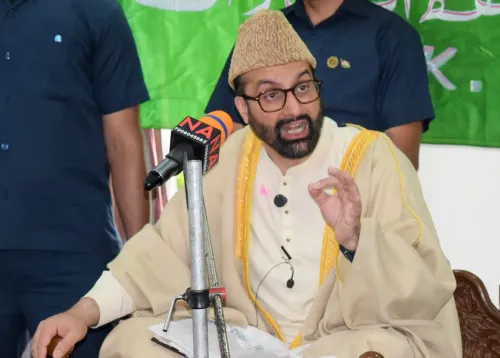
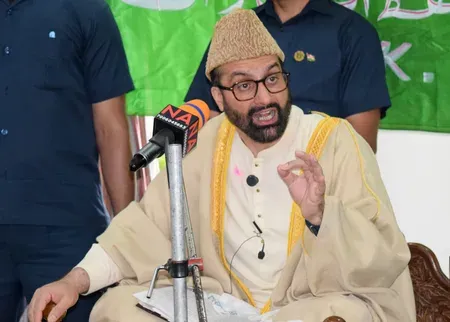
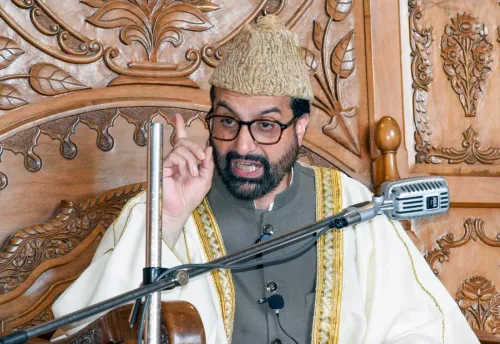
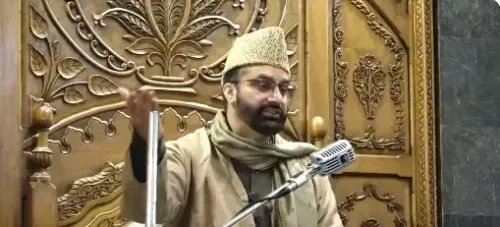
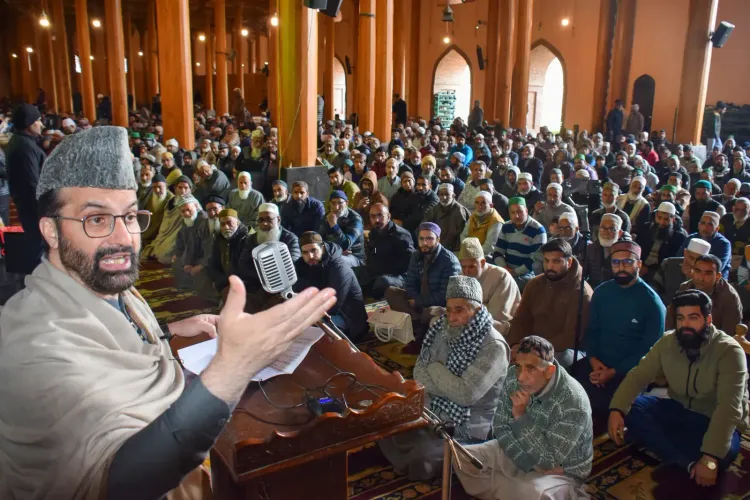
Mirwaiz Umar Farooq, senior religious leader and chief cleric of Kashmir, on Friday, 20 November 2026, called for strict government accountability and ethical conduct in trade as the only credible path to ensuring food safety across Jammu and Kashmir. Speaking during his traditional sermon at the historic Jama Masjid in the Nowhatta area of old Srinagar, Mirwaiz used the platform to deliver a pointed indictment of systemic failures in food safety enforcement.
The Rotten Meat Controversy
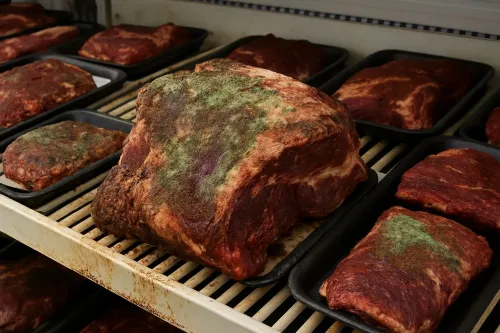
At the centre of the Mirwaiz's concern was the recent seizure of approximately 2,000 kg of rotten meat at Budgam Railway Station, reportedly transported from Delhi. While he appreciated the intervention of the Railway Police, he pressed hard on the gaps the incident exposed. 'Who sent this meat, who was supposed to receive it in Kashmir, and where was it intended to be distributed? Were the consignments transported under their correct description, and why were the mandatory checks not carried out?' he asked.
He demanded a transparent, end-to-end investigation into the supply chain, arguing that seizure and destruction of contaminated food alone was insufficient. Those responsible, he stressed, must be identified, exposed and punished. He also questioned the status of a previous inquiry launched after a similar large-scale seizure of rotten meat last year — a probe whose findings, he said, were promised to the public but have never materialised. 'What happened to that enquiry and where is its report,' he asked.
Scale of the Problem: Numbers From the Assembly Floor
Citing figures presented in the Legislative Assembly, Mirwaiz noted that more than 12,183 kg of rotten meat had been destroyed during 2025–26 up to December 2025, while 7,665 kg of substandard cottage cheese had been seized in Jammu and Samba. These figures, he argued, illustrated not an isolated failure but a recurring pattern that was eroding public confidence in the food supply.
Crumbling Infrastructure: The Enforcement Gap
The Mirwaiz also drew attention to what he described as deeply troubling shortfalls in food safety infrastructure. According to reports he cited, only 68 Food Safety Officers serve across J&K's 20 districts. In the region's two food-testing laboratories, 11 of 19 sanctioned technical positions in each reportedly lie vacant. Additionally, 12 mobile food-testing vehicles are reportedly not functioning effectively owing to staff shortages, despite earlier official claims of their operational status. 'How can public health be safeguarded when the very institutions responsible for food testing and monitoring face such serious shortages,' he said.
Halal Authenticity and the Hospitality Sector
Beyond physical safety, Mirwaiz voiced growing public concern about the authenticity of Halal meat sourced from outside the region, calling for transparent verification of origin, slaughtering practices and certification. He said this uncertainty was not merely a religious concern — it was also damaging Kashmir's restaurants, hotels and hospitality sector at large. Referring to the Quranic injunction of Halal and Tayyib, he underscored that Islamic principles require food to be not merely lawful but also pure, wholesome and safe.
Local Self-Sufficiency and Youth Unemployment
The Mirwaiz linked Kashmir's vulnerability on food safety to its heavy dependence on outside markets for meat and essential food supplies, and called for stronger local production. With youth unemployment in J&K standing at 26.2% against a national average of 15.3%, he urged the government to promote sheep farming, poultry and allied enterprises through financial assistance, training and market linkages. This, he argued, would simultaneously address unemployment and reduce dependency on supply chains that are difficult to monitor.
The Moral Dimension: Society's Collective Responsibility
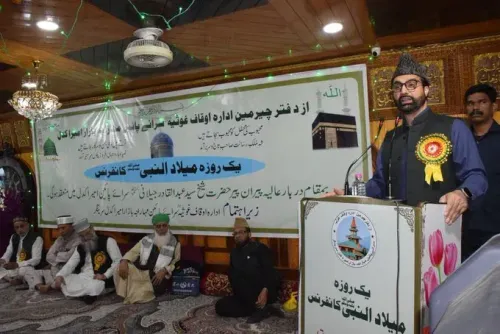
The Muttahida Majlis-e-Ulama (MMU) had devoted Friday's common sermon — delivered in mosques across Jammu, Kashmir and Ladakh — to the theme of 'Food Adulteration, Moral Decline and Collective Responsibility'. Mirwaiz framed food adulteration not merely as a regulatory failure but as a symptom of a deeper ethical rot. 'What kind of society are we becoming if some among us are prepared to endanger the lives of others for extra profit? Where are our values of honesty, compassion, accountability and fear of Allah?' he asked. He stressed that while the government and business community bore primary responsibility, individuals within society were not absolved. 'We must not only ensure that our food is free from adulteration, but also strive to rid society of greed, dishonesty and moral decay,' he said.
The speech signals that food safety in Kashmir — long a bureaucratic concern — has now acquired significant religious and social currency, with the region's highest Islamic platform demanding answers the administration has yet to provide.
Point of View
Kashmir and Ladakh. The numbers he cited from the Legislative Assembly are damning not because they are new, but because they have produced no visible accountability: a previous inquiry into rotten meat seizures was promised to the public and has apparently gone nowhere. The enforcement infrastructure figures — 68 officers, 20 districts, labs half-staffed — suggest the problem is structural, not incidental. When the region's most authoritative Islamic platform frames food adulteration as a moral and civic emergency, the government cannot treat silence as a viable response.
NationPress
20 Nov 2026
Frequently Asked Questions
What prompted Mirwaiz Umar Farooq's food safety sermon in Srinagar?
The sermon was prompted by recurring incidents of food adulteration in J&K, most recently the seizure of approximately 2,000 kg of rotten meat at Budgam Railway Station, reportedly transported from Delhi. The Muttahida Majlis-e-Ulama (MMU) designated Friday's common sermon across Jammu, Kashmir and Ladakh to the theme of food adulteration, moral decline and collective responsibility.
How serious is the rotten meat problem in Jammu and Kashmir?
According to figures cited from the Legislative Assembly, more than 12,183 kg of rotten meat was destroyed in J&K during 2025–26 up to December 2025, and 7,665 kg of substandard cottage cheese was seized in Jammu and Samba. Mirwaiz noted this represents a recurring pattern rather than an isolated incident.
What are the gaps in food safety enforcement in J&K?
According to reports cited by Mirwaiz, only 68 Food Safety Officers serve across J&K's 20 districts. In each of the two food-testing laboratories, 11 of the 19 sanctioned technical positions are reportedly vacant, and 12 mobile food-testing vehicles are reportedly non-functional due to staff shortages.
What did Mirwaiz say about Halal meat certification?
Mirwaiz called for transparent verification of the origin, slaughtering practices and certification of Halal meat brought from outside the region. He said prevailing uncertainty about authenticity was also harming Kashmir's restaurants, hotels and the broader hospitality sector.
What solutions did Mirwaiz propose for Kashmir's food safety crisis?
Mirwaiz called for a transparent investigation into the rotten meat supply chain, public release of a previous inquiry's findings, and strict punishment for those responsible. He also urged the government to promote local sheep farming, poultry and allied sectors as a long-term solution, particularly given J&K's youth unemployment rate of 26.2% against a national average of 15.3%.