PM Modi and King Abdullah II of Jordan Address West Asia Tensions, Advocate for Dialogue
Synopsis
In a critical conversation, PM Modi and King Abdullah II of Jordan expressed their worries about the escalating situation in West Asia, calling for urgent dialogue and diplomacy to restore stability. Their discussions reflect the importance of international cooperation in navigating these challenges.
Key Takeaways
PM Modi and King Abdullah II emphasize the necessity of dialogue for peace.
Jordan's efforts in aiding stranded Indians are commendable.
Recent conflicts in West Asia necessitate international cooperation.
Both leaders have a shared commitment to restoring stability.
Ongoing discussions with multiple nations reflect India's diplomatic outreach.
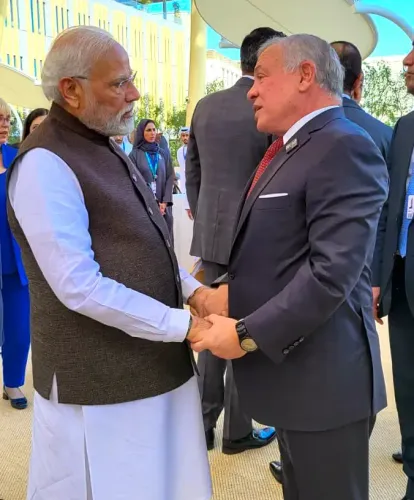
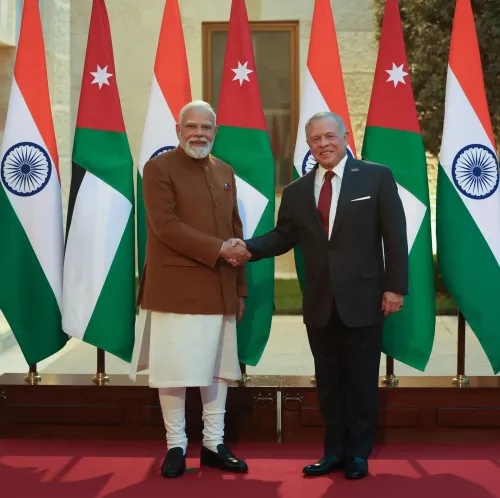
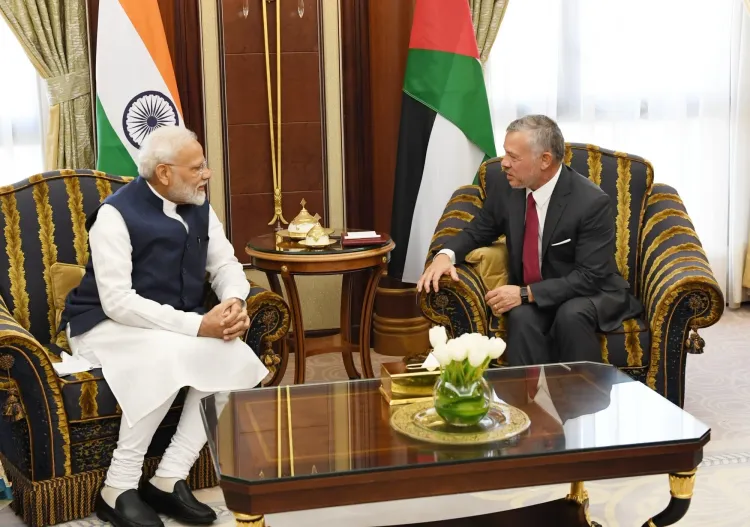
New Delhi, March 19 (NationPress) Prime Minister Narendra Modi engaged in a phone call with King Abdullah II of Jordan on Thursday, marking their second discussion this month, during which they voiced their apprehensions regarding the changing dynamics in West Asia. The leaders underscored the importance of dialogue and diplomacy for the swift restoration of peace, security, and stability in the area.
During the conversation, PM Modi extended his early Eid greetings to King Abdullah II and expressed gratitude for Jordan's role in ensuring the safe return of Indian nationals stranded in the region.
“I conveyed my advance Eid wishes to my brother, His Majesty King Abdullah II, the King of Jordan, over the phone. We expressed concern over the evolving situation in West Asia and emphasized the necessity for dialogue and diplomacy for the prompt restoration of peace, security, and stability in the region,” PM Modi shared on X.
“The assaults on energy infrastructure in West Asia are unacceptable and may lead to unnecessary escalation. Both India and Jordan support the unimpeded transit of goods and energy. I sincerely appreciated Jordan’s efforts in facilitating the safe return of stranded Indians in the region,” he added.
This dialogue took place amidst the ongoing conflict that erupted in West Asia following the US-Israeli strikes on Iran on February 28, which resulted in the deaths of Iran's Supreme Leader Ayatollah Ali Khamenei and several top military officials. In retaliation, Iran initiated drone and missile attacks targeting US and Israeli installations, as well as regional capitals and allied forces in West Asia.
The two leaders had previously communicated on March 2.
In recent days, PM Modi has also reached out to leaders from Malaysia, Oman, France, Kuwait, UAE, Israel, Iran, Saudi Arabia, Bahrain, and Qatar, as India maintains contact with regional governments and key partners regarding the ongoing turmoil in Iran and the Gulf region.
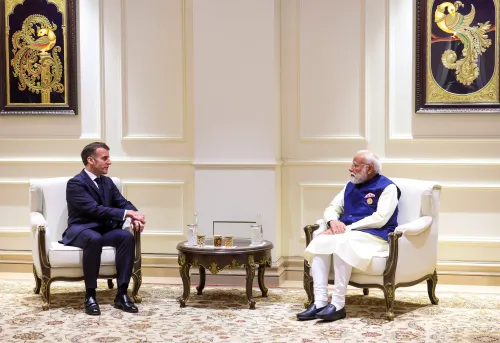
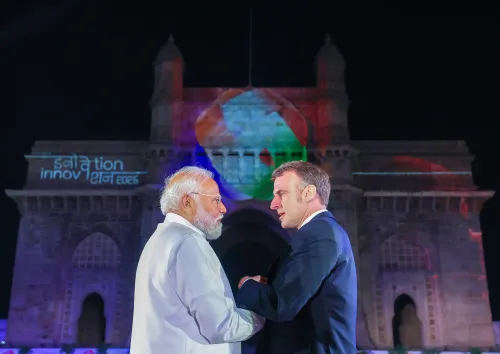
Earlier today, PM Modi conferred with French President Emmanuel Macron concerning the situation in West Asia and the urgent need for de-escalation, as well as a return to dialogue and diplomacy.
In a post on X, PM Modi remarked, “I spoke with my dear friend, President Emmanuel Macron, about the situation in West Asia and the pressing need for de-escalation, along with a return to dialogue and diplomacy. We look forward to continuing our close collaboration to advance peace and stability in the region and beyond.”
PM Modi also held a phone conversation with Oman's Sultan Haitham bin Tariq, reiterating India’s condemnation of the recent infringement of Oman's sovereignty and territorial integrity. Both leaders agreed on the necessity to prioritize dialogue and diplomacy for de-escalation and the subsequent restoration of peace and stability.
“I had a constructive conversation with my brother Sultan Haitham bin Tariq and extended my early Eid greetings to the people of Oman. We concurred on the need to focus on dialogue and diplomacy for de-escalation and subsequent restoration of peace and stability,” PM Modi posted on X after the call.
“I reiterated India’s condemnation of the violation of Oman’s sovereignty and territorial integrity, and commended Oman’s efforts to facilitate the safe return of thousands, including Indian nationals. Both India and Oman advocate for safe and free navigation through the Strait of Hormuz,” he added.
On Thursday, PM Modi also connected with his Malaysian counterpart Anwar Ibrahim to discuss the alarming situation in West Asia. The two leaders reaffirmed their mutual commitment to de-escalation and the prompt restoration of peace and stability through dialogue and diplomacy.
In a post on X, PM Modi stated, “I spoke with my friend, Prime Minister Anwar Ibrahim of Malaysia, and conveyed warm greetings to him and the people of Malaysia on the upcoming festival of Hari Raya Aidilfitri. We also discussed the deeply concerning situation in West Asia, reaffirming our shared commitment to de-escalation and the early restoration of peace and stability through dialogue and diplomacy.”
Point of View
Reflecting a proactive stance in international relations.
NationPress
6 Oct 2026
Frequently Asked Questions
What was the main topic of discussion between PM Modi and King Abdullah II?
The main topic was the evolving situation in West Asia, with both leaders expressing concern and advocating for dialogue and diplomacy to restore peace and stability.
Why is the conversation between PM Modi and King Abdullah II significant?
This conversation is significant as it demonstrates international cooperation and concern over regional instability, highlighting the importance of diplomatic efforts.
What actions did PM Modi commend Jordan for?
PM Modi commended Jordan for its efforts in facilitating the safe return of stranded Indian nationals in the region.
What recent events triggered the current conflict in West Asia?
The conflict was triggered by US-Israeli strikes on Iran that resulted in the deaths of key military figures, leading to retaliatory attacks by Iran.
How did PM Modi engage with other leaders regarding the situation?
PM Modi has been in contact with several leaders from countries including Malaysia, Oman, and France to discuss the ongoing conflict and promote dialogue.