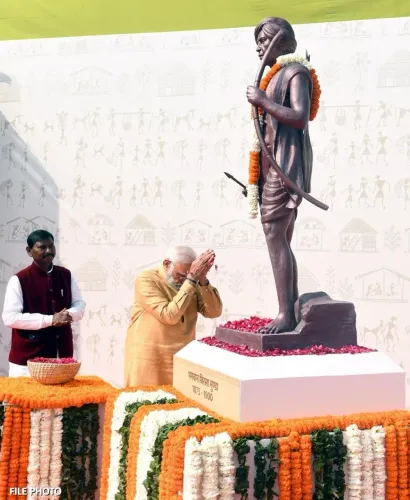
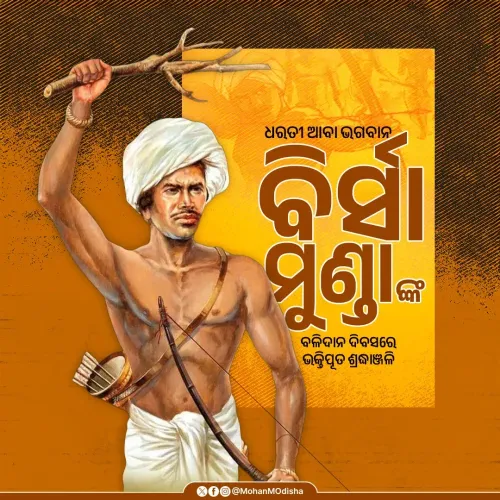
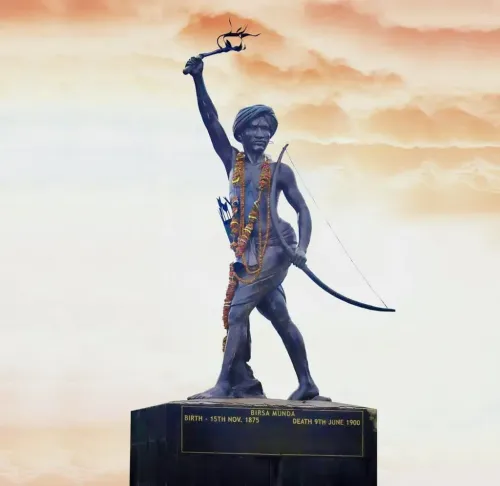
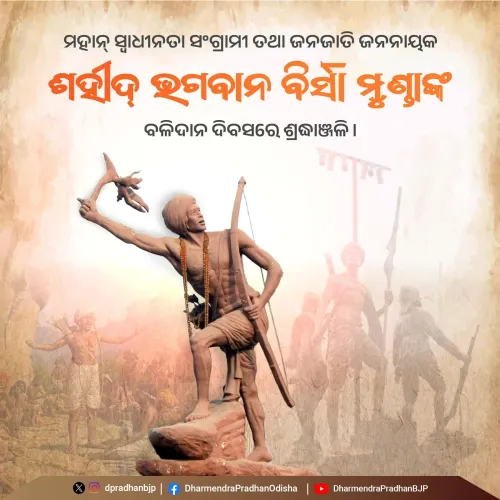
Birsa Munda martyrdom day: PM Modi pays homage to 'Dharti Aaba'
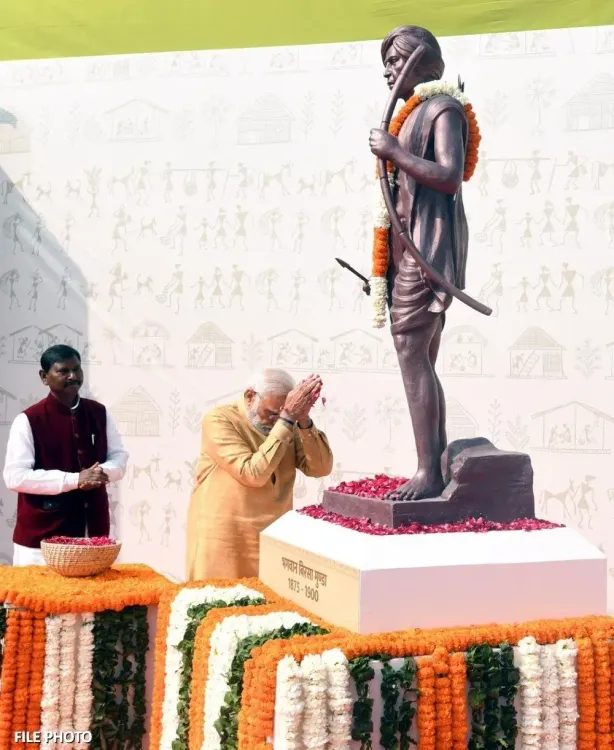
Synopsis
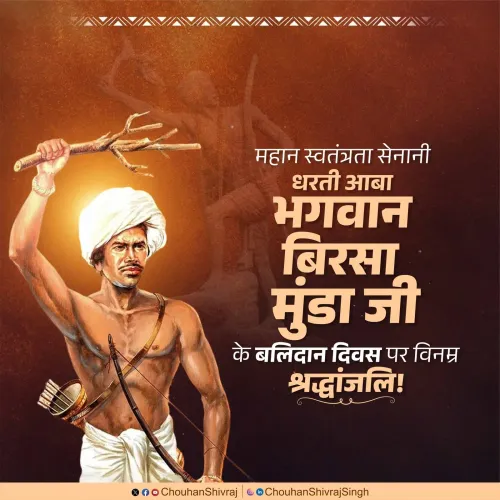
On the 125th anniversary of Birsa Munda's death in British custody, PM Modi honoured the 'Dharti Aaba' on X, calling his sacrifice an eternal source of patriotism. Munda's Ulgulan movement — fought to protect tribal land, forests, and water — remains one of India's most consequential but underrecognised freedom struggles, with a living legacy stretching from Jharkhand to Assam's tea gardens.
Key Takeaways
PM Narendra Modi paid tribute to Birsa Munda on his martyrdom day, 9 June , via a post on social media platform X.
Modi described Munda as 'Dharti Aaba' and said his sacrifice will inspire patriotism across every generation.
Birsa Munda was born in 1875 in present-day Jharkhand and died in British custody on 9 June 1900 , aged 25 .
He led the Ulgulan ('Great Tumult'), mobilising thousands of tribal people against British colonial land policies in the Chotanagpur region .
The Union government observes 15 November — his birth anniversary — as Janjatiya Gaurav Divas to honour tribal freedom fighters.
His legacy is especially resonant in Assam , where many tea garden community members trace their ancestry to the Chotanagpur plateau.
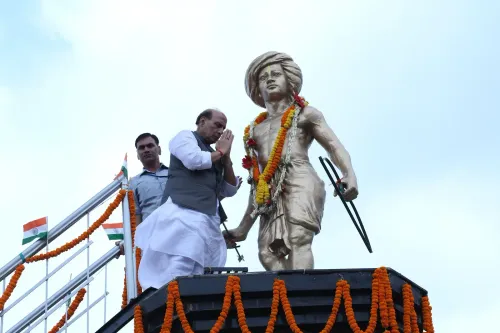
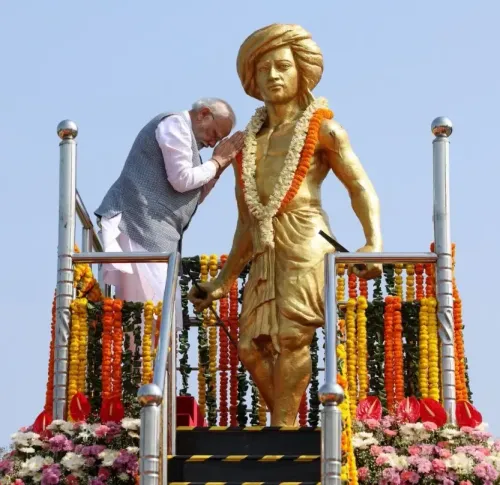
Prime Minister Narendra Modi on Tuesday, 9 June paid tribute to tribal freedom fighter and social reformer Birsa Munda on his martyrdom day, stating that the saga of his supreme sacrifice for the motherland will continue to inspire a spirit of patriotism across every generation of the country. Modi posted his tribute on social media platform X, honouring Munda on the 125th anniversary of his death in British custody.
What PM Modi Said
In his post on X, Modi wrote: 'A million salutations to ‘Dharti Aaba’ Bhagwan Birsa Munda on his martyrdom day. He fought against foreign rule with indomitable courage to protect water, forests, and land.'
Modi added: 'His entire life was dedicated to safeguarding the self-respect, culture, and rights of the tribal community. The saga of his supreme sacrifice for the motherland will continue to inspire a spirit of patriotism in every generation of the country.'
Who Was Birsa Munda
Birsa Munda was born in 1875 in present-day Jharkhand and is revered as one of India's most prominent tribal leaders and freedom fighters. He led the historic Ulgulan — meaning 'Great Tumult' — a mass uprising against British colonial rule and the exploitative land policies imposed on tribal communities. Through the movement, he mobilised thousands of tribal people to fight for their rights, identity, and traditional land ownership. He died in British custody on 9 June 1900, aged just 25.
Legacy Across States
Although Munda's movement was centred in the Chotanagpur region, his legacy resonates strongly across several states. Assam, home to a large tribal population and a significant number of tea tribe communities, holds a particular connection — many members of Assam's tea garden community trace their roots to regions associated with Munda's struggle and continue to regard him as a symbol of resistance, dignity, and empowerment.
Notably, the ancestors of these communities migrated from the Chotanagpur plateau during the colonial era, making Munda's fight for land rights and tribal identity directly relevant to their historical experience.
Government Recognition
The Union government has designated 15 November — Birsa Munda's birth anniversary — as Janjatiya Gaurav Divas, honouring the contributions of tribal freedom fighters and celebrating India's rich tribal heritage. The recognition reflects growing institutional acknowledgement of tribal leaders' role in India's independence movement, a narrative that had historically received limited mainstream attention.
As India continues to revisit the contributions of its lesser-celebrated freedom fighters, Birsa Munda's story stands as a reminder that the struggle for independence was fought on multiple fronts — including the forests and fields of tribal heartlands.
Point of View
Sustained political effort to centre tribal identity in India's national narrative — one that has intensified since the designation of Janjatiya Gaurav Divas in 2021. What mainstream coverage often misses is that Birsa Munda's Ulgulan was not merely anti-colonial; it was also a fight against the zamindari system and forest-rights dispossession — grievances that remain live policy debates today. Honouring Munda's memory is politically significant in states like Jharkhand and Assam, where tribal voters are a decisive electoral bloc. The gap between symbolic recognition and substantive policy delivery on tribal land rights, forest rights, and displacement remains wide — and that is the accountability question his martyrdom day should prompt.
NationPress
23 Oct 2026
Frequently Asked Questions
Who was Birsa Munda and why is he celebrated?
Birsa Munda was a tribal freedom fighter and social reformer born in 1875 in present-day Jharkhand. He led the Ulgulan, a mass uprising against British colonial rule and exploitative land policies, mobilising thousands of tribal people before dying in British custody on 9 June 1900 at the age of 25. He is revered as 'Dharti Aaba' — meaning 'Father of the Earth' — across India's tribal communities.
What did PM Modi say on Birsa Munda's martyrdom day?
PM Modi posted on X that he offered 'a million salutations' to Birsa Munda, praising his courage in fighting foreign rule to protect water, forests, and land. Modi said Munda's entire life was dedicated to safeguarding the self-respect, culture, and rights of the tribal community, and that his sacrifice would inspire patriotism in every generation.
What is Janjatiya Gaurav Divas and when is it observed?
Janjatiya Gaurav Divas is observed on 15 November, the birth anniversary of Birsa Munda, as designated by the Union government. It honours the contributions of tribal freedom fighters and celebrates India's tribal heritage.
What was the Ulgulan movement led by Birsa Munda?
The Ulgulan, meaning 'Great Tumult', was a historic uprising led by Birsa Munda against British colonial rule and the exploitative land policies imposed on tribal communities in the Chotanagpur region. The movement mobilised thousands of tribal people to assert their rights, identity, and traditional land ownership.
Why does Birsa Munda's legacy matter in Assam?
Many members of Assam's tea garden community trace their ancestry to the Chotanagpur plateau, the heartland of Birsa Munda's movement. Their ancestors migrated to Assam during the colonial era, and they continue to regard Munda as a symbol of resistance, dignity, and empowerment — making his legacy particularly resonant in the state.