Modi-Merz G7 meet: India-Germany Strategic Partnership gains fresh momentum
Synopsis
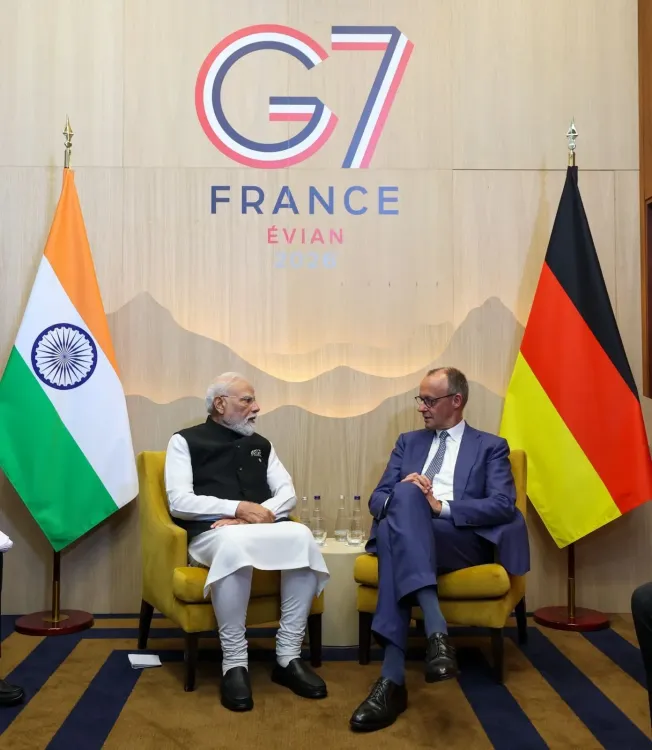
On the sidelines of the G7 in Evian, Modi and Merz — meeting for the second time this year — signed a Defence Industrial Cooperation Roadmap and activated a transit visa waiver for Indians in Germany. With the India-EU FTA wrapped and the 75th anniversary of diplomatic ties in 2026, the partnership is moving from symbolism to deliverables.
Key Takeaways
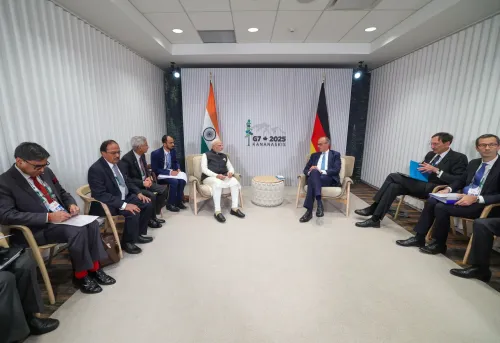
PM Modi and Chancellor Friedrich Merz held bilateral talks on 17 June 2026 at the G7 Summit in Evian, France — their second meeting this year.
Both leaders welcomed the conclusion of India-EU Free Trade Agreement (FTA) negotiations and Merz's earlier visit to India as catalysts for renewed momentum.
India and Germany are marking the 75th anniversary of diplomatic relations in 2026 .
The two sides signed a Defence Industrial Cooperation Roadmap and operationalised a transit visa waiver for Indian nationals transiting through Germany.
Chancellor Merz invited PM Modi to the 8th India-Germany Inter-Governmental Consultations (IGC) to be held later this year in Germany.
This is India's 13th G7 participation and PM Modi's seventh consecutive attendance at the summit.
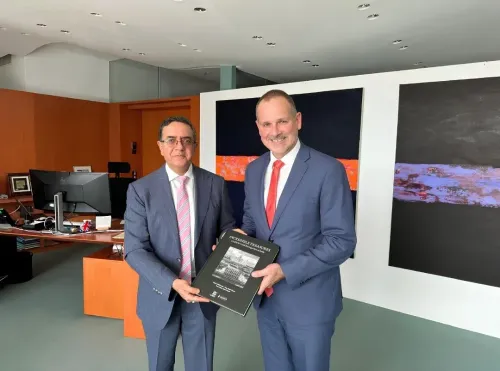
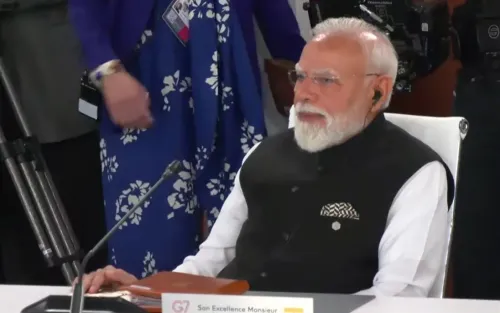
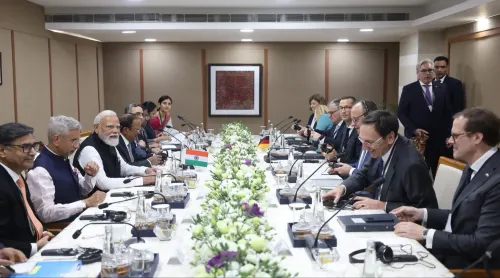
Prime Minister Narendra Modi met German Chancellor Friedrich Merz on the sidelines of the Group of Seven (G7) Summit in Evian, France on Wednesday, 17 June 2026, reaffirming the depth of the India-Germany Strategic Partnership and charting a course for deeper bilateral engagement. The meeting, confirmed by the Ministry of External Affairs (MEA), was their second bilateral this year.
Key Developments from the Evian Meeting
The two leaders reviewed the progress of bilateral engagements and expressed satisfaction at the renewed momentum in the partnership, which has accelerated following Chancellor Merz's official visit to India earlier this year and the conclusion of the India-European Union (EU) Free Trade Agreement (FTA) negotiations. Both milestones have given fresh impetus to ties between the two countries.
As India and Germany mark the 75th anniversary of diplomatic relations in 2026, Modi and Merz reaffirmed their commitment to deepen cooperation across trade and investment, defence and security, green and sustainable development, technology, innovation, education, and mobility.
Defence Roadmap and Visa Facilitation
A significant outcome of the bilateral engagement was the signing of the Defence Industrial Cooperation Roadmap, a structured framework to align the two nations' defence manufacturing and procurement interests. The two sides also operationalised a transit visa waiver for Indian nationals transiting through Germany — a practical step that eases mobility for Indian travellers and professionals.
Chancellor Merz also formally invited Prime Minister Modi to the 8th India-Germany Inter-Governmental Consultations (IGC), scheduled to be held later this year in Germany, signalling continued high-level engagement.
What PM Modi Said
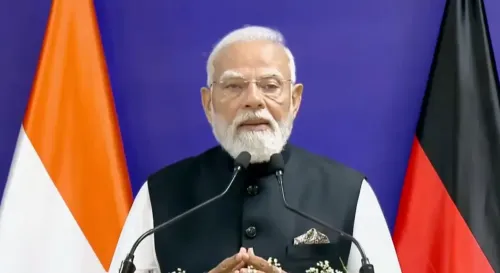
Sharing his assessment of the talks on X, Prime Minister Modi wrote: 'The talks with Chancellor Merz were very fruitful. We discussed ways to further cement bilateral cooperation by working together in trade, investments, circular economy, defence, IT and more. We also talked about boosting cultural linkages between our nations.'
Regional and Global Issues on the Agenda
Beyond bilateral matters, Modi and Merz discussed regional and global developments of mutual concern, including the situation in West Asia and the ongoing Russia-Ukraine conflict. Both leaders welcomed the understanding reportedly reached to end the conflict in West Asia, reflecting a convergence of positions on international stability.
Context: India at the G7 and the India-Germany Trajectory
This year marks India's 13th participation in the G7 Summit and PM Modi's seventh consecutive attendance — a measure of India's growing stature in multilateral diplomacy. The summit is being hosted by France under its G7 Presidency.
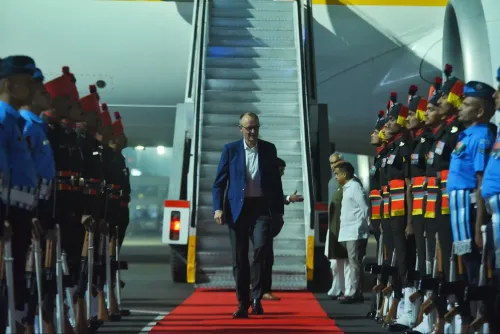
The bilateral relationship has been on an upward trajectory since Chancellor Merz's January 2026 visit to India — his first official trip after assuming office — during which the two leaders met in Gujarat and agreed to deepen cooperation in defence, space, and critical and emerging technologies. The Evian meeting builds directly on those commitments, with concrete deliverables now in place.
Point of View
Now Evian — signal that the India-Germany axis is being deliberately accelerated, not merely maintained. The Defence Industrial Cooperation Roadmap is notable: Germany has historically been cautious about defence co-production partnerships outside NATO, making this a meaningful shift. The transit visa waiver, while modest, addresses a persistent friction point for Indian professionals and students. What remains to be tested is whether the India-EU FTA, now concluded, actually delivers the market access Indian exporters have sought for over a decade — or whether non-tariff barriers blunt its gains. The 8th IGC later this year will be the real scorecard.
NationPress
16 Sept 2026
Frequently Asked Questions
What was decided at the Modi-Merz meeting at the G7 Summit?
Prime Minister Modi and Chancellor Merz signed a Defence Industrial Cooperation Roadmap and activated a transit visa waiver for Indian nationals transiting through Germany. They also reaffirmed commitment to deepen ties across trade, defence, technology, and education at their 17 June 2026 meeting in Evian.
Why is 2026 significant for India-Germany relations?
2026 marks the 75th anniversary of diplomatic ties between India and Germany, making it a landmark year for the bilateral relationship. Both leaders have used the occasion to inject fresh momentum into the Strategic Partnership.
What is the India-Germany Defence Industrial Cooperation Roadmap?
It is a framework signed by India and Germany to align their defence manufacturing and procurement interests, enabling structured collaboration in the defence industrial sector. It was formalised as part of the bilateral engagement in 2026.
What is the India-EU Free Trade Agreement and how does it relate to India-Germany ties?
The India-EU Free Trade Agreement is a comprehensive trade deal whose negotiations were concluded earlier in 2026. Since Germany is the EU's largest economy, the FTA is expected to significantly boost India-Germany trade and investment flows.
When is the next India-Germany Inter-Governmental Consultations (IGC) scheduled?
The 8th India-Germany Inter-Governmental Consultations (IGC) is scheduled to be held later in 2026 in Germany. Chancellor Merz extended the invitation to PM Modi during their Evian meeting.