PM Modi's water security roadmap: Jal Utsav, AI data, continuous review
Synopsis
Modi's water summit wasn't a ceremonial close — it was a blueprint. From deploying AI in water data governance to converting Jal Utsav into a national movement, the Prime Minister pushed for a continuous review mechanism that keeps states accountable. The real test is whether cooperative federalism on water outlasts the summit room.
Key Takeaways
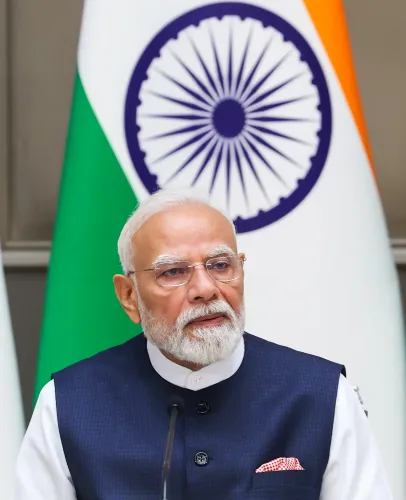
PM Modi chaired the valedictory session of the two-day Departmental Summit on Water on 2 September in New Delhi , organised by the Ministry of Jal Shakti .
The summit — the first in a planned series — focused on strengthening cooperative federalism and Team India spirit on water security.
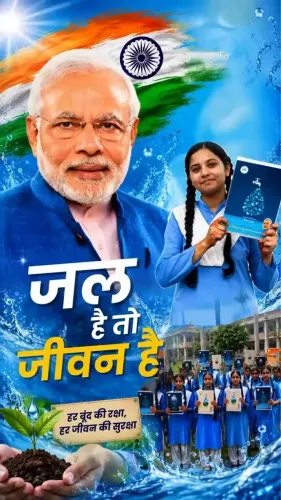
Modi called for 'Jal Utsav' to be promoted as a sustained people's movement rooted in Jan Bhagidari .
Artificial intelligence is to be deployed for water data collection and analysis in a uniform format across states.
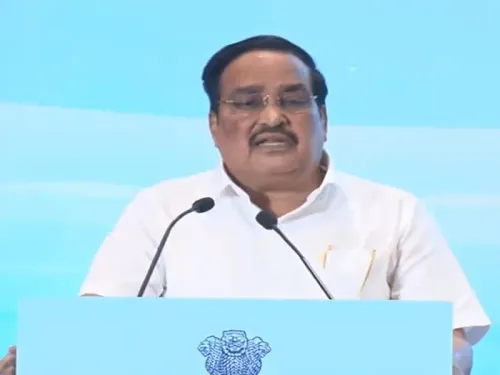
Union Minister CR Patil outlined four key summit outcomes, including accelerated water infrastructure completion and sustaining Jal Jeevan Mission 2.0 operations.
The Prime Minister stressed that the summit must become an ongoing review mechanism, not a one-time event.
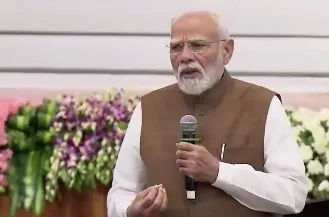
Prime Minister Narendra Modi on Wednesday, 2 September chaired the valedictory session of the two-day Departmental Summit on Water in New Delhi, organised by the Ministry of Jal Shakti. The summit — the first in a planned series — brought together ministers and senior officials from states and Union Territories under the banner of cooperative federalism, with the Prime Minister stressing that its outcomes must not remain on paper.
Key Outcomes from the Summit
Union Minister for Jal Shakti CR Patil outlined four concrete outcomes from the two-day deliberations: accelerated completion of water infrastructure projects; strengthening water conservation as a people's movement; ensuring long-term sustainability of drinking-water sources; and institutionalising effective operation and maintenance of rural drinking-water schemes under Jal Jeevan Mission 2.0. These commitments signal a shift from policy articulation toward execution accountability.
Modi's Call for a Sustained People's Movement
Emphasising the principle of Jan Bhagidari (people's participation), the Prime Minister called for promoting 'Jal Utsav' as a vehicle to deepen public awareness on water conservation and transform it into a sustained national movement. He urged greater adoption of water-saving technologies and recommended dedicated exhibitions and workshops to expose Indian manufacturers and stakeholders to global best practices, so that efficient, scalable solutions can be developed domestically.
Drawing on his tenure as Gujarat Chief Minister, Modi noted that water scarcity can be converted into an opportunity through systematic planning, committed leadership, and deployment of capable officers and resources — a framing that positions administrative will as central to the water challenge.
AI, Data Governance, and Inter-State Learning
The Prime Minister called for robust water data governance, recommending that water-sector data be systematically consolidated, managed, analysed, and utilised — with artificial intelligence deployed for data collection and analysis in a uniform format. He also proposed structured inter-state study visits involving public representatives, officials, and farmers, to enable practical learning and replication of interventions that have worked on the ground.
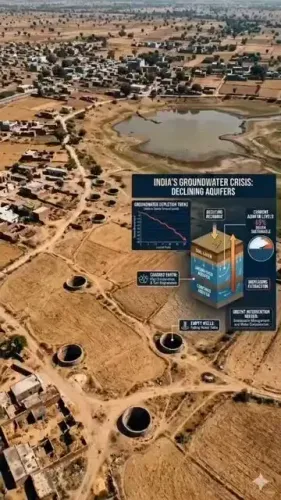
This comes amid growing recognition that India's water crisis is as much a data and coordination problem as it is a resource problem. Notably, fragmented data across states has historically hampered national-level planning and fund utilisation under flagship water schemes.
Urban Bodies, Dam Safety, and Education
Highlighting urban pressures, Modi called for sensitising urban local bodies to the compounding demands of population growth and future water needs, and suggested organising similar 'Chintan Shivirs' for them. He advocated making de-silting a regular programme with clear criteria and standard operating procedures, and stressed rigorous monsoon preparedness for dam safety.
On the education front, the Prime Minister urged that water awareness be incorporated into school curricula, while also recommending that water management knowledge be strengthened in universities and higher educational institutions. He further stressed anticipatory planning that utilises treated water for agriculture and industry — a signal toward circular water use.
What Comes Next
The Prime Minister made clear that the summit must evolve into an ongoing mechanism for collective action rather than a one-time event, with time-bound outcomes subject to continuous review, learning, and follow-up. The next steps will depend on how quickly states translate the summit's commitments into on-ground programmes — particularly under Jal Jeevan Mission 2.0, which remains the Centre's flagship rural water delivery vehicle.
Point of View
'time-bound outcomes', 'people's movement' — is familiar from a dozen earlier flagship schemes. What is different this time is the explicit push for AI-driven data governance and inter-state study visits, which, if implemented, could address the coordination failures that have plagued water schemes for years. Yet the Centre's track record on holding states accountable for water infrastructure completion remains uneven. Until there is a credible, public-facing review mechanism with teeth, the risk is that Jal Utsav becomes another well-intentioned campaign that fades between election cycles.
NationPress
18 Oct 2026
Frequently Asked Questions
What was the Departmental Summit on Water organised by the Ministry of Jal Shakti?
It was a two-day national-level summit held in New Delhi on 1–2 September, chaired by Prime Minister Narendra Modi at its valedictory session. The summit brought together ministers and officials from states and Union Territories to align on water security priorities and is the first in a planned series of such summits.
What is Jal Utsav and why is PM Modi promoting it?
Jal Utsav is a public awareness initiative on water conservation that PM Modi wants transformed into a sustained national people's movement under the Jan Bhagidari principle. The goal is to move water conservation from a government programme to a community-driven habit, supported by exhibitions, workshops, and exposure to global best practices.
How will artificial intelligence be used in India's water sector?
PM Modi has recommended deploying AI for systematic data collection and analysis in a uniform format across states, as part of a broader push for robust water data governance. The aim is to consolidate fragmented water-sector data so it can be effectively managed and used for planning.
What are the four key outcomes of the water summit outlined by CR Patil?
Union Minister CR Patil outlined four outcomes: accelerated completion of water infrastructure projects; strengthening water conservation as a people's movement; ensuring long-term sustainability of drinking-water sources; and institutionalising effective operation and maintenance of rural drinking-water schemes under Jal Jeevan Mission 2.0.
What did PM Modi say about urban water challenges at the summit?
Modi called for sensitising urban local bodies to the pressures of population growth and future water needs, and suggested organising 'Chintan Shivirs' for them. He also advocated regular de-silting programmes with clear criteria and standard operating procedures, and stressed monsoon preparedness for dam safety.