Jal Shakti Ministry 2-day Summit on water security kicks off Tuesday

Synopsis
The Jal Shakti Ministry's first-ever Departmental Summit — a format personally envisioned by PM Modi — opens Tuesday with state leaders converging on four water priorities. The valedictory session, where states pitch action plans directly to the Prime Minister, signals that this is less a routine conference and more a political accountability mechanism for India's rural water mission.
Key Takeaways
The Ministry of Jal Shakti hosts a two-day Departmental Summit starting Tuesday, 2 September in New Delhi .
The summit is the first in a series of such conclaves conceived by Prime Minister Narendra Modi to strengthen cooperative federalism.
Four focus areas: water infrastructure delivery, Jal Sanchay Jan Bhagidari-Catch the Rain , source sustainability, and Jal Jeevan Mission 2.0 operations.
States will present action plans directly before PM Modi at the valedictory session.
Outcomes are expected to be concrete and time-bound , covering project completion, public participation, and rural water accountability.
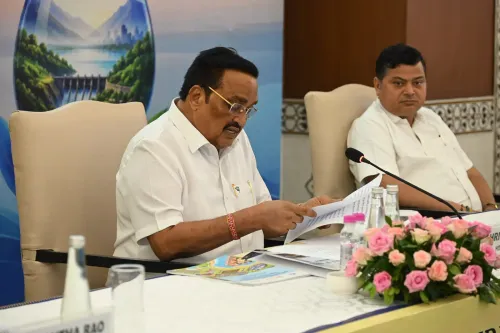
The Ministry of Jal Shakti will host a two-day Departmental Summit beginning Tuesday, 2 September in New Delhi, aimed at accelerating Centre-State collaboration on water security and advancing the goals of Water Secure India and Viksit Bharat 2047. The summit is the first in a series of such departmental conclaves conceived by Prime Minister Narendra Modi to institutionalise cooperative federalism across key national priorities.
Four Thematic Pillars
The two-day deliberations will be structured around four core themes: timely implementation of water infrastructure projects; the Jal Sanchay Jan Bhagidari-Catch the Rain initiative; source sustainability of drinking water systems; and operation and maintenance of rural drinking water supply schemes under Jal Jeevan Mission 2.0.
Discussions are expected to span project execution, inter-agency coordination, water conservation, rainwater harvesting, groundwater recharge, digital monitoring, asset management, and community-led water governance — a broad agenda reflecting the scale of India's rural water challenge.
What the Summit Aims to Deliver
The consultations are designed to produce concrete, time-bound outcomes, including accelerated completion of ongoing infrastructure projects, enhanced public participation in conservation efforts, stronger sustainability of drinking water sources, and improved accountability for rural water services. Participating states will present their experiences, challenges, and best practices as part of the collaborative framework.
Notably, state delegations will present key outcomes and action plans directly before Prime Minister Modi during the valedictory session — a design choice that signals political accountability at the highest level.
The Cooperative Federalism Model
The Departmental Summit model brings together political leadership and senior officials from both the Union Government and state governments to deliberate on sectoral priorities, share effective practices, address implementation bottlenecks, and agree on time-bound actions. Conceived under the 'Team India' framework, the format is intended to replace siloed, bureaucratic coordination with direct, outcome-oriented dialogue.
This Water Summit is the inaugural edition of what officials describe as a new institutional architecture for Centre-State engagement on national development goals.
Why This Matters
India's rural water infrastructure has faced persistent gaps in last-mile delivery, source sustainability, and community ownership — challenges that the Jal Jeevan Mission has sought to address since its launch. The introduction of a structured summit format, with Prime Ministerial oversight at the valedictory stage, represents an escalation of political attention to implementation quality rather than just scheme outlay.
This comes amid growing concerns about groundwater depletion and erratic monsoon patterns that have stressed rural water systems across multiple states. The summit's focus on digital monitoring and asset management also signals a push toward data-driven governance in the water sector.
How states translate summit commitments into on-ground delivery will determine whether this new institutional model produces measurable change or remains a coordination exercise.
Point of View
The Centre is signalling that accountability now runs upward, not just sideways through bureaucratic channels. That is a meaningful design shift. The harder question is whether summit commitments translate into verifiable field outcomes; Jal Jeevan Mission has logged impressive connection numbers, but source sustainability and functionality gaps remain underreported. A summit that produces time-bound, publicly trackable targets would be genuinely new. One that produces another round of agreed minutes would not.
NationPress
16 Oct 2026
Frequently Asked Questions
What is the Jal Shakti Departmental Summit?
It is a two-day national conclave hosted by the Ministry of Jal Shakti beginning Tuesday, 2 September in New Delhi, bringing together Union and state government officials to align on water infrastructure, conservation, and rural drinking water delivery under Jal Jeevan Mission 2.0. It is the first in a series of such summits envisioned by Prime Minister Narendra Modi.
What are the key topics on the summit agenda?
The summit covers four pillars: timely implementation of water infrastructure projects, the Jal Sanchay Jan Bhagidari-Catch the Rain initiative, source sustainability of drinking water systems, and operation and maintenance of rural schemes under Jal Jeevan Mission 2.0. Discussions also include digital monitoring, groundwater recharge, and community-led water governance.
What outcomes are expected from the summit?
Officials expect concrete, time-bound outcomes including faster completion of ongoing projects, stronger public participation in water conservation, improved source sustainability, and greater accountability for rural water services. States will present action plans to Prime Minister Modi at the valedictory session.
What is Jal Jeevan Mission 2.0?
Jal Jeevan Mission 2.0 is the Centre's programme to ensure reliable, sustainable piped drinking water supply to rural households across India. The summit focuses specifically on the operation and maintenance of schemes already established under the mission.
Why is cooperative federalism central to this summit?
The summit model is designed to replace fragmented, department-to-department coordination with direct deliberation between Union and state political leadership. By having states share challenges and best practices — and commit to action plans before the Prime Minister — the format aims to create shared ownership of national water goals.