MP Assembly UCC Bill 2026: Congress demands Select Committee, clashes erupt
Synopsis
The Madhya Pradesh Assembly turned into a battleground on 21 July as the UCC Bill 2026 triggered back-to-back disruptions, two House adjournments, and a sharp BJP-Congress clash over OBC reservation and Muslim exemptions — exposing the deep fault lines that will define the Bill's passage.
Key Takeaways
The Madhya Pradesh UCC Bill, 2026 triggered repeated disruptions in the Assembly on 21 July during the Monsoon Session.
Congress demanded referral to a Select Committee and immediate implementation of 27% OBC reservation .
Congress MLA Arif Masood proposed an amendment seeking Muslim exemptions under Article 29 , citing inconsistencies on polygamy and criminalisation of marital disputes.
Minister Kailash Vijayvargiya said the Bill reflects public opinion from over one million people and advances 'One Nation, One Law.' Speaker Narendra Singh Tomar adjourned the House twice — for 15 minutes and 10 minutes — as tensions escalated.
Tribal communities have been exempted from the Bill to protect their distinct traditions, the government confirmed.
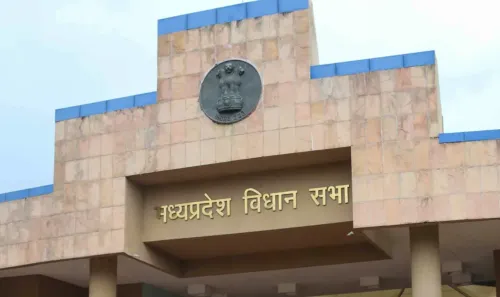
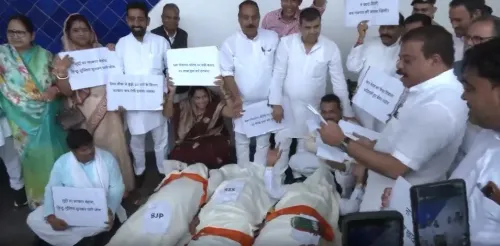
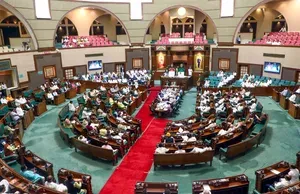
The Madhya Pradesh Legislative Assembly descended into repeated disruptions on Tuesday, 21 July as the Uniform Civil Code (UCC) Bill, 2026 dominated proceedings during the ongoing Monsoon Session in Bhopal. Congress legislators mounted a sustained protest from the outset, demanding referral of the Bill to a Select Committee and immediate implementation of 27 per cent reservation for Other Backward Classes (OBCs).
How the Disruptions Unfolded
The session turned combative the moment Minister Gautam Tetwal moved a motion to take up the Madhya Pradesh Uniform Civil Code Bill, 2026 and BJP MLA Sitaram Sharma rose to address the House. Congress members immediately broke into slogans, insisting that OBC reservation demands be addressed alongside the UCC debate.
Minister Kailash Vijayvargiya raised a point of order, arguing that only the member holding the floor should be recorded. Sita Sharan Sharma criticised the Congress for, in his view, invoking the Constitution while defying Supreme Court directives. BJP MLA Rameshwar Sharma then interjected with the slogan 'BJP stands in support of tribal honour,' drawing immediate counter-slogans from Opposition benches.
Opposition's Core Arguments
Leader of Opposition Umang Singhar argued that delivering 27 per cent OBC reservation was far more consequential than the UCC, accusing the Bharatiya Janata Party (BJP) government of neglecting backward classes. Congress MLA Bhanwar Singh Shekhawat suggested the UCC should first be enacted in Delhi and passed by the Lok Sabha before being introduced at the state level.
Congress MLA Arif Masood proposed a formal amendment, flagging what he described as inconsistencies in the legislation — specifically its treatment of polygamy and the criminalisation of marital disputes. He demanded exemptions for Muslims under Article 29 of the Constitution, analogous to protections already granted to tribals and Scheduled Castes.
Masood also challenged the adequacy of the public consultation process, alleging the Bill was directed at a specific community. Umang Singhar separately raised a point of order, contending that members had not received copies of the Bill at least two days in advance, as required under Assembly rules.
What the Government Said
Rameshwar Sharma countered that Congress was attempting to appease the Muslim community. Minister Rakesh Singh challenged the Opposition to clearly articulate their objections rather than resort to sloganeering.
Minister Prahlad Patel questioned whether the Congress intended to sever tribals from their cultural heritage, noting that tribal communities had been explicitly exempted from the Bill to safeguard their distinct traditions. Kailash Vijayvargiya defended the legislation, stating it reflected public opinion gathered from over one million people and embodied the vision of 'One Nation, One Law.'
Speaker Intervenes, House Adjourned Twice
Speaker Narendra Singh Tomar urged members repeatedly to maintain decorum and engage in substantive debate, describing the UCC as a 'historic Bill.' As tensions escalated — including a 'Jai Shri Ram' call from BJP MLA Jagdish Devda — Tomar adjourned the House twice: first for 15 minutes and subsequently for 10 minutes.
Despite the adjournments, debate on the UCC Bill resumed with the sharp divide between the ruling BJP and the Congress-led Opposition remaining unresolved. With the Bill still under discussion and procedural objections on the table, the Monsoon Session is set for further turbulence in the days ahead.
Point of View
Tacked on by the Opposition, is tactically shrewd: it forces the BJP to defend its backward-class credentials on a day it would rather talk about 'One Nation, One Law.' The real question is whether the Bill's public consultation — one million respondents in a state of 85 million — meets the bar of democratic legitimacy that courts will eventually apply.
NationPress
20 Oct 2026
Frequently Asked Questions
What is the Madhya Pradesh Uniform Civil Code Bill 2026?
The Madhya Pradesh Uniform Civil Code Bill, 2026 is a state legislation introduced during the Monsoon Session to establish a common set of civil laws — covering marriage, divorce, inheritance, and related matters — for all residents of Madhya Pradesh. Tribal communities have been explicitly exempted from its provisions to protect their cultural traditions.
Why is the Congress opposing the UCC Bill in the MP Assembly?
The Congress has demanded that the Bill be referred to a Select Committee for deeper scrutiny, arguing it contains inconsistencies — particularly around polygamy and the criminalisation of marital disputes. The party has also linked its opposition to the government's failure to implement 27 per cent OBC reservation, framing the UCC as a distraction from backward-class welfare.
What is the demand for Muslim exemptions under Article 29?
Congress MLA Arif Masood proposed an amendment seeking exemptions for Muslims under Article 29 of the Constitution, which protects the rights of minorities to conserve their distinct culture. He argued that if tribals and Scheduled Castes have been exempted, the same constitutional logic should apply to Muslims.
Why was the House adjourned twice on 21 July?
Speaker Narendra Singh Tomar adjourned the Madhya Pradesh Assembly twice — first for 15 minutes and then for 10 minutes — as escalating sloganeering, counter-protests, and a 'Jai Shri Ram' call from the BJP benches made orderly debate impossible.
What procedural objection did the Opposition raise?
Leader of Opposition Umang Singhar raised a point of order contending that members had not received copies of the UCC Bill at least two days before debate, as mandated by Assembly rules — a procedural challenge that could complicate the Bill's timeline.