MP Assembly passes Uniform Civil Code Bill 2026 amid Congress walkout
Synopsis
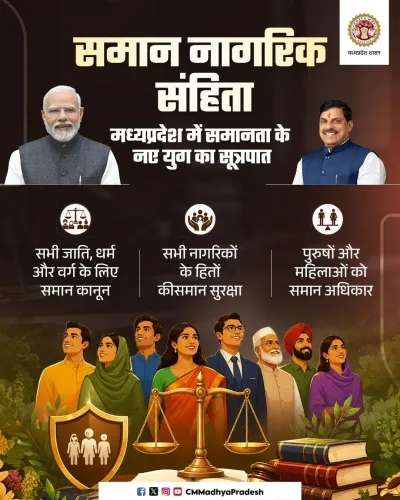
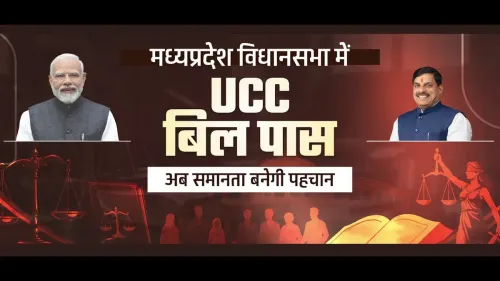
Madhya Pradesh became one of India's few states to pass a Uniform Civil Code, with Chief Minister Mohan Yadav declaring that separate religious personal laws would no longer apply. The BJP pushed the Bill through on a voice vote after Congress walkouts and two adjournments — setting up a legal and political battle that could reverberate well beyond the state's borders.
Key Takeaways
The Madhya Pradesh Legislative Assembly passed the Uniform Civil Code (UCC) Bill 2026 on 21 July via a voice vote.
Chief Minister Mohan Yadav declared that separate religious personal laws would no longer apply in the state.
Congress MLAs stormed the well, demanded referral to a Select Committee, and staged walkouts; the House was adjourned twice.
Congress MLA Arif Masood cited Article 29 of the Constitution and demanded tribal-style exemptions for Muslims.
Minister Kailash Vijayvargiya said the Bill was shaped by input from over one million people .
Madhya Pradesh now joins Goa , Uttarakhand , and Assam in legislating a uniform personal law framework.
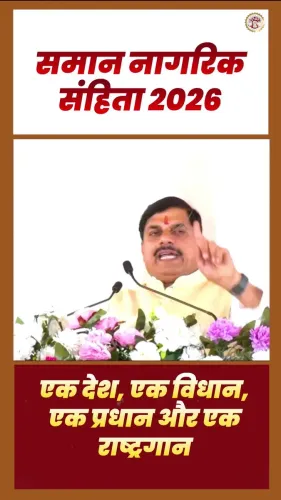
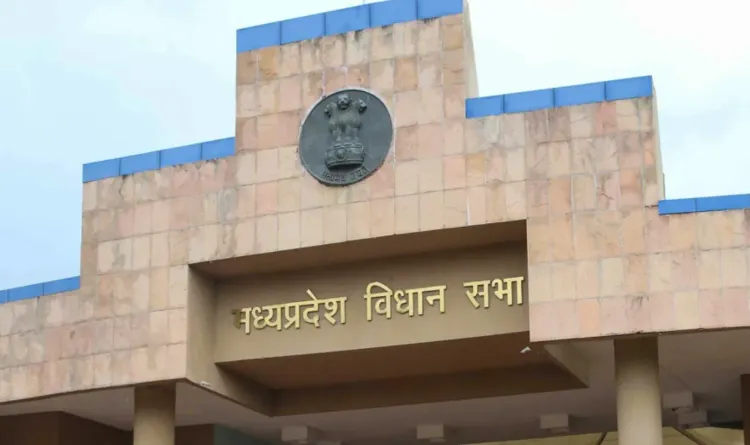
The Madhya Pradesh Legislative Assembly passed the Uniform Civil Code (UCC) Bill 2026 on Tuesday, 21 July, amid sustained opposition protests, repeated adjournments, and a Congress walkout, with the ruling Bharatiya Janata Party (BJP) pushing the legislation through on a voice vote. The passage makes Madhya Pradesh one of a handful of Indian states to legislate a uniform personal law framework, joining Goa, Uttarakhand, and Assam.
How the Session Unfolded
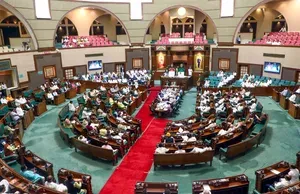
Proceedings turned turbulent almost immediately after Minister Gautam Tetwal moved the motion to take up the Bill and BJP MLA Sitaram Sharma began addressing the House. Congress MLAs stormed the well, raised slogans, and demanded the Bill be referred to a Select Committee. They also pressed for simultaneous implementation of 27 per cent reservation for Other Backward Classes (OBCs). The House was adjourned twice — for 15 minutes and 10 minutes respectively — before the debate could proceed. Speaker Narendra Singh Tomar repeatedly appealed for decorum, describing the UCC as a historic piece of legislation.
What the Government Said
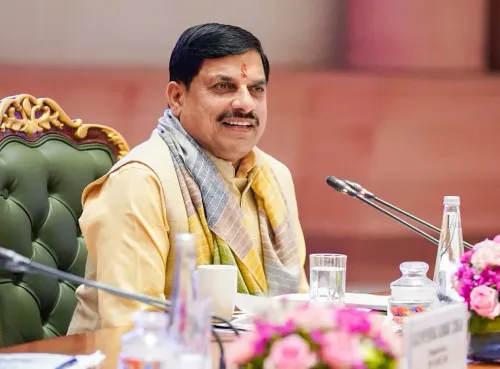
Chief Minister Mohan Yadav led BJP MLAs in chants of 'Jai Shri Ram' and declared that separate religious personal laws would no longer prevail in the state. 'From Ram to Rahim and Anthony to Akbar, everyone will now be governed by a single constitution,' Yadav asserted. He claimed that 76 per cent of Muslim women and 40 per cent of Muslim men supported the UCC, and accused the opposition of practising appeasement politics. Minister Kailash Vijayvargiya defended the Bill, stating it had been shaped by public opinion drawn from over one million people and advanced the principle of 'One Nation, One Law'.
Opposition's Core Objections
Congress MLA Arif Masood called the Bill inconsistent and rushed, arguing that Article 29 of the Constitution protects the cultural rights of minorities. He demanded that Muslims receive exemptions similar to those granted to Scheduled Tribes and questioned why disputes between spouses were being shifted from the civil to the criminal domain. Leader of Opposition Umang Singhar echoed these concerns, insisting that OBC reservation was a more pressing priority than the UCC and accusing the government of neglecting backward classes.
BJP's Counter-Arguments
BJP MLA Rameshwar Sharma alleged that the Congress was opposing Hindus, Indians, and tribals. Minister Prahlad Patel questioned whether the Congress wanted to sever tribals from their own culture. After the uproar subsided, the ruling party secured passage of the Bill through a voice vote.
Implications and What Comes Next
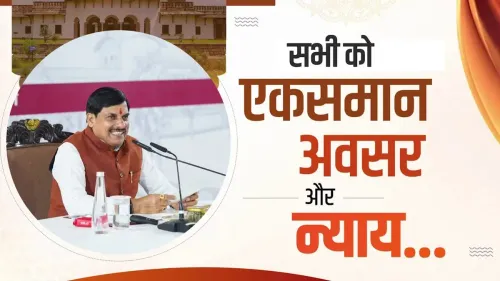
Chief Minister Yadav hailed the passage as a historic moment that would end discrimination and bring uniformity to personal laws across communities. Notably, the UCC's passage deepens the political divide in Madhya Pradesh: the BJP frames it as a landmark reform aligned with constitutional equality, while the Congress has criticised it as targeting a specific community and sidelining OBC reservation demands. The legislation is likely to face legal scrutiny, and its implementation framework — including how it handles tribal customary law exemptions — remains to be detailed. All eyes will now be on whether the Centre follows with a national UCC push ahead of the next general election cycle.
Point of View
One Law' framing is calibrated to consolidate a broad Hindu voter coalition ahead of future electoral cycles, while the Congress's OBC reservation counter-demand is its own attempt to fracture that coalition along caste lines. What is missing from both sides is a serious public reckoning with implementation: how the UCC interacts with constitutionally protected tribal customary laws, whether the claimed survey of one million people was methodologically credible, and what redressal mechanism will exist for communities whose personal practices are disrupted. The legal challenges that follow will likely be more consequential than the vote itself.
NationPress
20 Oct 2026
Frequently Asked Questions
What is the Madhya Pradesh Uniform Civil Code Bill 2026?
The Madhya Pradesh Uniform Civil Code Bill 2026 is a state legislation passed on 21 July that seeks to replace separate religious personal laws — governing marriage, divorce, inheritance, and adoption — with a single uniform framework applicable to all communities. It makes Madhya Pradesh one of a small group of Indian states to enact such a law.
Why did the Congress oppose the UCC Bill in the MP Assembly?
The Congress demanded the Bill be referred to a Select Committee, arguing it was rushed and inconsistent. Congress MLA Arif Masood contended that Article 29 of the Constitution protects minority cultural rights and that Muslims should receive exemptions similar to those granted to Scheduled Tribes. The opposition also argued that implementing 27 per cent OBC reservation was a more urgent priority.
Which states in India have already implemented a Uniform Civil Code?
Goa has had a uniform civil code since the colonial era. Uttarakhand and Assam have more recently legislated UCC frameworks. With the passage of the 2026 Bill, Madhya Pradesh now joins this group.
What did Chief Minister Mohan Yadav say about the UCC?
Chief Minister Mohan Yadav declared that separate religious personal laws would no longer prevail in Madhya Pradesh, saying 'From Ram to Rahim and Anthony to Akbar, everyone will now be governed by a single constitution.' He claimed that 76 per cent of Muslim women and 40 per cent of Muslim men supported the UCC.
What happens next after the MP UCC Bill is passed?
The Bill's implementation framework — including how it addresses tribal customary law exemptions and the shift of spousal disputes from civil to criminal jurisdiction — is yet to be detailed. The legislation is widely expected to face legal challenges, and its final shape will depend on how courts interpret its interaction with constitutional protections for minority and tribal communities.