MP UCC Bill passed: BJP hails 'historic' step, Congress cries distraction
Synopsis
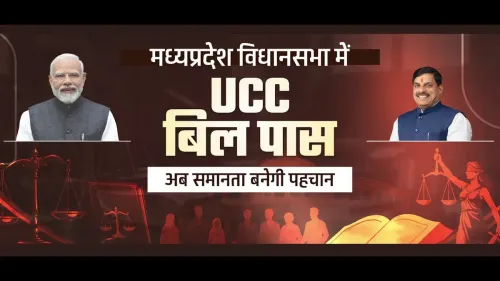
Madhya Pradesh has become the latest BJP-governed state to pass a Uniform Civil Code, with the Bill clearing the Assembly on 21 July amid fierce opposition protests. The legislation — which carves out tribal communities but mandates live-in relationship registration — deepens the BJP-Congress fault line and signals a state-by-state UCC push ahead of any national move.
Key Takeaways
The Madhya Pradesh Assembly passed the Uniform Civil Code (UCC) Bill on 21 July during the Monsoon Session.
BJP state president Hemant Khandelwal called it a 'historic' step that strengthens women's rights and social equality.
The Bill mandates registration of live-in relationships within one month , with penal provisions for violations.
Tribal communities are explicitly excluded from the UCC's purview, with their customs left intact.
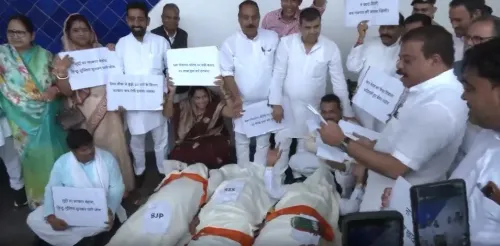
Leader of Opposition Umang Singhar led a symbolic Congress protest, alleging the BJP was using the UCC to distract from farmers' distress, unemployment, and inflation.
Madhya Pradesh follows Uttarakhand , which enacted India's first state-level UCC in 2024 .
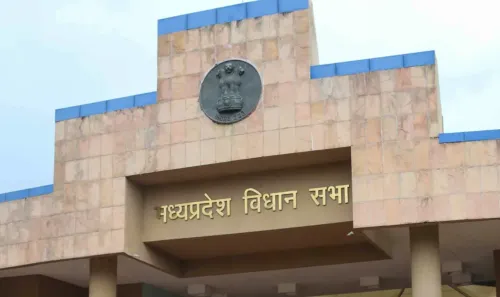
The Madhya Pradesh Assembly on Tuesday, 21 July passed the Uniform Civil Code (UCC) Bill, triggering a sharp political confrontation between the ruling Bharatiya Janata Party (BJP) and the opposition Congress. The legislation, cleared on the second day of the Monsoon Session, dominated Assembly proceedings and drew heated exchanges across the treasury and opposition benches in Bhopal.
What the BJP Said
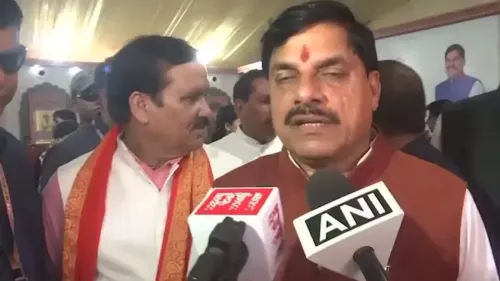
Madhya Pradesh BJP state president and MLA Hemant Khandelwal described the Bill's passage as a 'historic' milestone, saying Chief Minister Mohan Yadav's government had 'created history' by implementing the UCC at the state level. Khandelwal argued the legislation would reinforce social justice, equality, and constitutional values while guaranteeing greater security and equal rights for women.
He also highlighted a provision mandating the registration of live-in relationships within one month, with penal consequences for non-compliance, which he said would bring legal clarity to such arrangements. Notably, Khandelwal emphasised that tribal communities have been explicitly kept outside the UCC's ambit, with their customs and traditions left unaffected — a concession that had been a key demand from several quarters ahead of the Bill's tabling.
Congress Mounts Symbolic Protest
Leader of the Opposition Umang Singhar led a symbolic protest by Congress MLAs within the Assembly premises, accusing the BJP government of using the UCC to advance the ideological agenda of the Rashtriya Swayamsevak Sangh (RSS) while sidestepping urgent public concerns.
'The BJP government is sleeping over the real issues of the people. Instead of discussing farmers, unemployed youth, inflation, education, and healthcare, it is trying to divert attention by raising issues like the UCC,' Singhar said. He alleged that the government had rushed the legislation through to deflect scrutiny from the state's economic and social challenges.
Key Provisions at a Glance
The UCC Bill, as passed, establishes a uniform legal framework applicable to all citizens of Madhya Pradesh regardless of religion, covering areas governed by personal laws such as marriage, divorce, inheritance, and adoption. The mandatory live-in relationship registration clause, with attached penal provisions for violations, is among its more contentious elements. The explicit carve-out for tribal communities is a significant political and legal feature that sets this version apart from broader UCC proposals discussed at the national level.
Broader Context
Madhya Pradesh follows Uttarakhand, which became the first state to enact a UCC law in 2024. The BJP has long championed a Uniform Civil Code as part of its core ideological platform, and state-level implementations are widely seen as building blocks for a potential national framework. This comes amid ongoing debates in several BJP-governed states about the pace and scope of social legislation. Critics argue that the speed of passage leaves insufficient room for stakeholder consultation, particularly with minority communities and legal experts.
What Happens Next
The Bill's passage sets the stage for potential legal challenges, with opposition leaders signalling they may approach the courts. Implementation timelines and the formation of any oversight body are yet to be announced by the Mohan Yadav government. The political fallout is likely to reverberate through the state's legislative calendar for the remainder of the Monsoon Session.
Point of View
Which raises the question of how 'uniform' the code actually is. Congress's distraction argument has merit as a political critique, but it sidesteps the substantive legal debate. The real test will come in the courts, where the constitutional validity of a state-level UCC — given that personal law is a concurrent subject — remains genuinely unsettled.
NationPress
20 Oct 2026
Frequently Asked Questions
What is the Uniform Civil Code (UCC) Bill passed in Madhya Pradesh?
The UCC Bill passed by the Madhya Pradesh Assembly on 21 July establishes a single legal framework governing personal matters such as marriage, divorce, inheritance, and adoption for all citizens of the state, irrespective of religion. It also includes a provision requiring mandatory registration of live-in relationships within one month, with penal consequences for violations.
Are tribal communities covered under the Madhya Pradesh UCC?
No. The Bill explicitly excludes tribal communities from its ambit, leaving their customs and traditions legally unaffected. This carve-out was highlighted by BJP state president Hemant Khandelwal as a key feature of the legislation.
Why did the Congress oppose the UCC Bill in Madhya Pradesh?
The Congress, led in protest by Leader of Opposition Umang Singhar, alleged that the BJP was using the UCC to advance the RSS's ideological agenda and divert public attention from issues such as farmers' distress, unemployment, inflation, and poor healthcare. Singhar accused the government of rushing the Bill through the Assembly.
Which other state has enacted a UCC before Madhya Pradesh?
Uttarakhand became the first Indian state to enact a Uniform Civil Code law in 2024, preceding Madhya Pradesh's passage of its own UCC Bill in July 2025.
What happens next after the MP UCC Bill is passed?
The Bill's passage is expected to face potential legal challenges, with opposition leaders signalling they may approach the courts. The Mohan Yadav government is yet to announce implementation timelines or details of any oversight body to administer the new law.