MP cabinet clears Uniform Civil Code Bill at historic Jagdishpur session
Synopsis
Madhya Pradesh became the latest BJP-governed state to clear a Uniform Civil Code Bill, approving the legislation at a symbolically charged cabinet session in Jagdishpur. With a Justice Ranjana Prakash Desai-led committee having consulted every district, and the Bill now headed to the Assembly, MP is positioning itself as the second state after Uttarakhand to push UCC into law.
Key Takeaways
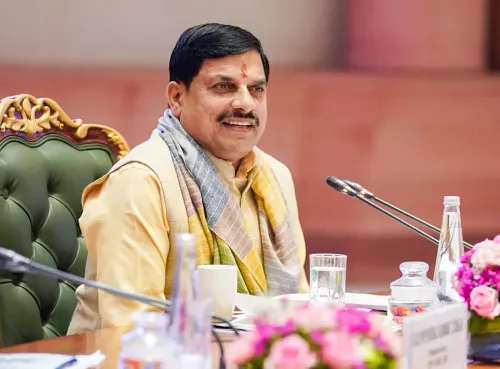
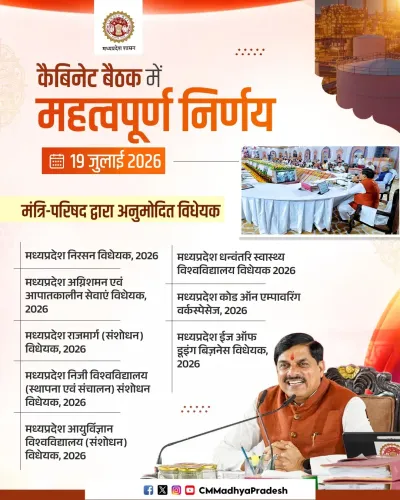
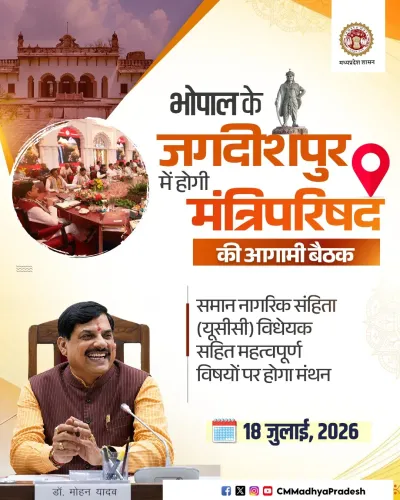
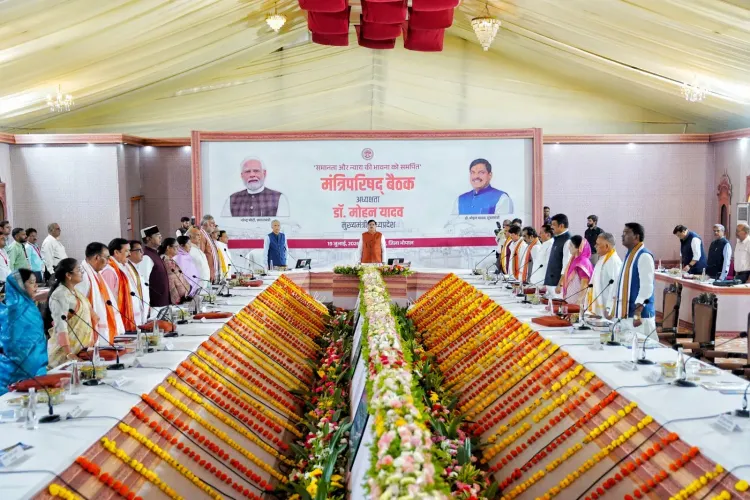
The Madhya Pradesh cabinet approved the Uniform Civil Code (UCC) Bill on 19 July at a special session in Jagdishpur , near Bhopal.
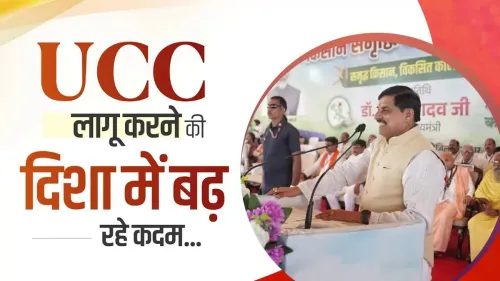
Chief Minister Mohan Yadav said the UCC will ensure equal legal rights across all communities and does not violate fundamental rights.
A committee headed by former Supreme Court judge Justice Ranjana Prakash Desai conducted consultations across all districts and divisions before the Bill was drafted.
The Congress boycotted all consultation meetings; AAP and the Communist Party participated.
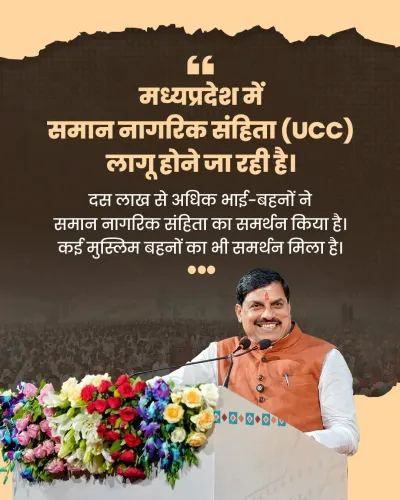
The government claims nearly 80 per cent of Muslim women and 40 per cent of Muslim men expressed support during consultations — figures not independently verified.
The Bill will now be tabled in the upcoming Madhya Pradesh Legislative Assembly session.
The Madhya Pradesh cabinet on Sunday, 19 July approved the Uniform Civil Code (UCC) Bill during a special meeting convened at Jagdishpur, a historically significant town near Bhopal once known as Islamnagar. The venue was deliberately chosen to underscore the cultural and historical weight of the decision, which Chief Minister Mohan Yadav described as a tribute to the state's glorious past and a step toward equal rights for all citizens.
What the Bill Proposes
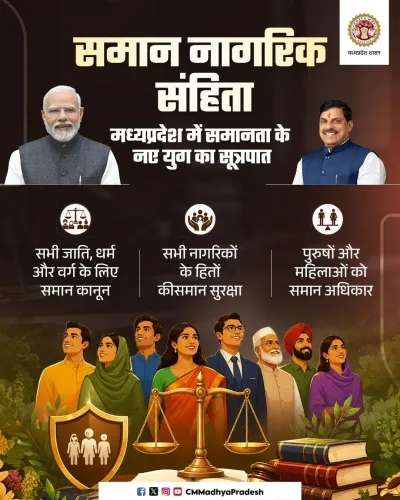
The UCC Bill, if enacted, would establish a single legal framework governing personal matters — marriage, divorce, inheritance, and adoption — across all communities in Madhya Pradesh. CM Yadav asserted that the legislation does not violate the fundamental rights of citizens and is aimed at ensuring equal opportunities regardless of religious identity. 'For us, whether Ramchandra or Rahim, everyone deserves equality. This law is a major step in that direction,' he said at a press conference following the cabinet meeting.
How the Bill Was Drafted
Before the Bill was finalised, the state government constituted a committee headed by former Supreme Court judge Justice Ranjana Prakash Desai. The panel conducted consultations across all districts and divisions of Madhya Pradesh, and state-level discussions in Bhopal included political parties and social organisations from diverse faiths. CM Yadav noted that parties including the Aam Aadmi Party (AAP) and the Communist Party participated in these deliberations.
Congress Stays Away, CM Hits Back
The Indian National Congress (Congress) chose not to participate in any of the consultation meetings, according to CM Yadav. He criticised the party's absence, remarking that Congress has historically struggled with the concept of 'one nation, one law, one leader.' The Congress has not publicly responded to these remarks.
Support Within Muslim Community, Says Government
Citing the consultation process, CM Yadav claimed that the exercise revealed considerable support for a uniform law within the Muslim community — with reportedly nearly 80 per cent of women and 40 per cent of men favouring its implementation. 'Many openly said that such a law would safeguard the lives of our mothers and sisters,' he added. These figures, however, are attributed to the government's own consultation exercise and have not been independently verified.
What Happens Next
The Bill will be tabled in the upcoming Madhya Pradesh Legislative Assembly session, where it will require passage to become law. CM Yadav framed the move as consistent with Prime Minister Narendra Modi's vision of a developed India by 2047, anchored in the principle of 'Sabka Saath, Sabka Vikas, Sabka Vishwas, Sabka Prayas.' Madhya Pradesh joins Uttarakhand — which became the first state to pass a UCC — in pursuing uniform personal law at the state level, signalling a broader push by Bharatiya Janata Party (BJP)-governed states on this front.
Point of View
Building political momentum and testing legal ground simultaneously. The consultation figures cited by CM Yadav — 80 per cent of Muslim women in favour — are striking but come from a government-run process with no independent audit, which will invite scrutiny. Congress's blanket boycott of consultations leaves it without a seat at the table and without a credible counter-narrative, a political miscalculation it has repeated on UCC at the national level. The real test comes in the Assembly, where the Bill's specific provisions on marriage, divorce, and inheritance will face detailed examination — and where the gap between a symbolic cabinet approval and an enacted, enforceable law will become apparent.
NationPress
18 Oct 2026
Frequently Asked Questions
What is the Uniform Civil Code Bill approved by the Madhya Pradesh cabinet?
It is a proposed law that would establish a single legal framework for personal matters — marriage, divorce, inheritance, and adoption — applicable to all communities in Madhya Pradesh. The cabinet cleared the Bill on 19 July at a special session in Jagdishpur, and it will next be tabled in the state Assembly.
Why was the cabinet meeting held in Jagdishpur?
Jagdishpur, a historic town near Bhopal formerly known as Islamnagar, was chosen to underline the cultural and historical significance of the decision. Chief Minister Mohan Yadav invoked the legacy of Rani Kamalapati and the spirit of national pride associated with the location.
Who drafted the UCC Bill for Madhya Pradesh?
A committee headed by former Supreme Court judge Justice Ranjana Prakash Desai was constituted to draft the Bill. The panel conducted consultations across all districts and divisions of the state, as well as state-level discussions in Bhopal with political parties and social organisations.
Why did the Congress boycott the UCC consultations?
The Congress did not participate in any of the consultation meetings, though the party has not publicly stated its reasons. Chief Minister Mohan Yadav criticised the absence, saying Congress has always struggled with the idea of 'one nation, one law, one leader.'
Is Madhya Pradesh the first state to approve a UCC?
No. Uttarakhand became the first state to pass a UCC into law. Madhya Pradesh is now among the BJP-governed states pursuing similar legislation at the state level, with the Bill still requiring passage in the Assembly before it becomes law.