MP Police trains CID officers in forensic, digital evidence for court
Synopsis
Madhya Pradesh's CID has wrapped a three-day forensic and digital evidence workshop in Bhopal — a signal that the state police recognise courtroom failures often stem from evidence mishandling, not lack of investigation. From DNA collection to chain-of-custody photography, the training targets the procedural gaps that let cases unravel at trial.
Key Takeaways
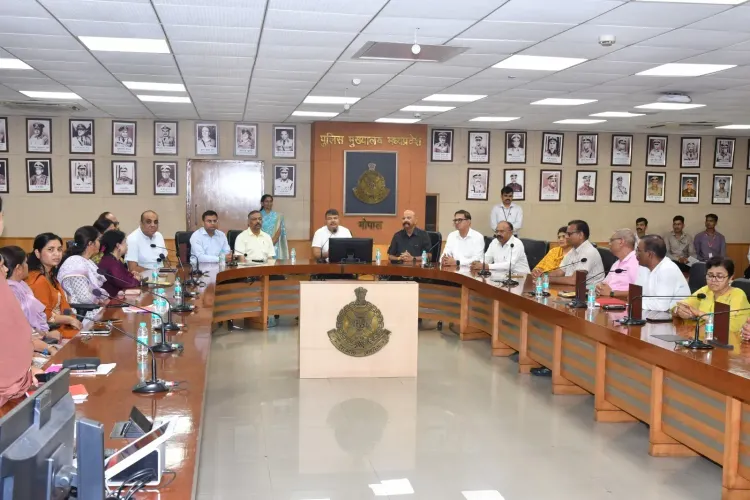
The Madhya Pradesh CID concluded a three-day forensic and digital evidence training workshop at Police Headquarters, Bhopal on 3 September .
CID Special DGP Pankaj Shrivastava led sessions on DNA and digital evidence collection, including protocols when a specialist is unavailable.
DSP Amitabh Tiwari outlined legal requirements for photographic evidence and the importance of maintaining the chain of custody .
Officers were trained in overall, mid-range, and close-up crime-scene photography covering dead bodies, weapons, bloodstains, and footprints.
Experts from the Forensic Science Laboratory and fingerprint, document, computer, and photo branches conducted specialised sessions.
The initiative aims to ensure forensic and digital evidence meets judicial admissibility standards in Madhya Pradesh courts.
The Madhya Pradesh Police has launched a focused initiative to sharpen the use of forensic and digital evidence in criminal investigations, aiming to strengthen probe quality and ensure evidence withstands judicial scrutiny. The effort is part of a broader push to modernise investigative practices across the state's law enforcement apparatus.
Three-Day Workshop at Police Headquarters
The Crime Investigation Department (CID) concluded a three-day training workshop at the Police Headquarters in Bhopal on Thursday, 3 September. The programme brought together investigators and specialists from multiple forensic disciplines to bridge the gap between field practice and courtroom requirements.
Sessions covered scientific investigation methods, evidence collection and preservation, crime-scene documentation, digital evidence handling, and the legal standards required for presenting material before courts. Experts from the Forensic Science Laboratory and the document, fingerprint, computer, and photo branches conducted specialised modules.
What Senior Officers Said
CID Special Director General of Police Pankaj Shrivastava addressed the concluding session, stressing that the evolving nature of crime demands a corresponding upgrade in investigative capability.
'Crime is becoming increasingly complex and strengthening investigation on scientific and technological lines is the need of the hour,' Shrivastava said. He also conducted an interactive session on DNA and digital evidence collection, specifically addressing how officers should manage investigations when a specialist is not immediately available.
Deputy Superintendent of Police (CID) Amitabh Tiwari elaborated on the technical and legal requirements for photographic evidence. 'Evidence has to be documented in its original condition and in a systematic manner without any alteration,' Tiwari said, underlining that maintaining the chain of custody for photographs and videos is essential to establishing their authenticity in court.
Crime-Scene Photography and Digital Safeguards
A significant portion of the workshop focused on crime-scene photography and videography. Officers were trained in overall, mid-range, and close-up photography techniques, as well as standard procedures for recording dead bodies, weapons, bloodstains, footprints, and other physical evidence found at crime scenes.
The workshop also addressed safeguards to prevent alteration of digital photographs and videos, and outlined the precautions required when presenting such material before a court. These procedural standards are increasingly critical as defence counsel scrutinise digital evidence for tampering or breaks in custody.
Why This Matters
Courts across India have increasingly demanded higher evidentiary standards, and cases have been weakened — or lost — when digital and forensic material is improperly collected or documented. This training reflects a recognition within Madhya Pradesh Police that investigative rigour must keep pace with both the sophistication of crime and the expectations of the judiciary.
Notably, this is part of a national trend: several state police forces have ramped up forensic training following Supreme Court observations on the admissibility and integrity of digital evidence. With cybercrime and technology-assisted offences on the rise, the ability to present court-ready digital evidence is no longer optional — it is operationally essential.
Further training modules are expected to follow as the CID scales the programme to cover a wider pool of investigators across the state.
Point of View
But their value depends entirely on whether the learning translates to field practice — and whether the infrastructure exists to support it. Many state police forces have held similar programmes, yet conviction rates in cases relying on digital evidence remain inconsistent, often because chain-of-custody protocols break down between the crime scene and the courtroom. The real test for Madhya Pradesh will be whether this training is institutionalised with follow-up audits and accountability, or remains a one-off event. The focus on handling investigations when a specialist is unavailable is particularly telling — it acknowledges a resource gap that training alone cannot fully close.
NationPress
19 Oct 2026
Frequently Asked Questions
What was the MP Police CID forensic training workshop about?
The Madhya Pradesh CID conducted a three-day workshop at Police Headquarters in Bhopal to train investigators in forensic and digital evidence handling, crime-scene documentation, and the legal requirements for presenting evidence in court. The programme concluded on 3 September.
Who led the forensic training sessions?
CID Special Director General of Police Pankaj Shrivastava led sessions on DNA and digital evidence collection, while Deputy Superintendent of Police Amitabh Tiwari covered the technical and legal standards for photographic evidence. Specialists from the Forensic Science Laboratory and multiple forensic branches also conducted modules.
Why is forensic evidence training important for police officers?
Courts increasingly demand rigorous evidentiary standards, and cases can be weakened when digital or forensic material is improperly collected or documented. Training ensures officers can establish chain of custody and present unaltered evidence that meets judicial admissibility requirements.
What specific skills did officers learn at the workshop?
Officers were trained in crime-scene photography at overall, mid-range, and close-up levels; documentation of dead bodies, weapons, bloodstains, and footprints; digital evidence safeguards against alteration; and DNA collection protocols for situations where a forensic specialist is not available.
Is this part of a broader national trend in police forensic training?
Yes. Several state police forces across India have intensified forensic training in recent years, partly in response to judicial observations on the admissibility and integrity of digital evidence. The rise of cybercrime and technology-assisted offences has made court-ready digital evidence a priority for law enforcement.