Census 2027: MP collectors ordered to prioritise fieldwork

Synopsis
Madhya Pradesh has put Census 2027 on a war footing. Chief Secretary Ashok Barnwal ordered all 55 collectors to personally drive fieldwork, warned of action for negligence, and flagged a fully digital count via mobile apps, mapping tools and the CMMS portal, with the state aiming to top phase-two rankings.
Key Takeaways
Chief Secretary Ashok Barnwal on 25 November ordered collectors of all 55 districts to give Census 2027 fieldwork top priority.
Collectors must personally attend field trainers’ training; municipal commissioners will lead urban supervision.
Negligence or lack of seriousness will invite action at the initial level, Barnwal warned.
Census 2027 will be fully digital for the first time, using a mobile app, digital mapping and the CMMS portal.
The Directorate of Census Operations was asked to compile more than 31 central circulars into one field handbook.
Additional Chief Secretary Sanjay Kumar Shukla said MP was among leading states in house listing and aims to be best in phase two.
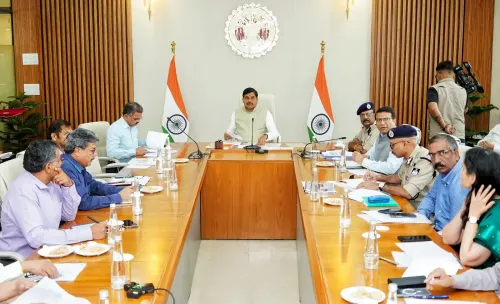
Madhya Pradesh Chief Secretary Ashok Barnwal on 25 November directed collectors of all 55 districts to accord the highest administrative priority to Census 2027 fieldwork and to ensure accuracy and quality in data collection. The instructions were issued at a state-level conference and training workshop in Bhopal, organised jointly by the Directorate of Census Operations, Madhya Pradesh, and the state Home Department at the RCVP Noronha Academy of Administration and Management.
The meeting was attended by Additional Chief Secretary (Home) Sanjay Kumar Shukla, Census Deputy Director General of the Government of India Biswajit Das, divisional commissioners, collectors from all 55 districts, municipal commissioners and other officials associated with the exercise.
What the Chief Secretary directed
Reviewing preparations for the second phase of the census, Barnwal said reliable population data would be crucial for formulating development policies and allocating resources in education, healthcare, infrastructure, employment, transport and social security. “The quality and reliability of census data directly affect the development plans of the country and the state,” he said, stressing that the exercise must be conducted with utmost seriousness and responsibility.
He directed district collectors to personally attend field trainers’ training programmes instead of leaving the task entirely to subordinate officials. Municipal commissioners were asked to lead and supervise census-related work in urban areas. Barnwal warned that negligence or lack of seriousness would invite action at the initial level.
He also highlighted the potential use of artificial intelligence for analysing census data to support policymaking on women’s workforce participation, per capita income, skill development and employment. The Directorate of Census Operations was told to prepare a comprehensive handbook by consolidating more than 31 circulars and guidelines issued by the Centre, so that field officials have all instructions in one place.
Why Census 2027 data matters
Census data will serve as an important basis for delimitation, Finance Commission recommendations and various welfare schemes of the Centre and state governments. Authentic figures are expected to help assess development requirements and opportunities across agriculture, transport, healthcare and education. Notably, Barnwal linked the reliability of the count directly to planning in social security and employment — sectors where uneven data can distort both targeting and outlays.
This comes amid a national push to complete Census 2027 as a fully digital exercise, raising the stakes for large states such as Madhya Pradesh, where rural and urban enumeration must run in parallel under a single quality standard. Officials at the Bhopal conference repeatedly underlined that policy design in health, education and infrastructure will rest on the numbers collected in the second phase.
First fully digital census
Das outlined the national framework, technological innovations, legal provisions and data security arrangements for Census 2027. He said the upcoming census would be conducted entirely through digital means for the first time. Enumerators would collect information through a mobile application, while digital mapping applications would be used to demarcate enumeration blocks and monitor geographical coverage.
The CMMS portal would be used for administrative monitoring and tracking the progress of the exercise. Das also emphasised that personal information collected from citizens during the census would remain confidential. The combination of a mobile app, digital maps and a central monitoring portal is intended to give supervisors a near real-time view of coverage gaps — a shift from earlier paper-based rounds.
Madhya Pradesh’s first-phase record and next steps
Shukla said Madhya Pradesh had performed among the leading states in the first phase, involving house listing and housing census, and was now aiming to emerge as the best-performing state in the second phase. He said authentic census data would help assess development requirements and opportunities across sectors, including agriculture, transport, healthcare and education.
The conference brought the entire field hierarchy onto one platform, from divisional commissioners down to municipal commissioners. In urban local bodies, municipal commissioners have been made accountable for supervision, while collectors retain overall charge of their districts. Barnwal’s warning of action at the initial level for negligence was meant to set an administrative tone before the second phase gathers pace.
Officials were also told that a single handbook consolidating more than 31 central circulars would reduce the risk of field staff working from incomplete or conflicting instructions. Combined with the CMMS portal for real-time tracking, the state is attempting to run Census 2027 as a monitored, digitally supervised operation rather than a paper-driven count. As training of field trainers proceeds, collectors’ personal attendance will be an early indicator of how seriously districts are treating the exercise. The state’s stated aim of finishing as the best-performing unit in the second phase now rests on whether that instruction travels from the academy in Bhopal to every enumeration block.
Frequently Asked Questions
What did the Madhya Pradesh government decide on Census 2027?
Chief Secretary Ashok Barnwal directed collectors of all 55 districts to accord the highest administrative priority to Census 2027 fieldwork and to ensure accuracy in data collection. The order was issued at a Bhopal conference on 25 November attended by collectors, municipal commissioners and census officials.
Will Census 2027 be conducted digitally in Madhya Pradesh?
Yes. Census Deputy Director General Biswajit Das said Census 2027 will be conducted entirely through digital means for the first time. Enumerators will use a mobile application, digital mapping will demarcate enumeration blocks, and the CMMS portal will track progress.
Why did Chief Secretary Ashok Barnwal warn collectors?
Barnwal warned that negligence or lack of seriousness in the census exercise would invite action at the initial level. He also insisted collectors personally attend field trainers’ training instead of leaving it to subordinate officials.
How did Madhya Pradesh perform in the first phase of the census?
Additional Chief Secretary Sanjay Kumar Shukla said Madhya Pradesh performed among the leading states in the first phase, which covered house listing and the housing census. The state is now aiming to emerge as the best-performing state in the second phase.
What will Census 2027 data be used for?
Census data will serve as a basis for delimitation, Finance Commission recommendations and welfare schemes of the Centre and state governments. Officials said it will also guide planning in education, healthcare, infrastructure, employment, agriculture, transport and social security.