Will the Thackeray Cousins' Marathi Pride Triumph Over BJP-Shiv Sena's Global City Vision in Mumbai Civic Polls?
Synopsis
As the Brihanmumbai Municipal Corporation elections near, the Thackeray cousins unite under 'Marathi pride' while the BJP pushes for a modern vision. What will this intense political battle mean for Mumbai's future? Discover the stakes in this high-profile contest as welfare promises and accountability claims collide.
Key Takeaways
The Thackeray cousins have united to present a cohesive front in the elections.
The BJP accuses the Thackeray administration of widespread corruption.
Both parties are targeting young voters with distinct narratives.
The election will significantly impact Mumbai ’s future and identity.
Welfare promises are central to the Thackeray campaign.
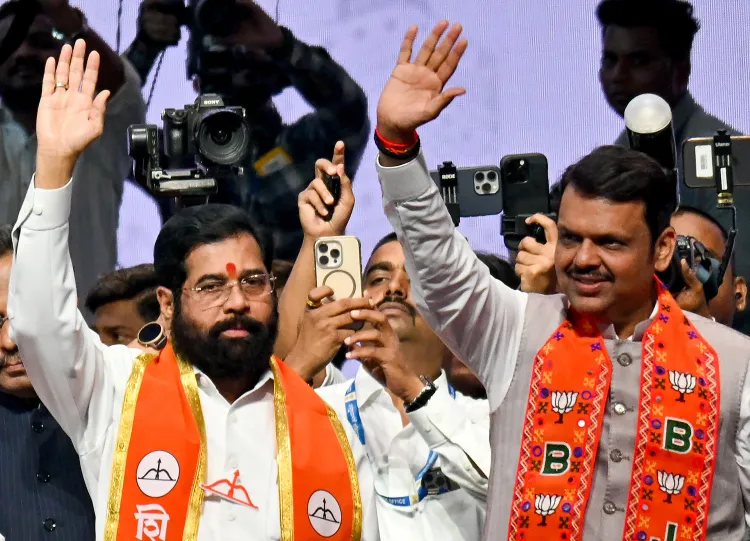
Mumbai, Jan 5 (NationPress) As the elections for the Brihanmumbai Municipal Corporation (BMC) set for January 15 approach, the political rivalry in Mumbai is heating up.
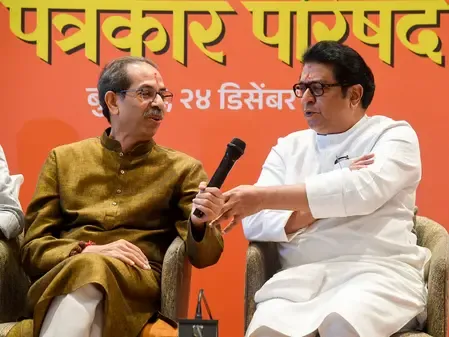
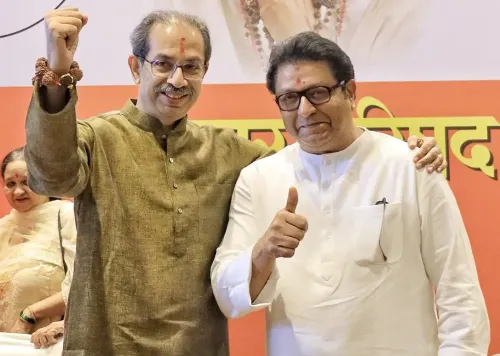
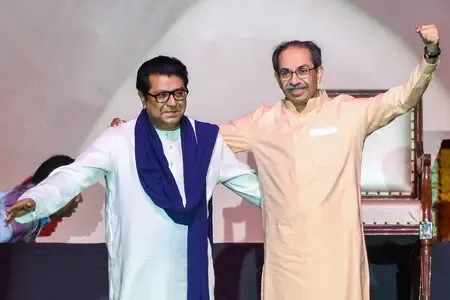
The Thackeray cousins -- Uddhav Thackeray and Raj Thackeray, head of the MNS -- made a rare display of unity on Sunday by launching a joint manifesto known as the Vachan Nama. In response, the Bharatiya Janata Party (BJP) published an Aarop Patra (charge sheet), accusing the Thackeray administration of extensive corruption over its 25-year reign over the BMC.
The Thackeray faction has framed their campaign around a narrative of “Save Democracy,” claiming instances of “vote theft” through uncontested victories and appealing to the youthful idealism of voters. On the other hand, the BJP has initiated digital campaigns labeled “Aarop,” portraying the current BMC framework as outdated and corrupt, arguing that it hinders Mumbai’s evolution into a “Global City” that resonates with the aspirations of the youth.
In an unprecedented move after nearly two decades, the Shiv Sena (UBT), the Maharashtra Navnirman Sena (MNS), and the Nationalist Congress Party led by Sharad Pawar have come together to present a coherent vision for Mumbai, encapsulated in the slogan “Shabd Thackerencha” (word of the Thackerays).
Their manifesto proposes several welfare initiatives, including the Swabhiman Nidhi -- a monthly stipend of Rs 1,500 for domestic workers and Koli women -- the construction of 100,000 affordable homes within five years, the establishment of a dedicated BMC Housing Authority, provision of 100 units of free electricity for residential users via BEST, subsidized meals priced at Rs 10 for breakfast and lunch, a reduction of the minimum bus fare to Rs 5, employment allowances, interest-free loans for gig workers, and the creation of five new medical colleges.
The Vachan Nama explicitly demands a “Marathi Mayor” and emphasizes that Mumbai’s land should be primarily allocated for “Mumbaikars.”
Conversely, the BJP’s Aarop Patra suggests a corruption scandal reaching Rs 3 lakh crore during the Thackeray-led governance of the BMC. The party contends that despite an expenditure of Rs 21,000 crore on road construction over the last decade, Mumbai still grapples with grave pothole problems.
The BJP further claims irregularities during the COVID-19 pandemic, referencing the “Body Bag Scam,” where body bags were allegedly procured at Rs 6,721 each, despite a cost of about Rs 1,500, and inconsistencies in oxygen plant installations valued at Rs 320 crore. They also allege that around 1,700 bar and restaurant owners faced extortion during the tenure of the Maha Vikas Aghadi.
The BJP has accused the Thackeray camp of a lack of genuine commitment to the Marathi language, noting a decline of 70% in Marathi-medium students and the closure of 114 BMC-operated Marathi schools.
While the Thackeray cousins stress “Marathi pride,” the BJP contends that significant infrastructure developments, such as the Coastal Road and Mumbai Metro, were realized solely due to the initiatives of Chief Minister Devendra Fadnavis and the Central government.
Political analysts observe that the Thackerays aim to forge a joint appeal of “social security” and “identity.” By promising a Marathi Mayor and advocating for Mumbaikar rights over land, they are looking to consolidate the traditional nativist vote that has diminished post the Shiv Sena split.
The reunion of the Thackeray cousins has created a powerful visual and emotional resonance, projecting a “united family” image to counter the BJP’s organizational prowess. Welfare promises like free electricity and subsidized meals are seen as strategic moves to attract slum dwellers and residents of chawls.
Analysts also argue that the BJP’s charge sheet strategy is designed to emphasize “performance and accountability,” appealing to tax-paying middle-class voters by alleging misuse of public funds under the previous administration. The party positions itself as the only force capable of modernizing Mumbai, showcasing the swift execution of infrastructure projects under the current Mahayuti government and contrasting them with what it describes as “25 years of failure.”
(Sanjay Jog can be contacted at sanjay.j@ians.in)
Point of View
Both the Thackeray cousins and the BJP present compelling narratives. It's crucial for voters to weigh the promises of social security against the BJP's claims of accountability. This electoral battle signifies more than just political power; it's about shaping Mumbai's identity and future. The NationPress remains committed to delivering unbiased insights amidst this dynamic political landscape.
NationPress
27 Sept 2026
Frequently Asked Questions
What is the significance of the Thackeray cousins uniting?
The unity of the Thackeray cousins signals a rare moment of collaboration in Maharashtra politics, aimed at consolidating their traditional voter base amidst rising competition from the BJP.
What are the main points of the BJP's charge sheet?
The BJP's charge sheet alleges extensive corruption during the Thackeray administration, including claims of a Rs 3 lakh crore scam and mismanagement of resources during the COVID-19 pandemic.
How does the Thackeray camp frame their election campaign?
The Thackeray camp frames their campaign around a 'Save Democracy' narrative, appealing to young voters by emphasizing ideals of fairness and transparency in governance.
What welfare promises have been made by the Thackeray cousins?
Their manifesto includes various welfare initiatives such as monthly allowances for domestic workers, affordable housing, and provisions for free electricity and subsidized meals.
What is the BJP's strategy in the upcoming elections?
The BJP aims to position itself as the party of modernity, focusing on performance and accountability while criticizing the previous administration's governance and infrastructure failures.