Did Mumbai HC Deny Abu Salem Emergency Parole to Visit His Hometown?
Synopsis
In a significant ruling, the Bombay High Court denied Abu Salem's request for emergency parole to visit his hometown in Azamgarh district of Uttar Pradesh, citing security concerns and the prisoner's inability to pay the estimated costs. This decision highlights the ongoing complexities surrounding his incarceration and the implications of parole for high-profile convicts.
Key Takeaways
The Bombay High Court denied Abu Salem's emergency parole request.
Salem was unable to pay the estimated Rs 17 lakh for security and travel costs.
Public safety concerns were a significant factor in the court's decision.
Salem has been imprisoned for nearly 25 years.
The case highlights the complexities surrounding parole for high-profile criminals.
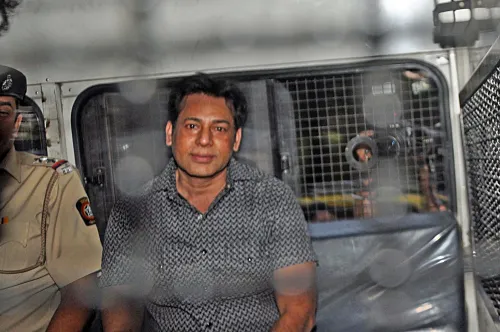
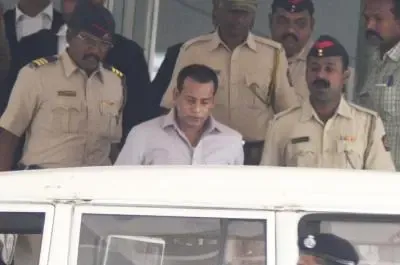
Mumbai, Feb 3 (NationPress) The Bombay High Court has denied gangster Abu Salem emergency parole to return to his native region in Azamgarh, Uttar Pradesh. The refusal came after Salem declined to cover the estimated costs for security and travel, which amounted to approximately Rs 17 lakh.
The court had previously stated that should Salem wish to obtain parole, he must fully finance the necessary arrangements, including police escort and security measures, due to the sensitive nature of his movements.
During the hearing, Salem's attorney argued that the quoted amount of over Rs 17 lakh was unreasonable, claiming that Salem, who has been imprisoned for nearly 25 years, is not in a position to pay such a hefty fee.
Nonetheless, the court did not find this argument compelling. The presiding judge emphasized that the security measures were essential due to safety concerns and could not be modified.
Salem’s lawyer indicated that his client could only afford Rs 1 lakh. He also noted that Salem had been permitted to visit his ancestral home during his mother’s funeral without incurring such charges.
This emergency parole request was made following the passing of Salem’s elder brother, Abu Hakim Ansari, who died on November 14, 2025.
In opposition to the request, the state government informed the court that Salem's ancestral village near Saraimeer in Azamgarh is a sensitive location, and his presence could threaten public order.
The government expressed willingness to grant four days of parole on humanitarian grounds, contingent on strict security protocols, with costs to be covered by Salem.
The court indicated a possibility of allowing Salem four days of parole, excluding travel time, under full police escort and secured conditions, provided he could bear the expenses. As Salem indicated an inability to fund this, the court ultimately denied the parole.
The next hearing is set for February 5.
Salem has been incarcerated since 2005 after being convicted in two major cases: the 1993 Mumbai serial blasts, which resulted in 257 fatalities and over 1,400 injuries, and the 1995 murder of builder Pradeep Jain.
After being extradited from Portugal in 2005 under an extradition treaty, his sentence was later reduced to 25 years.
Last year, Abu Salem also approached the court for clarification regarding the completion of his 25-year prison term.
Point of View
It is vital to present a balanced perspective on this case. The Bombay High Court's decision to deny Abu Salem emergency parole underscores the complexities of the legal system when it comes to high-profile criminals. While the humanitarian aspect is essential, public safety and the potential for unrest must also be prioritized. This case serves as a reminder of the ongoing challenges faced by the justice system in handling sensitive matters.
NationPress
3 Oct 2026
Frequently Asked Questions
What was the reason for the denial of Abu Salem's parole?
The Bombay High Court denied Abu Salem's emergency parole request due to his refusal to cover the estimated costs for security and travel, which were around Rs 17 lakh.
How long has Abu Salem been incarcerated?
Abu Salem has been in prison since 2005, serving a sentence related to the 1993 Mumbai serial blasts and the 1995 murder of builder Pradeep Jain.
What was the court's stance on security concerns?
The court emphasized that the security arrangements were necessary given the sensitivity surrounding Abu Salem's movements and could not be relaxed.
What are the implications of this decision?
The court's ruling underscores the balance between humanitarian grounds and public safety in the context of parole for high-profile inmates.
When is the next hearing for this case?
The next hearing for Abu Salem's case is scheduled for February 5.