Pankaja Munde unveils pollution action plan for Chandrapur, Bhiwandi clean fuel mandate

Synopsis
Maharashtra's Environment Minister Pankaja Munde moved beyond rhetoric on 25 June, ordering the closure of a coal washery, fast-tracking FGD systems for Chandrapur's thermal plants, and making clean fuel mandatory for Bhiwandi's dyeing units — all in a single assembly session. The IIT Powai committee and revised bank guarantees signal a shift toward financial deterrence, not just regulatory warnings.
Key Takeaways
Pankaja Munde announced a short, mid, and long-term industrial pollution action plan in the Maharashtra assembly on 25 June .
Mahamaya Coal Washery in Chandrapur received an immediate closure notice after management missed a mandatory pollution hearing.
A comprehensive environmental audit of all Chandrapur thermal power plants has been ordered; FGD system implementation will be fast-tracked.
Yarn dyeing units in Bhiwandi must now use PNG, CNG, or LPG ; burning plastic, wood, or solid waste in boilers is prohibited.
Of 254 textile industries in Bhiwandi, 54 'Orange' category dyeing units are under strict MPCB monitoring.
The SMS Company in the Mankhurd-Govandi belt has been ordered to relocate to MIDC's Ambernath zone .
Maharashtra's Environment and Climate Change Minister Pankaja Munde on Thursday, 25 June announced a structured short, mid, and long-term action plan to address critical industrial pollution, covering the heavily industrialised belt of Chandrapur and the textile hub of Bhiwandi. The announcements were made during Calling Attention motions on the floor of the Maharashtra state assembly, signalling the government's intent to move from regulatory warnings to enforceable compliance.
Chandrapur: Closure Notices, Audits, and a Pilot Project
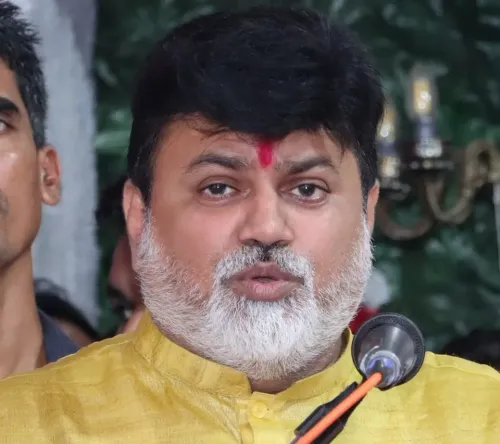
Responding to a Calling Attention motion raised by MLA Sudhir Mungantiwar over severe pollution from coal washeries, mines, cement units, and thermal power plants in Chandrapur, Munde said she had personally visited affected villages and industrial sites to assess the public health impact.
The minister directed the immediate issuance of a closure notice to Mahamaya Coal Washery after its management failed to appear at a mandatory pollution-related hearing. She further announced that a comprehensive environmental audit of all thermal power plants in the district will be conducted.
The government will enforce strict measures on fly ash management, transport regulations, and coal dust mitigation. Implementation of Flue Gas Desulfurization (FGD) systems will be fast-tracked — a step that former environment minister and Shiv Sena (UBT) legislator Aaditya Thackeray had strongly advocated. A committee under the District Collector is already assessing crop damage caused by industrial emissions, and the administration has been directed to ensure industries comply with compensation orders.
Notably, a new committee comprising legislators, experts from IIT Powai, and eco-friendly entrepreneurs will be formed to review and revise bank guarantee amounts for polluting industries — a financial lever designed to make non-compliance more costly. Strategic decisions are also underway with the Revenue and Industry departments to promote afforestation, establish green belts, and rehabilitate the worst-affected villages.
'Our objective is not to shut down industries and disrupt employment, but to ensure that businesses actively invest in clean, pollution-control technologies,' Munde stated. MLAs Kishore Jorgewar, Nana Patole, Rajesh Pawar, Devrao Bhongale, Bhaskar Jadhav, and Jyoti Gaikwad also participated in the discussion alongside Thackeray.
Bhiwandi Textile Units: Mandatory Shift to PNG, CNG, or LPG
Responding to a separate Calling Attention motion raised by MLA Abu Azmi on pollution in the Bhiwandi textile cluster, Munde made it mandatory for yarn dyeing units to transition to cleaner fuels — specifically PNG, CNG, or LPG. Dyeing units are now strictly prohibited from burning hazardous materials such as plastic, wood, or solid waste in boilers.
Of the 254 textile-related industries operating in the Bhiwandi region, 74 fall under the safe 'Green' category, while 54 chemical-processing dyeing units are classified under the 'Orange' category and are under strict monitoring by the Maharashtra Pollution Control Board (MPCB).
Acknowledging that the high cost of cleaner fuels poses a challenge for small-scale units, Munde said the Environment Department will hold discussions with the Industry Department and local municipal bodies to explore subsidies or financial assistance for the transition.
Mankhurd-Govandi Belt: SMS Company Ordered to Relocate
Addressing concerns about Ready Mix Concrete (RMC) plants and the SMS Company in the Mankhurd-Govandi belt, the minister assured the assembly that continuous monitoring is underway. The SMS Company has been directed to relocate to the Ambernath zone of the Maharashtra Industrial Development Corporation (MIDC).
Munde gave a firm assurance that until relocation is complete, the company will remain legally bound to comply with all emission norms, with strict action promised for any violations.
What Comes Next
The multi-pronged plan spans regulatory enforcement, financial incentives, inter-departmental coordination, and community rehabilitation — a notably broader scope than previous single-sector crackdowns. Whether the timelines hold, particularly on FGD fast-tracking and the IIT Powai committee's formation, will be the key measure of follow-through in the months ahead.
Point of View
Which historically works better than notice-and-forget enforcement. But Chandrapur has been on Maharashtra's pollution radar for years, and the gap between assembly commitments and ground-level compliance has been wide. The FGD fast-tracking claim deserves scrutiny: thermal plant operators have resisted FGD installation nationally on cost grounds, and 'fast-tracking' without a binding deadline is a phrase the record does not support. The Bhiwandi mandate is more immediately enforceable, but subsidies for small dyeing units — still unquantified — will determine whether the fuel transition happens or simply drives units underground.
NationPress
24 Sept 2026
Frequently Asked Questions
What is the Maharashtra government's pollution action plan for Chandrapur?
The plan, announced by Environment Minister Pankaja Munde on 25 June, includes a pilot project for Chandrapur's industrial belt, an immediate closure notice for Mahamaya Coal Washery, a comprehensive audit of all thermal power plants, fast-tracking of FGD systems, and a new committee with IIT Powai experts to revise bank guarantees for polluting industries.
What has the Maharashtra government mandated for Bhiwandi textile units?
Yarn dyeing units in Bhiwandi are now required to switch to cleaner fuels — PNG, CNG, or LPG. Burning plastic, wood, or solid waste in boilers is strictly prohibited. The Environment Department will explore subsidies for small-scale units struggling with the higher cost of clean fuel.
How many Bhiwandi textile units are under pollution monitoring?
Of 254 textile-related industries in the Bhiwandi region, 54 chemical-processing dyeing units fall under the 'Orange' category and are under strict monitoring by the Maharashtra Pollution Control Board (MPCB). Another 74 units are in the safe 'Green' category.
What action has been taken against the SMS Company in Mankhurd-Govandi?
The SMS Company has been ordered to relocate to the Ambernath zone of the Maharashtra Industrial Development Corporation (MIDC). Until relocation is complete, it must comply with all emission norms, with strict action promised for any violations.
Why is Chandrapur considered a critical pollution zone in Maharashtra?
Chandrapur hosts a dense cluster of coal washeries, mines, cement units, and thermal power plants, whose combined emissions have severely impacted public health and caused crop damage in surrounding villages. Minister Munde said she personally visited affected sites to assess the scale of the problem before announcing the action plan.