Nagaland EMRS schools score 100% pass rate in HSLC Exam 2026
Synopsis
Every tribal student enrolled in Nagaland's three functional Eklavya Model Residential Schools passed the HSLC Exam 2026 — a clean sweep across 751 students. With 19 more campuses stuck in construction limbo, the result is both a proof of concept and a reminder of how much of the model remains unbuilt.
Key Takeaways
All three functional Eklavya Model Residential Schools (EMRS) in Nagaland recorded a 100 per cent pass rate in the HSLC Examination 2026 .
Total enrolment across the three operational schools stands at 751 students .
A total of 22 EMRSs have been sanctioned for Nagaland; only 3 are fully operational, with 19 under construction.
Chief Minister Neiphiu Rio has stated the government aims to operationalise at least 19 under-construction EMRSs by next year.
Construction delays are attributed to land disputes, inadequate power and water connectivity, and missing approach roads.
More than 86.5 per cent of Nagaland's population of over two million belongs to 17 recognised tribal communities .
All three functional Eklavya Model Residential Schools (EMRS) in Nagaland recorded a 100 per cent pass rate in the High School Leaving Certificate (HSLC) Examination 2026, officials confirmed on Thursday, 9 July. The achievement marks a significant milestone in tribal education in a state where more than 86.5 per cent of the population belongs to recognised tribal communities.
Key Developments
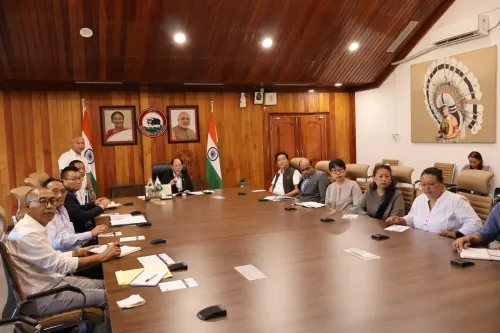
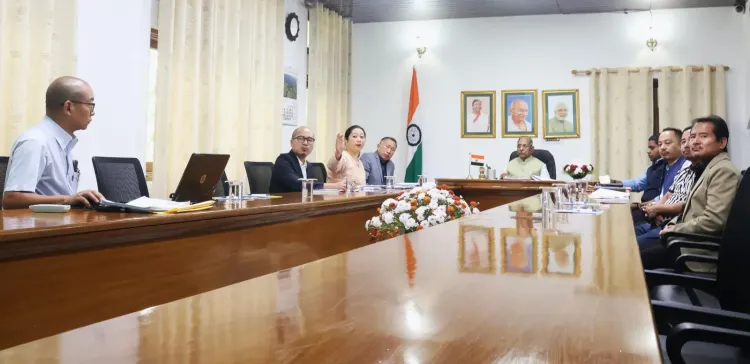
The results were highlighted during a comprehensive review meeting chaired by Nagaland Governor Nand Kishore Yadav at Lok Bhavan in Kohima. Officials from the Tribal Affairs Department briefed the Governor on the performance of the three operational EMRS campuses, which together serve a total enrolment of 751 students. All three schools cleared the HSLC examination without a single failure.
The Governor also reviewed the construction status of new EMRS campuses across various districts, with officials flagging delays caused by land-related disputes, inadequate power and water connectivity, and the absence of approach roads.
Scale of the EMRS Programme in Nagaland
A total of 22 EMRSs have been sanctioned for Nagaland. Of these, only three are currently fully operational, while the remaining 19 are at various stages of construction. Chief Minister Neiphiu Rio had earlier informed the Nagaland Assembly that the state government is working to operationalise at least 19 under-construction EMRSs by next year — an ambitious target given the infrastructure bottlenecks currently on record.
EMRSs are designed to deliver quality residential education to students from tribal communities in remote areas, with a mandate to improve access to modern schooling while preserving indigenous cultural identity.
What the Governor Reviewed
The Tribal Affairs Department made a comprehensive presentation covering key schemes, infrastructure projects, and implementation status of various programmes. Officials presented details on budget allocations, progress under Article 275(1) of the Constitution, the Development Action — Janjatiya Unnat Gram Abhiyan (DA-JUGA), the Pradhan Mantri Adi Adarsh Gram Yojana (PMAAGY), and a range of community infrastructure initiatives aimed at improving socio-economic conditions in tribal areas.
Governor Yadav reviewed both completed and ongoing projects, stressing the need for timely execution, optimal utilisation of resources, and transparent coordination among all stakeholders to ensure benefits reach intended beneficiaries.
Why This Matters
Nagaland's 17 recognised tribal communities account for over 86.5 per cent of the state's population of more than two million. Quality residential schooling in remote tribal belts has historically been limited, making the EMRS network a critical equity intervention. The 100 per cent HSLC pass rate — across all three functional schools — signals that the model, where it is fully operational, is delivering measurable academic outcomes. The challenge now lies in replicating that performance across the 19 campuses yet to come online. The review meeting was attended by senior officers of the Tribal Affairs Department and officials from the Governor's Secretariat.
Point of View
But the real story is the gap between sanction and delivery: 22 EMRSs approved, only 3 running. The infrastructure bottlenecks — land disputes, no roads, no power — are not new complaints; they are the chronic failure mode of centrally-funded tribal schemes in the Northeast. Chief Minister Rio's pledge to operationalise 19 campuses by next year is an ambitious ask given that these barriers have persisted through multiple budget cycles. The academic success of the three functional schools is precisely the argument for urgency on the remaining 19 — and the Governor's review meeting, while welcome, needs to translate into a hard construction deadline, not another presentation.
NationPress
8 Oct 2026
Frequently Asked Questions
What is the HSLC pass rate achieved by Nagaland's EMRS schools in 2026?
All three functional Eklavya Model Residential Schools in Nagaland recorded a 100 per cent pass rate in the High School Leaving Certificate (HSLC) Examination 2026, covering a combined enrolment of 751 students.
How many EMRS schools are operational in Nagaland?
Three EMRSs are currently fully operational in Nagaland. A total of 22 have been sanctioned by the government, with the remaining 19 at various stages of construction.
What is delaying the construction of new EMRS campuses in Nagaland?
Officials cited land-related disputes, inadequate power and water connectivity, and the absence of approach roads as the primary factors affecting timely completion of the under-construction EMRS campuses.
What did Governor Nand Kishore Yadav review at the Lok Bhavan meeting?
Governor Yadav chaired a comprehensive review of the Tribal Affairs Department on 9 July, covering EMRS performance, budget allocations, progress under Article 275(1), the DA-JUGA scheme, the PMAAGY programme, and various community infrastructure projects for tribal areas.
Who are the intended beneficiaries of the EMRS programme in Nagaland?
EMRSs are designed to provide quality residential education to students from tribal communities in remote areas. More than 86.5 per cent of Nagaland's population of over two million belongs to 17 recognised tribal communities, making the scheme a major equity initiative for the state.