Kezoma village revives millet farming via mechanisation, double-season harvest in Nagaland
Synopsis
A Nagaland village that had not grown millet for over a decade has gone from zero cultivation in 2024 to double-season farming in 2026, with a single Millet Festival generating ₹13–14 lakh in one day. Kezoma's step-by-step revival — mill provision, thresher support, sprinkler irrigation — is now a live blueprint for traditional crop recovery across the northeast.
Key Takeaways
Kezoma village in Kohima district, Nagaland revived millet cultivation from zero hectares in 2024 after the crop had been absent for over a decade .
A millet mill provided by the District Agriculture Office cut post-harvest labour drudgery by approximately 80 per cent , spurring wider farmer adoption.
The village's first Millet Festival in 2025 marketed approximately 4,000 kg of grain and generated around ₹13–14 lakh in a single day .
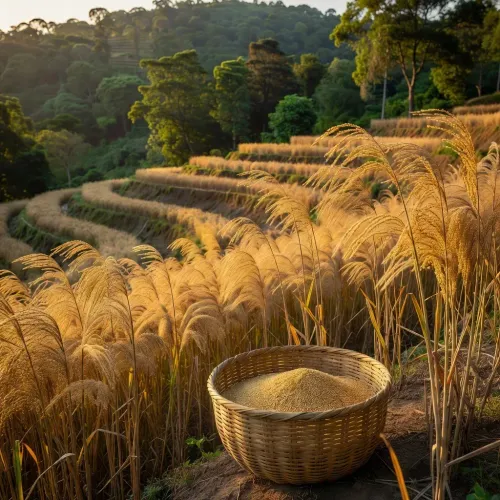
Total village millet production is now estimated at 12,000–13,000 kg , with average yields of 2,000–2,500 kg per hectare .
Double-season cultivation was introduced in 2025 and scaled to two hectares in 2026, supported by a sprinkler irrigation system under the Per Drop More Crop (PDMC) scheme.
Officials describe the initiative as a replicable model for millet revival and sustainable agriculture across Nagaland .
Kezoma village in Nagaland's Kohima district has staged a remarkable agricultural turnaround, reviving millet cultivation from zero hectares to a thriving, double-season farming system through a combination of departmental support, farm mechanisation, and active community participation. The initiative, launched in 2024 by the District Agriculture Office, Kohima, in collaboration with the Kezoma Village Council, is now being cited as a replicable model for sustainable agriculture across Nagaland.
A Decade of Disappearance, Then a Restart
According to a District Agriculture Office official, millet cultivation had completely vanished from Kezoma for over a decade, leaving an entire generation with no familiarity with the crop. Recognising its nutritional value and economic potential, the revival programme began with farmer mobilisation, awareness drives, and seed distribution. From a baseline of zero hectares, cultivation reached one hectare in the first year of the programme.
A critical early intervention was the provision of a millet mill by the District Agriculture Office, which reduced post-harvest labour drudgery by approximately 80 per cent. Officials noted that the ease of mechanised processing directly encouraged more farmers to take up cultivation, strengthening confidence in millet's commercial viability.
Millet Festival Generates ₹13-14 Lakh in a Single Day
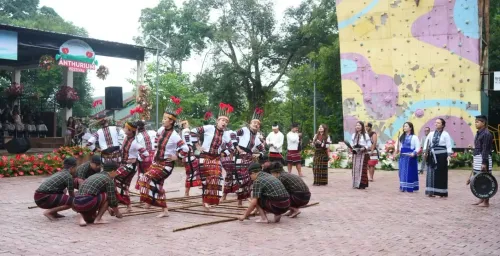
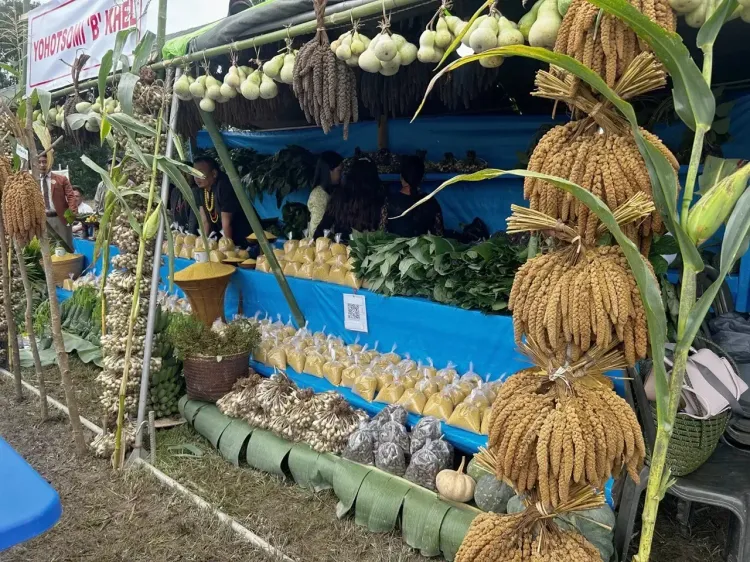
In 2025, Kezoma hosted its first-ever Millet Festival, which became a showcase for local produce and value-added millet products. Approximately 4,000 kg of millet grain was displayed and marketed, with reported productivity of 20–25 quintals per hectare across two hectares. The combined sale of millet grain and processed products reportedly generated ₹13–14 lakh in a single day, demonstrating the crop's potential as a meaningful income source for village households.
This comes amid a broader national push under the International Year of Millets 2023 legacy, with several northeastern states exploring millet revival as both a nutritional and livelihood strategy. Kezoma's results offer concrete, ground-level evidence of what that effort can yield.
Mechanisation and Irrigation Support in 2026
Building on the festival's success, the District Agriculture Office supplied an additional millet mill and a millet thresher in 2026 to expand processing capacity. Average yield has reached approximately 2,000–2,500 kg per hectare, with total village production estimated at 12,000–13,000 kg.
A particularly notable development is the introduction of double-season millet cultivation. Initially undertaken on an experimental basis in 2025, the second crop gained traction after a successful harvest. In 2026, approximately two hectares were brought under the second crop, with harvesting expected by November. To address water availability constraints, a sprinkler irrigation system was installed under the Per Drop More Crop (PDMC) scheme, supporting year-round water management and a more productive multi-crop calendar.
Why Kezoma's Model Matters
The village's journey — from complete absence of millet farming to organised double-season production with market linkages — highlights the interdependence of farmer awareness, mechanisation, irrigation, technical guidance, and access to markets. Notably, the intervention required no single large capital outlay; instead, incremental inputs at each stage compounded into a structural shift in the local agricultural economy.
Officials have flagged the initiative as a promising template for replication across other villages in Nagaland and potentially across the northeast, where traditional crops have similarly retreated over the past two to three decades.
With the second crop harvest due by November 2026 and processing infrastructure now in place, Kezoma's millet story appears set to deepen further — a rare case of a traditional crop making a commercially credible comeback.
Point of View
Slashing labour, and only then did area expansion follow. That order of intervention is the real lesson, and it is one most top-down agricultural schemes miss by leading with seed distribution rather than processing infrastructure. The ₹13–14 lakh single-day festival revenue is also a reminder that market linkage is not a soft add-on — it is what converts demonstration plots into sustained farmer commitment. Whether the district can replicate this model elsewhere will depend on whether it scales the institutional coordination, not just the equipment supply.
NationPress
27 Oct 2026
Frequently Asked Questions
How did Kezoma village revive millet cultivation in Nagaland?
The revival was led by the District Agriculture Office, Kohima, in collaboration with the Kezoma Village Council from 2024 onwards, starting with farmer mobilisation, awareness programmes, and seed distribution. The provision of a millet mill, which cut post-harvest labour by about 80 per cent, was a key early breakthrough that encouraged more farmers to participate.
What was achieved at Kezoma's first Millet Festival in 2025?
Kezoma's first Millet Festival in 2025 showcased approximately 4,000 kg of millet grain and a range of value-added products, generating around ₹13–14 lakh in a single day. It served as both a market platform and a demonstration of millet's commercial viability.
What is double-season millet cultivation and how is it practised in Kezoma?
Double-season millet cultivation means growing two millet crops in a single year instead of one, extending the productive window and increasing total output. In Kezoma, around two hectares were brought under a second crop in 2026, supported by a sprinkler irrigation system installed under the Per Drop More Crop (PDMC) scheme to address water shortages.
What is the current millet production level in Kezoma village?
As of 2026, average yield in Kezoma stands at approximately 2,000–2,500 kg per hectare, with total village production estimated at 12,000–13,000 kg. This compares with zero production when the programme began in 2024.
Can Kezoma's millet revival model be replicated in other Nagaland villages?
Officials from the District Agriculture Office have described Kezoma's model — combining mechanisation, irrigation support, market linkages, and community participation — as a template that can be replicated across other villages in Nagaland. The second millet crop harvest, expected by November 2026, will provide further evidence of its scalability.