General Naravane: Govt Fully Backed Army in 2020 China Standoff
Synopsis
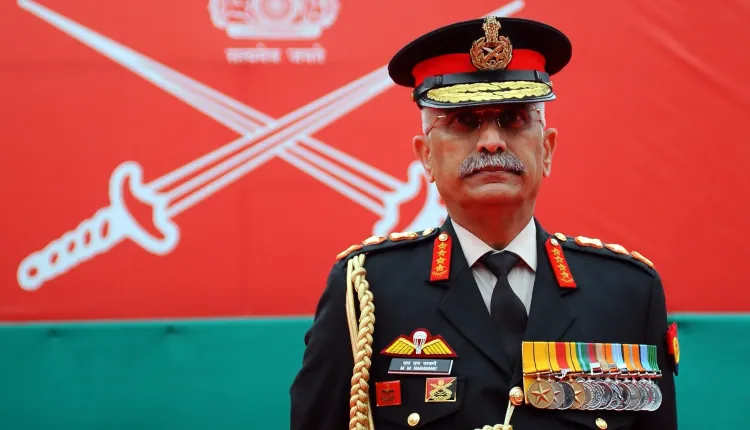
Former Army Chief General Naravane has fired back at Rahul Gandhi's 'abandoned general' narrative, revealing that PM Modi's 'do what you think is right' instruction was a gesture of total operational trust — not a vacuum of command. His clarification reframes the entire political controversy around the 2020 China standoff.
Key Takeaways
General Manoj Mukund Naravane , former Indian Army Chief, has firmly denied that the military lacked political direction during the 2020 China-India standoff .
PM Modi's instruction — "do what you think is right" — was interpreted by Naravane as a grant of total operational freedom , not an absence of command.
Indian soldiers have standing authority to open fire in self-defence and did not require explicit political orders during the border crisis.
Naravane's unpublished memoir, Four Stars of Destiny , remains under Ministry of Defence review ; the General declined to comment on its contents during the process.
He credited subordinate field commanders for India's advantage at the disengagement negotiating table following the June 2020 Galwan Valley confrontation.
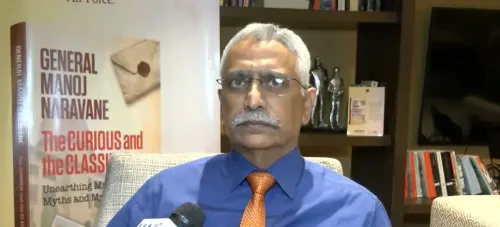
The General has released a new book, The Curious and the Classified , signalling his continued public engagement on defence matters.
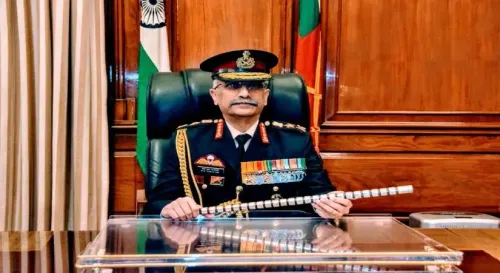
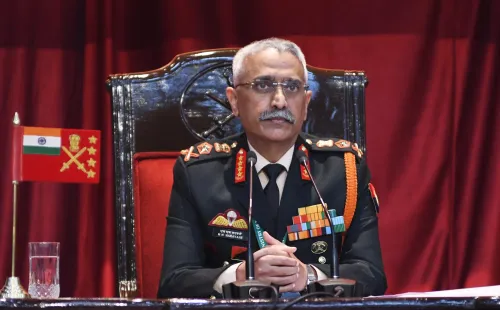
New Delhi, April 23: Former Indian Army Chief General Manoj Mukund Naravane has categorically refuted allegations that the military was left without political direction during the 2020 China-India standoff, stating unequivocally that the government and the entire nation stood firmly behind the armed forces throughout the crisis. Speaking to NDTV, the retired four-star general pushed back against a politically charged narrative that had gained momentum in recent weeks, offering a firsthand account of the command dynamics during one of India's most tense border confrontations in decades.
The Controversy and Rahul Gandhi's Claims
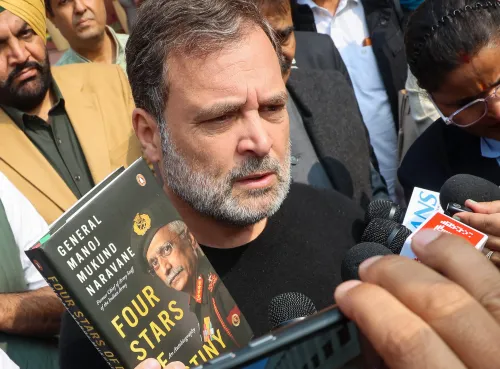
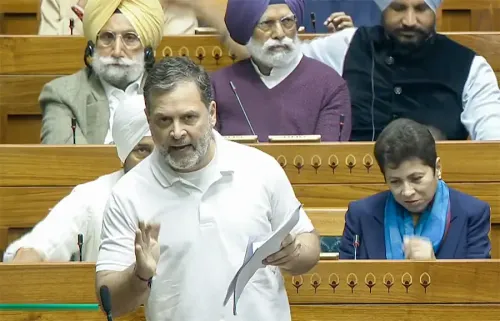
The political storm was triggered by references to General Naravane's unpublished memoir, Four Stars of Destiny, which reportedly documented that Prime Minister Narendra Modi's instruction to him during the face-off at Rechin La pass was to "do what you think is right." Congress leader Rahul Gandhi seized on this passage, publicly suggesting that the General had been abandoned by political leadership at the height of the border tensions.
The opposition's interpretation framed the PM's remark as an absence of clear strategic direction — a vacuum of command during a live military crisis. However, General Naravane offered a starkly different reading of the same words, one rooted in operational military culture rather than political optics.
Naravane's Interpretation: Trust, Not Abandonment
General Naravane told NDTV that he viewed the Prime Minister's directive as a significant gesture of trust, interpreting it as being granted total freedom of operation. He argued this was the correct approach, given that the military hierarchy possesses the most accurate, real-time understanding of ground realities, troop capabilities, and tactical options.
He acknowledged that leadership can feel like a lonely position but drew a sharp distinction between loneliness and abandonment. "I felt the entire country and the army were behind me," he stated, adding that any course of action he chose would have carried full government backing. This framing redefines the narrative — from one of political negligence to one of institutional trust between civilian and military leadership.
Standing Orders to Fire: No Ambiguity on the Front Lines
On the specific and sensitive question of whether Indian troops required an explicit order to open fire, General Naravane was unambiguous. He confirmed that Indian soldiers have always held standing authority to open fire in self-defence — a foundational principle of Rules of Engagement that does not require real-time political clearance.
He clarified that if the personal safety of soldiers or the integrity of their positions were at stake, troops were at full liberty to act. This statement carries significant weight: it directly addresses public anxiety about whether India's frontline soldiers at Galwan Valley and surrounding sectors were operationally empowered during the June 2020 confrontations that resulted in the deaths of 20 Indian Army personnel.
The Unpublished Memoir and MoD Review
Regarding his first book, Four Stars of Destiny, which remains under mandatory review by the Ministry of Defence (MoD), General Naravane maintained a principled and disciplined stance. He declined to elaborate on the book's specific contents, explaining that doing so would constitute a backdoor entry into public discourse while the official vetting process is still ongoing.
This adherence to protocol is notable: retired senior officers are required to submit memoirs for MoD clearance to ensure no classified information is inadvertently disclosed. The General confirmed he has since moved forward, having recently released a new work titled The Curious and the Classified.
Credit to Field Commanders and the Bigger Strategic Picture
Reflecting on the overall outcome of the 2020 Eastern Ladakh standoff, General Naravane credited the resolute and decisive action of his subordinate commanders for giving India a tangible advantage at the diplomatic and military negotiating table. He reaffirmed that faith and trust between the government and the armed forces remained a two-way street throughout the prolonged crisis.
This is a strategically important assertion. The India-China disengagement process — which has seen multiple rounds of Corps Commander-level talks — has been a slow, painstaking diplomatic exercise. India's firm posture on the ground, including the counter-occupation of key heights in Kailash Range in August 2020, is widely credited with forcing China's People's Liberation Army (PLA) back to the negotiating table. General Naravane's remarks suggest that operational boldness, backed by institutional trust, was the cornerstone of that posture.
This comes amid broader questions about civil-military relations in India, a topic that has periodically surfaced in policy debates. The 2020 standoff was the most serious military confrontation between India and China since the 1962 war, making the command dynamics of that period a matter of lasting historical and strategic interest. As India continues to strengthen border infrastructure under the Border Roads Organisation (BRO) and deploy advanced surveillance systems along the Line of Actual Control (LAC), the lessons of 2020 will continue to shape doctrine and preparedness for years to come.
Point of View
Far from being negligence, reflects a textbook principle of mission command — a doctrine NATO armies actively train for. What's more revealing is that Naravane's account implicitly validates India's bold counter-occupation of Kailash Range heights, a move that gave New Delhi real leverage in disengagement talks. The real story here isn't political point-scoring — it's that India's military-civil compact held firm under its most severe test in six decades.
NationPress
3 Oct 2026
Frequently Asked Questions
What did General Naravane say about the 2020 China standoff?
General Naravane stated that the government and the entire country fully backed the Indian Army during the 2020 China standoff. He rejected claims of being abandoned, saying PM Modi's instruction to 'do what you think is right' was a gesture of complete operational trust, not a lack of direction.
What is General Naravane's book Four Stars of Destiny about?
Four Stars of Destiny is General Naravane's unpublished memoir that reportedly covers his tenure as Army Chief, including the 2020 India-China standoff. The book is currently under mandatory review by the Ministry of Defence and has not yet been cleared for public release.
Did Indian soldiers have orders to shoot during the 2020 China standoff?
Yes. General Naravane confirmed that Indian soldiers have always held standing authority to open fire in self-defence without requiring explicit real-time orders. Troops were fully empowered to act if their safety or the integrity of their positions was threatened.
What was Rahul Gandhi's claim about General Naravane?
Congress leader Rahul Gandhi suggested that General Naravane was abandoned by political leadership during the 2020 China standoff, citing passages from the General's unpublished memoir. Naravane has directly refuted this interpretation, calling it a misreading of what was a deliberate gesture of trust.
What is the current status of India-China border relations after the 2020 standoff?
Following the 2020 Eastern Ladakh standoff, India and China have undergone multiple rounds of Corps Commander-level talks leading to phased disengagement at several friction points. India's firm ground posture, including the occupation of Kailash Range heights, is credited with strengthening New Delhi's negotiating position.