Ex-Army Chief Naravane: Never Seen Published Copy of My Book
Synopsis
Former Army Chief Gen Naravane says he has never seen a published copy of his own memoir 'Four Stars of Destiny', throwing serious doubt on the alleged copy displayed by Rahul Gandhi outside Parliament. Penguin confirms no copy is in circulation — raising the explosive question: where did it come from?
Key Takeaways
General (Retired) Manoj Mukund Naravane stated on April 25, 2025 that he has never seen a final published copy of his own memoir 'Four Stars of Destiny' .
Publisher Penguin has officially confirmed that no copy of the book is in circulation — in print, hard copy, or digital format.
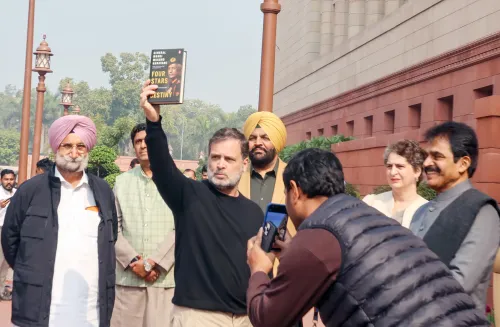
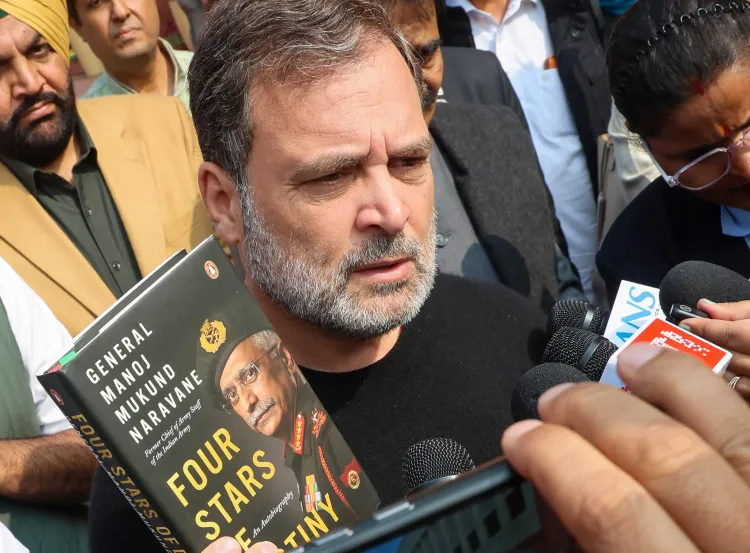
Rahul Gandhi , as Lok Sabha Leader of Opposition , was seen outside Parliament with an alleged copy of the unpublished book, using it to question the government's handling of the 2020 India-China border standoff .
General Naravane defended the phrase "Jo uchit lage, vo karo" , saying it reflects the government's full institutional trust in the Army — not a lack of political direction.
He described India's response to the 2020 Galwan Valley clash as a "whole-of-nation effort" and called China's retreat a clear military victory for India.
The provenance of the alleged manuscript copy remains unverified and is likely to face legal and political scrutiny in the coming weeks.
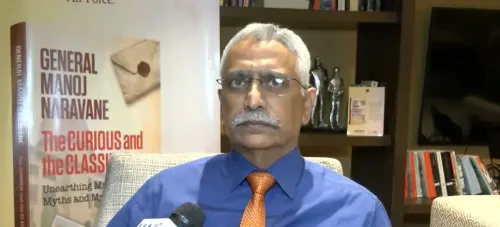
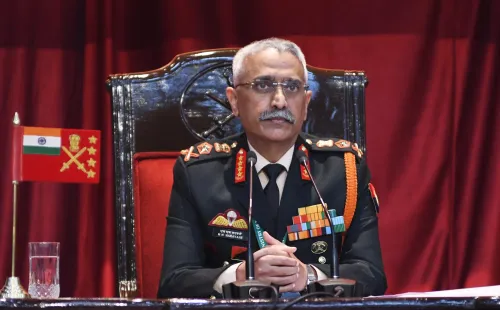
New Delhi, April 25: Former Indian Army Chief General (Retired) Manoj Mukund Naravane has stated that he himself has never seen a final published copy of his memoir 'Four Stars of Destiny', and is therefore unable to explain how Lok Sabha Leader of Opposition (LoP) Rahul Gandhi obtained what was claimed to be a copy of the unpublished book. Speaking exclusively to IANS, General Naravane also defended the government's conduct during the 2020 India-China Galwan standoff, asserting that the People's Liberation Army (PLA) was forced to retreat due to India's unified military and diplomatic response.
The Unpublished Book Controversy
The controversy erupted after Rahul Gandhi was seen outside Parliament holding what he claimed was a copy of General Naravane's memoir, using it to question the Union government's handling of the 2020 India-China border standoff. The alleged excerpt cited a line suggesting the Army was told to "do whatever you deem appropriate" (Jo uchit lage, vo karo), which the opposition interpreted as a sign of the government's disengagement from military decision-making.
General Naravane categorically distanced himself from the controversy. "I would just say that I myself haven't seen a final copy of that book as an author. So, I can't say which book it was or where it came from," he told IANS. He also pointed to the publisher's official position: Penguin has clearly stated that "no copy of that book is in circulation, either in print, hard copy, or soft copy."
This raises a significant question that neither the opposition nor the government has fully answered — if no copy exists in any format, how did a physical copy allegedly surface in the hands of a senior political leader outside the country's highest legislative body?
Naravane Defends Government's Military Trust
Addressing the opposition's interpretation of the alleged excerpt, General Naravane argued that the phrase had been taken out of context and a "wrong perspective" was derived from it. He stressed that the Union government has always extended "full freedom" to the armed forces in operational matters, which is a sign of institutional trust — not abdication of responsibility.
"The Army is always given full freedom when it comes to taking action. And the freedom given implies that the government has full trust in its Army. So this should be viewed from that perspective. If you always want to see the glass half empty, then there is no solution for that," he said.
This is a significant rebuttal to the opposition's narrative, which sought to portray the government as having left the Army without clear political direction during one of the most serious border crises in decades.
India's Response to the 2020 Galwan Standoff
General Naravane emphasized that India's response to the 2020 Galwan Valley clash — which resulted in the deaths of 20 Indian soldiers and an unspecified number of Chinese PLA troops — was a "whole-of-nation effort" involving political, diplomatic, and military coordination.
"It's never just one branch or organisation. In this, the political dispensation has a contribution, the diplomatic side has a contribution, and the military has a contribution. So, everyone moving forward together is a whole-of-nation effort," he stated.
He further pointed to visible evidence of China's retreat along the Line of Actual Control (LAC) as proof of India's success. "All the things coming on TV screens showing them dismantling their bunkers — such things had never happened before, that China stepped back. We forced them to step back. So if this isn't a victory, then what is?" he said, challenging those who question the outcome of the standoff.
Broader Implications: Opposition's Political Gambit
The use of an alleged unpublished memoir by the Leader of Opposition to target the government on a sensitive national security matter is a politically charged move. It comes at a time when the India-China border situation remains a flashpoint in domestic politics, with both sides seeking to define the narrative around what actually transpired in Eastern Ladakh between 2020 and 2024.
Notably, the disengagement process at friction points along the LAC — including Depsang Plains and Demchok — was confirmed by the Indian government in October 2024, following months of diplomatic negotiations. Critics had long questioned whether India had conceded ground, while the government maintained that patrolling rights were restored.
General Naravane's statements now add another layer to this debate — a former Army Chief defending both the government's conduct and the military's success, while simultaneously being unable to verify the provenance of his own alleged memoir. The credibility of the document Rahul Gandhi displayed remains in serious doubt, and its origin is likely to remain a subject of political and legal scrutiny in the weeks ahead.
What Happens Next
With Penguin Publishers on record denying any circulation of the book, and General Naravane himself unable to confirm the authenticity of the alleged copy, the opposition's claims face a credibility challenge. Legal questions around the potential leak or fabrication of an unpublished manuscript could also emerge. Meanwhile, the political battle over the 2020 India-China standoff narrative is far from over, and the memoir — whenever officially published — is expected to become one of the most closely scrutinized military accounts in recent Indian history.
Point of View
It signals a serious breach in the publishing or security ecosystem. If it did not, the opposition has deployed a potentially forged document on national security — a far graver matter. General Naravane's inability to even confirm the book's authenticity, combined with Penguin's categorical denial, leaves the opposition's credibility dangerously exposed. India's mainstream media must press harder on this provenance question rather than simply amplifying the political theatre.
NationPress
9 Oct 2026
Frequently Asked Questions
What is General Naravane's book 'Four Stars of Destiny' about?
'Four Stars of Destiny' is the unpublished memoir of former Indian Army Chief General (Retired) Manoj Mukund Naravane, reportedly covering his tenure including the 2020 India-China Galwan standoff. As of April 2025, publisher Penguin has confirmed that no copy of the book is in circulation in any format.
How did Rahul Gandhi get a copy of Naravane's unpublished book?
The origin of the alleged copy displayed by Rahul Gandhi outside Parliament remains unexplained. General Naravane himself said he cannot identify the book or its source, and Penguin has stated no copy — print, hard, or soft — has been released.
What did General Naravane say about India's response to the 2020 Galwan standoff?
General Naravane said India's response was a 'whole-of-nation effort' involving political, diplomatic, and military coordination. He asserted that the Chinese PLA was forced to retreat and called it a clear victory, pointing to televised footage of China dismantling its bunkers along the LAC.
What does the phrase 'Jo uchit lage, vo karo' mean in the context of the book controversy?
The phrase, meaning 'do whatever you deem appropriate', was allegedly cited from Naravane's manuscript to suggest the government gave the Army vague direction during the 2020 standoff. General Naravane rejected this interpretation, saying it reflected the government's full trust in the military, not a lack of guidance.
Has Penguin confirmed publishing General Naravane's memoir?
Penguin is the listed publisher for 'Four Stars of Destiny', but as of April 2025, the book has not been published. Penguin has publicly stated that no copy of the book is in circulation in any form — print, hard copy, or digital.