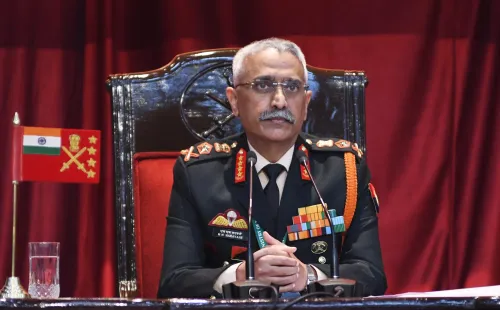
Gen Naravane: Army Given Full Freedom, Govt Has Full Trust in Military
Synopsis
Former Army Chief Gen Naravane reveals the government gave the military 'full freedom' during the 2020 India-China standoff — and says that freedom itself proves the government's complete trust in its forces. He also questions the authenticity of the manuscript Rahul Gandhi displayed in Parliament, citing publisher Penguin's denial of any circulating copy.
Key Takeaways
General Manoj Mukund Naravane confirmed the government gave the Army "full freedom" during the 2020 India-China LAC standoff , calling it a sign of complete governmental trust in the military.
Naravane stated he has never seen a final copy of his unpublished memoir 'Four Stars of Destiny' , and publisher Penguin confirmed no copy is in circulation — raising doubts about the manuscript Rahul Gandhi displayed in Parliament.
Operation Sindoor marked a doctrinal shift: unlike previous strikes at Uri (2016) and Balakot (2019) , it targeted terror group leadership and financial headquarters , not just border camps.
Naravane credited a "whole of nation effort" — combining political, diplomatic, and military action — for forcing the PLA to withdraw from contested LAC positions in 2020.
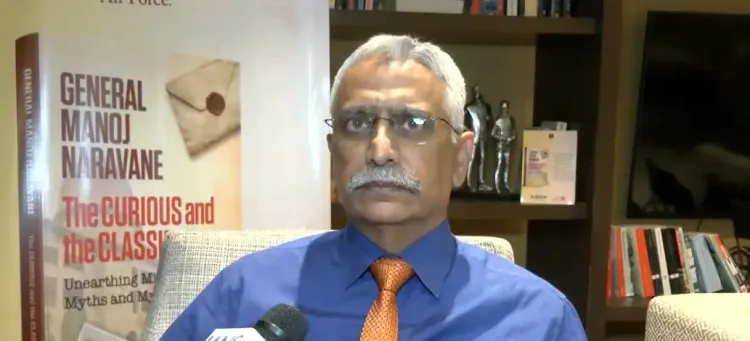
His new book 'The Curious and the Classified: Unearthing Military Myths and Mysteries' contains 25 chapters of little-known Indian military history, including the Mughal-era origin of the phrase "Chak De Phatte" .
Naravane warned India must urgently pursue Atmanirbharta (self-reliance) across defence, food, energy, medicine, and rare earth minerals, drawing lessons from the Russia-Ukraine and West Asia conflicts.
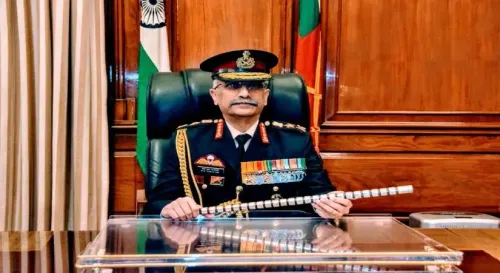
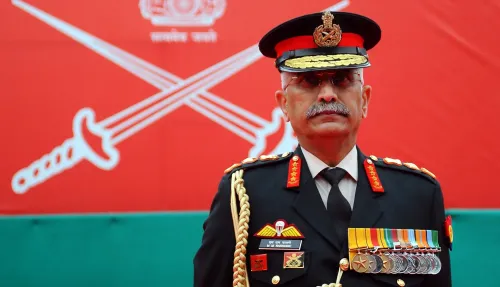
New Delhi, April 25: Former Indian Army Chief General Manoj Mukund Naravane (Retd.) has emphatically stated that the Indian government extended "full freedom" to the armed forces during the 2020 India-China standoff along the Line of Actual Control (LAC), adding that this freedom itself is proof of the government's "full trust" in its military. Speaking exclusively to IANS, the retired four-star general addressed a range of critical issues — from the controversy over his unpublished memoir to Operation Sindoor, the apolitical character of the Indian Army, and lessons India must draw from ongoing global conflicts.
India-China Standoff 2020: Army's Autonomy and the Government's Trust
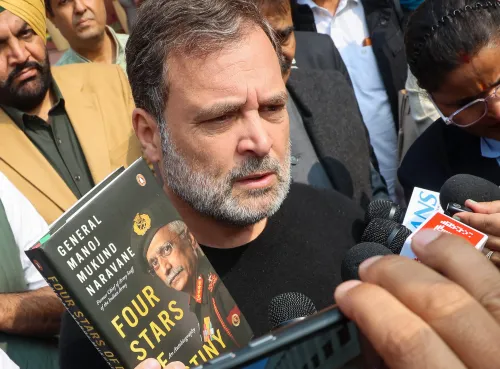
General Naravane directly addressed the political storm triggered by Leader of Opposition Rahul Gandhi's reference to his unpublished memoir, 'Four Stars of Destiny', which Gandhi had reportedly displayed outside Parliament to corner the government. The alleged line in question suggested the Army was told to "do whatever you deem appropriate" — a phrase that critics attempted to frame as governmental abdication of responsibility.
Naravane firmly rejected that interpretation. "The Army is always given full freedom when it comes to taking action. And the freedom given implies that the government has full trust in its Army," he said. He cautioned against viewing such directives through a negative lens, adding that those who "always want to see the glass half empty" will find no satisfactory answer regardless of the facts.
On the authenticity of the manuscript Gandhi displayed, Naravane was unequivocal: "I myself haven't seen a final copy of that book as an author." He noted that publisher Penguin had categorically stated that "no copy of that book is in circulation, either in print, hard copy, or soft copy" — raising serious questions about the provenance of the document Gandhi held.
China's Retreat from LAC: A Victory India Must Acknowledge
Reflecting on the outcome of the 2020 Galwan Valley standoff, General Naravane described India's response as a "whole of nation effort" — a coordinated push involving political leadership, diplomatic channels, and military force acting in unison. He credited this unified approach for compelling the People's Liberation Army (PLA) to withdraw from contested positions.
"All the things coming on TV screens showing them dismantling their bunkers — such things had never happened before, that China stepped back. We forced them to step back. So if this isn't a victory, then what is?" he said pointedly. This is notable given that the 2020 standoff resulted in the deaths of 20 Indian soldiers in the Galwan Valley in June 2020 — the deadliest clash between the two nations in over five decades — making the eventual PLA withdrawal all the more strategically significant.
Operation Sindoor: Targeting Terror's Leadership, Not Just Its Foot Soldiers
On Operation Sindoor, which is approaching its first anniversary, General Naravane drew a sharp distinction between this operation and previous Indian military responses. While the 2016 surgical strikes post-Uri targeted camps near the Line of Control (LoC), and the 2019 Balakot airstrikes post-Pulwama hit facilities in Pakistan-Occupied Kashmir, Operation Sindoor marked a decisive escalation in strategic targeting.
"This time, we targeted their leadership and headquarters, where the real pain is felt," Naravane said. He explained that in the past, Pakistan-backed terror groups calculated that losing a few operatives on the border was an acceptable cost. By striking financial backers and command structures, India fundamentally altered that calculus. He cited Defence Minister Rajnath Singh's declaration — "Ghar mein ghus ke maarenge" — as a reflection of this new, uncompromising doctrine.
Indian Army's Apolitical Stance: A National Strength, Not a Weakness
General Naravane was equally direct on the question of the Army's apolitical character, pushing back against attempts to drag the military into partisan debate. "The Indian Army and armed forces are totally apolitical in every direction," he stated, while carefully distinguishing between following the lawful orders of elected civilian leadership and becoming politically aligned.
He framed India's military professionalism as a key differentiator from neighbouring countries, particularly Pakistan, where the military has historically dominated civilian governance. "If we have been able to progress so far ahead compared to other neighbouring countries, it is because we are apolitical," he said — a pointed, if indirect, reference to the civil-military dysfunction that has repeatedly destabilised Pakistan's democratic institutions.
New Book, Global Lessons, and the Call for Atmanirbharta
General Naravane also spoke about his latest published work, 'The Curious and the Classified: Unearthing Military Myths and Mysteries' — a 25-chapter volume that demystifies little-known aspects of India's military history for a general audience. Inspired by Congress MP Shashi Tharoor's 'A Wonderland of Words', Naravane said he was motivated to write the book after discovering that even serving military personnel were unaware of many of these stories.
One highlight is the origin of the phrase "Chak De Phatte" — the battle cry of the Sikh Light Infantry, the regiment in which Naravane was commissioned. He traced its roots to Sikh cavalry raids against Mughal camps, where soldiers would lift wooden bridge planks (phatte) during retreat to prevent pursuit — a piece of military history that has since entered mainstream Indian popular culture, most famously through the Shah Rukh Khan film 'Chak De! India'.
On global conflicts, Naravane stressed that the wars in Russia-Ukraine and West Asia underscore the urgent need for India to deepen its Atmanirbharta (self-reliance) — not just in defence hardware, but across food, medicine, energy, rare earth minerals, and critical supply chains. "When such events happen, no one comes to your aid; everyone thinks of themselves," he warned.
As Operation Sindoor nears its first anniversary and India's strategic posture on both its western and northern fronts continues to evolve, General Naravane's assessments offer a rare insider view of the doctrinal shifts shaping India's military future. The publication of 'Four Stars of Destiny' — whenever it officially releases — is expected to reignite political debate over the 2020 standoff and the decision-making frameworks that governed India's response.
Point of View
While the actual architect of those decisions has to publicly clarify he hasn't seen his own book's final copy. The deeper irony is that the 2020 Galwan standoff — where 20 Indian soldiers died and China was eventually pushed back — should have been a moment of national consensus, not partisan point-scoring. Naravane's comparison to Pakistan's civil-military dysfunction is the sharpest line in the interview: India's military professionalism is a strategic asset that political actors on all sides are recklessly gambling with.
NationPress
3 Oct 2026
Frequently Asked Questions
What did Gen Naravane say about the government's role in the 2020 India-China standoff?
General Naravane stated that the government gave the Army 'full freedom' to act during the 2020 India-China standoff, which he said reflects the government's complete trust in its military. He cautioned against interpreting this directive negatively.
Is Gen Naravane's book 'Four Stars of Destiny' published?
No, 'Four Stars of Destiny' remains unpublished. General Naravane confirmed he has not seen a final copy of the book himself, and publisher Penguin stated no copy — in print, hard copy, or soft copy — is currently in circulation.
What is Operation Sindoor and how does it differ from previous Indian military strikes?
Operation Sindoor targeted the leadership and headquarters of terror groups, unlike the 2016 Uri surgical strikes or the 2019 Balakot airstrikes which hit border-area camps. General Naravane says this shift in targeting caused far greater strategic pain to Pakistan-backed terror networks.
What is Gen Naravane's new published book about?
'The Curious and the Classified: Unearthing Military Myths and Mysteries' is a 25-chapter non-fiction book by General Naravane that explores little-known stories and facts from Indian military history. It was inspired by Shashi Tharoor's essay collection 'A Wonderland of Words'.
What did Gen Naravane say about the Indian Army being apolitical?
General Naravane firmly stated that the Indian Army is 'totally apolitical in every direction' and that following orders from civilian leadership does not make the Army political. He credited India's military professionalism as a key reason India has progressed further than its neighbours.