NASA's Artemis II Crew Achieves Historic Space Milestone

Synopsis
NASA’s Artemis II mission has set a new benchmark in human space exploration, surpassing previous distance records. This historic crewed lunar mission not only highlights space advancements but also paves the way for future explorations.
Key Takeaways
Historic Achievement: Artemis II crew sets new distance record.
Significant Milestone: First crewed lunar mission in over fifty years.
Scientific Exploration: High-resolution images and lunar observations conducted.
Future Missions: Paves the way for sustained lunar presence and potential Mars exploration.
Team Effort: Crew members Reid Wiseman, Victor Glover, Christina Koch, and Jeremy Hansen lead the mission.
Washington, April 7 (NationPress) Astronauts participating in NASA’s Artemis II mission have achieved a remarkable feat by establishing a new record for the greatest distance traveled by humans from Earth, marking a significant milestone in the first crewed lunar expedition in over fifty years.
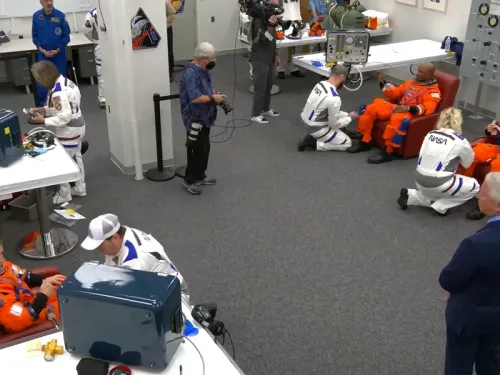
The crew, consisting of four astronauts — Reid Wiseman, Victor Glover, Christina Koch, and Canadian astronaut Jeremy Hansen — crossed this historic boundary just six days into their mission, reaching a distance of 248,655 miles from Earth and eventually peaking at approximately 252,756 miles at the farthest point of their journey.
This achievement surpasses the previous record set during the Apollo 13 mission in 1970, creating a new standard in the realm of human space exploration.
“At NASA, we strive to reach greater heights, explore further, and accomplish what once seemed impossible. Our Artemis II astronauts—Reid, Victor, Christina, and Jeremy—embody this mission,” stated Dr. Lori Glaze, the acting associate administrator for the Exploration Systems Development Mission Directorate.
“Their commitment goes beyond simply breaking records; it ignites our aspirations for a daring future. Their mission is a testament to our promise to return to the Moon’s surface, this time for an extended stay as we establish a Moon Base,” she elaborated.
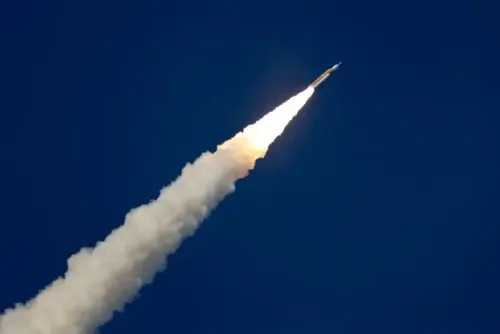
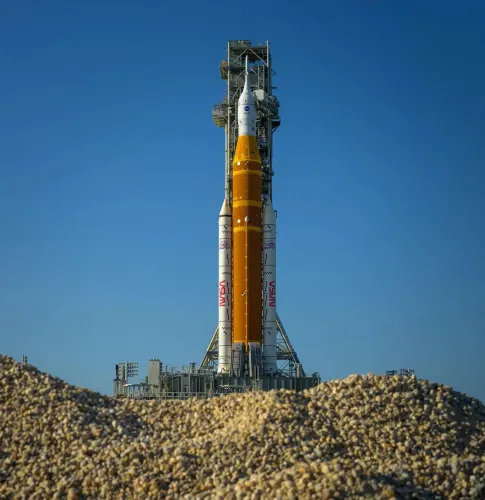
The crew is currently engaged in a ten-day mission aimed at testing the Space Launch System (SLS) rocket and the Orion spacecraft in a deep-space environment with astronauts on board. The mission includes a lunar flyby before making the return journey to Earth.
Reflecting from the Orion spacecraft, Hansen shared his thoughts on this historic moment.
“From the cabin of Integrity, as we exceed the farthest distance that humans have traveled from Earth, we do so in honor of the extraordinary achievements of those who came before us in space exploration,” he remarked.
“We are committed to pushing our journey further into space before Earth pulls us back to all that we cherish. Most importantly, we seize this moment to challenge both this generation and the next to ensure this record is not long-lasting.”
During the lunar flyby, the astronauts conducted extensive observations, capturing high-resolution images of the Moon and examining its surface features, including craters and geological structures. The crew also experienced a solar eclipse as the Moon passed in front of the Sun and dealt with a planned communications blackout lasting around 40 minutes while the spacecraft was positioned behind the Moon.
At one point, the spacecraft approached within about 4,067 miles of the lunar surface, granting the astronauts a rare opportunity to view regions of the Moon that have not been directly seen by humans before.
This mission has generated valuable scientific data through imagery, telemetry, and direct human observation, which will inform future Artemis endeavors.
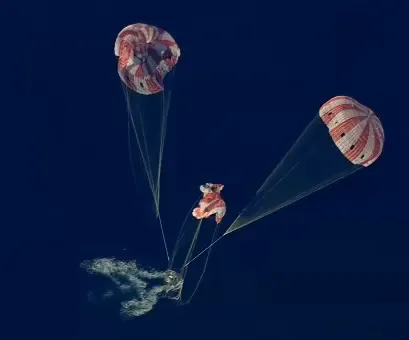
The crew is scheduled to splash down off the coast of San Diego on April 10, where recovery teams will be on hand to assist them with post-flight medical assessments before they return to shore.
Artemis II represents the inaugural crewed mission in NASA’s Artemis program, which aspires to return humans to the Moon and establish a lasting presence there. The program is also viewed as a crucial step towards future human missions to Mars.
The last occasion when astronauts ventured beyond low Earth orbit was during the Apollo missions over fifty years ago. By breaking that record, Artemis II signifies a pivotal advancement in the revival of deep space human exploration and the long-term goals for lunar and interplanetary missions.
Point of View
It is essential to highlight the significance of NASA’s Artemis II mission. This achievement revitalizes public interest in space exploration while underscoring the importance of continued investment in our space programs. The crew's journey is not only a historic milestone but also a crucial step toward future lunar and Martian endeavors.
NationPress
21 Oct 2026
Frequently Asked Questions
What is the Artemis II mission?
The Artemis II mission is NASA's first crewed lunar mission in over fifty years, aimed at testing the Space Launch System (SLS) rocket and Orion spacecraft in deep space.
Who are the astronauts on the Artemis II mission?
The crew includes Reid Wiseman, Victor Glover, Christina Koch, and Canadian astronaut Jeremy Hansen.
What record did the Artemis II crew set?
The Artemis II crew set a new record for the farthest distance traveled by humans from Earth, surpassing the previous record set during the Apollo 13 mission.
What scientific observations were made during the mission?
The crew captured high-resolution images of the Moon, studied its surface features, and experienced a solar eclipse.
When is the crew scheduled to return to Earth?
The crew is scheduled to splash down off the coast of San Diego on April 10.