The Evolution of Political Ideologies: Naxalbari's Shift from Radicalism to Right-Wing Politics
Synopsis
Discover how the Naxalbari movement, once a catalyst for far-Left radicalism, has faded over the decades, giving way to right-wing politics as the region embraces new priorities ahead of the 2026 Assembly elections.
Key Takeaways
Naxalbari's political identity has shifted from far-Left to right-wing.
The BJP has gained significant ground in the region.
Tribal voters are prioritizing development over ideological affiliations.
The influence of Maoism has diminished in the area.
This transformation reflects broader political trends in India.
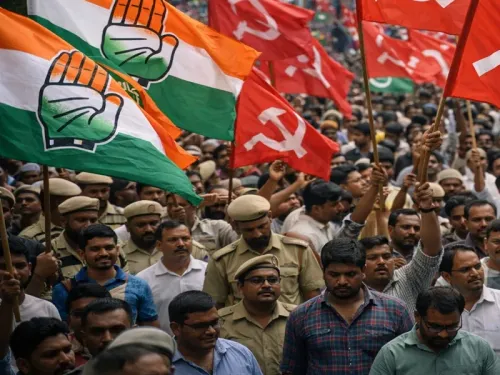
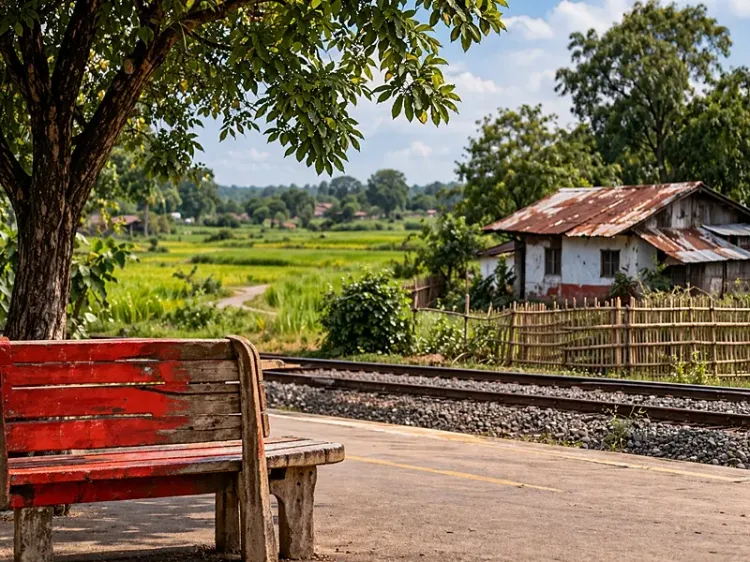
New Delhi, April 16 (NationPress) The railway station still carries the name Naxalbari, yet the far-Left movement that began here in the late 1960s has significantly diminished, fading over almost six decades. The political landscape has undoubtedly changed over the years.
The architects of the movement were staunch advocates of violence over democratic processes, never allowing their ideology to be tested through elections. This era was also characterized by political instability in Kolkata, which experienced the imposition of President’s Rule three times between 1968 and 1977.
In the meantime, the Darjeeling Lok Sabha constituency, which includes the Matigara-Naxalbari (SC) Assembly segment, has seen fierce competition primarily between the Congress and the Left, with some brief intermissions. However, in 2009, BJP leader Jaswant Singh captured the Darjeeling seat, aided by support from the Gorkhaland movement leaders.
Since that pivotal moment, the BJP has continued to hold onto this parliamentary constituency, with S. S. Ahluwalia winning in 2014, followed by Raju Bista in 2019 and the upcoming 2024 election.
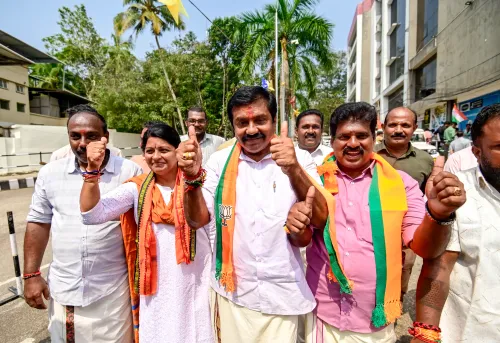
Matigara-Naxalbari is one of the seven Assembly segments in this Lok Sabha constituency and one of five in the Darjeeling district. In the 2021 Assembly elections, the BJP secured four out of five seats, including Matigara-Naxalbari. Leading up to the 2024 Lok Sabha elections, the party was ahead in all these segments.
After the delimitation and the establishment of the Matigara-Naxalbari Assembly constituency, Congress candidate Sankar Malakar defeated the CPI-M's Jharen Roy by approximately 6,800 votes in 2011 and retained the seat in 2016, winning by over 18,600 votes against Trinamool Congress candidate Amar Sinha.
Interestingly, the Trinamool Congress ascended to power in 2011 in coalition with the Congress, only for the two parties to later part ways, with Congress subsequently aligning with the Left.
In 2021, BJP’s Anandamoy Barman triumphed over Trinamool candidate Rajen Sundas by a staggering margin of over 70,800 votes, leaving Malakar far behind.
Meanwhile, the influence of Maoism in the region has diminished but has proliferated in different areas, largely due to internal conflicts within leadership that led to the emergence of new factions.
The Naxalbari movement sparked a wave of far-Left radicalism in India through a peasant uprising against landlords. Nearly sixty years later, however, the birthplace of this movement is leaning towards right-wing politics, indicative of a broader political transformation.
Pioneers like Charu Majumdar, Kanu Sanyal, and Jangal Santhal led the movement, which attracted tribal sharecroppers who were oppressed by landlords at that time.
In 1967, expelled CPI-M radicals established the All India Coordination Committee of Communist Revolutionaries, which later became the Communist Party of India (Marxist-Leninist) in 1969 under Sanyal's leadership.
Majumdar’s pivot towards urban strategies and his call for the obliteration of class adversaries resonated with many youth, particularly university students in cities like Kolkata.
This ideology subsequently spread to regions such as Bihar, Andhra Pradesh, and others.
The disillusionment following this movement was starkly illustrated by an event on March 23, 2010, when residents of Hatighisa village near Naxalbari discovered Kanu Sanyal deceased at his home, with known disagreements between him and Charu Majumdar.
Most former leaders have since renounced armed conflict, and many individuals from the latest generation of Naxal supporters have chosen to engage in the democratic process.
Majumdar passed away under mysterious circumstances in custody at Alipore Central Jail in Kolkata in July 1972.
As the 2006 Assembly elections approached, despite the rising tide for the Trinamool, Sanyal, from his humble abode, reflected on the “excesses” committed by his comrades in prior stages and predicted that “the time is still not here for Mamata Banerjee” to emerge victorious.
Indeed, the Trinamool Congress lost the 2006 elections despite the prevailing excitement. Disenchantment with the violence associated with Naxalism and shifting political allegiances contributed to this outcome.
Now, as the 2026 West Bengal Assembly elections draw near, the BJP seems to be gaining traction amidst the decline of the Left, with tribal voters increasingly favoring development over ideology. This shift to the right emphasizes the diminishing impact of far-Left ideologies, as economic progress and state interventions overshadow the allure of Maoism.
Point of View
The trajectory of the Naxalbari movement illustrates a significant shift in political ideologies in West Bengal. Once a stronghold of far-Left radicalism, the region now leans towards the right, reflecting broader trends in Indian politics amidst changing voter priorities.
NationPress
26 Sept 2026
Frequently Asked Questions
What was the Naxalbari movement?
The Naxalbari movement was a peasant uprising that began in the late 1960s in India, focusing on fighting against landlord exploitation through radical leftist ideologies.
How has the political landscape changed in Naxalbari?
Over the decades, Naxalbari has shifted from far-Left radicalism to a more right-wing political stance, particularly with the rise of the BJP.
Who were the key leaders of the Naxalbari movement?
Prominent leaders included Charu Majumdar, Kanu Sanyal, and Jangal Santhal, who significantly influenced the movement's direction and ideology.
What impact did the Naxalbari movement have on Indian politics?
The movement sparked a wave of far-Left radicalism in India, influencing various regions and political ideologies, although its influence has waned in recent years.
What is the significance of the upcoming 2026 West Bengal Assembly elections?
The 2026 elections are crucial as they indicate a potential further decline of the Left and a strengthening of right-wing politics in the region, reflecting changing voter priorities.