NEET protests expose INDIA Bloc fault lines as leaders detained in Delhi
Synopsis
Rahul Gandhi and Akhilesh Yadav were detained at Modi's doorstep over NEET leaks — but the real story is what the protests reveal about INDIA Bloc's structural fractures. TMC is back at the table after a West Bengal loss, AAP is sniping from the sidelines, and every show of unity is quietly underwritten by state-level electoral self-interest.
Key Takeaways
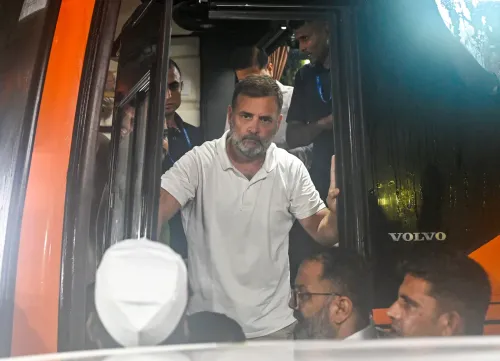
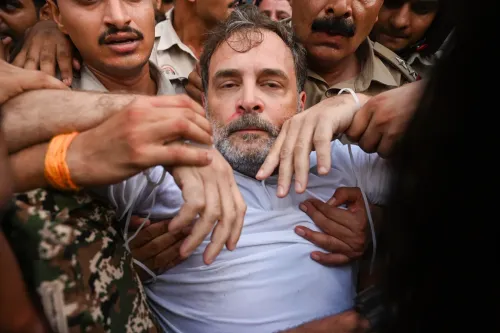
Rahul Gandhi and Akhilesh Yadav were detained by Delhi Police on 22 July during NEET paper leak protests at Lok Kalyan Marg .
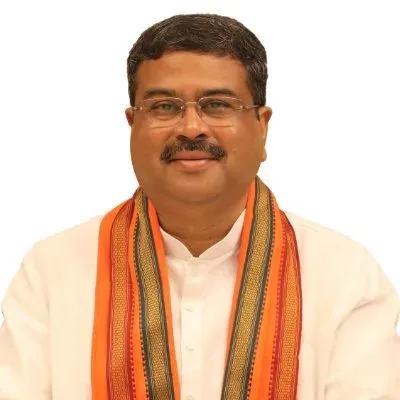
Protesters demanded the resignation of Union Education Minister Dharmendra Pradhan .
Trinamool Congress rejoined Opposition protests in Parliament, reportedly after losing the West Bengal Assembly election .
AAP publicly criticised the Congress-led protests, calling them political theatre, reflecting the bitter Punjab rivalry.
AAP and DMK had previously withdrawn from the INDIA platform following the 2024 Lok Sabha elections .
SP-Congress coordination in Uttar Pradesh is driven by electoral arithmetic, not ideological alignment, analysts say.
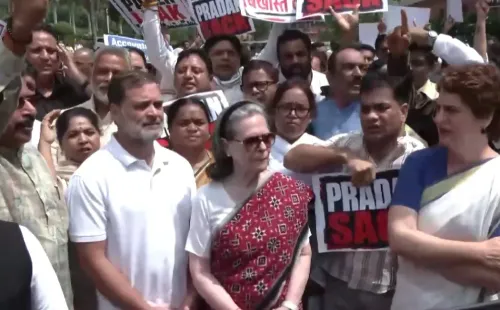
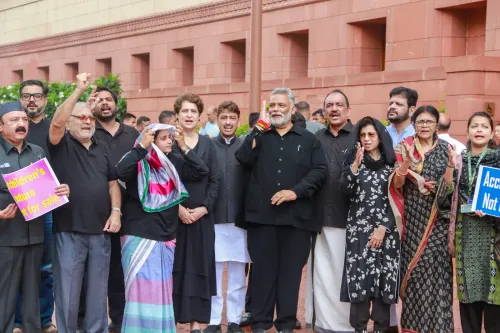
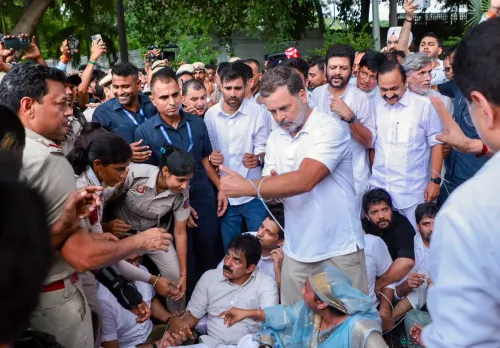
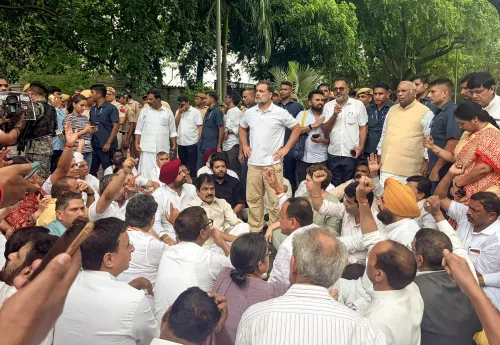
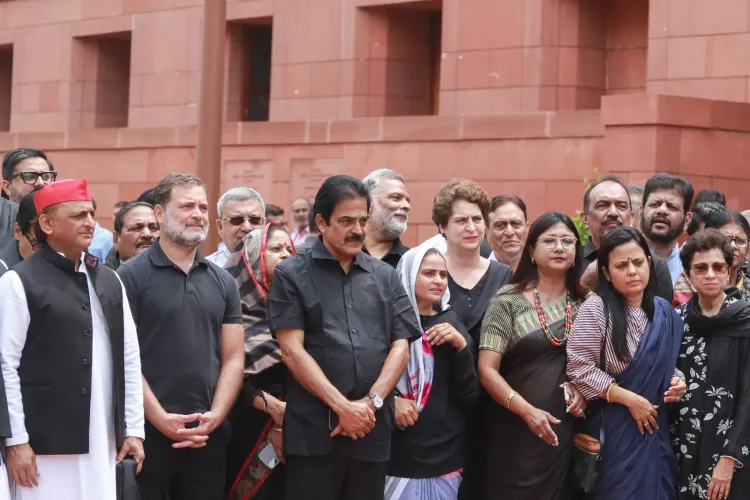
Opposition leaders including Rahul Gandhi and Akhilesh Yadav were detained by Delhi Police on Tuesday, 22 July after leading demonstrations at Lok Kalyan Marg over the NEET paper leak controversy, in what became the most visible — and most contradictory — display of INDIA Bloc solidarity in recent months. The protests, centred around Jantar Mantar in New Delhi, demanded the resignation of Union Education Minister Dharmendra Pradhan and accountability for systemic examination failures.
Key Developments at the Protest Site
Leader of the Opposition in the Lok Sabha, Rahul Gandhi, flanked by Congress President Mallikarjun Kharge and Priyanka Gandhi, marched a contingent to Prime Minister Narendra Modi's residence on Lok Kalyan Marg. Samajwadi Party (SP) chief Akhilesh Yadav joined the sit-in, lending the gathering a cross-party character. The previous day had seen a police crackdown involving baton charges and tear gas, yet thousands reconvened the following morning.
The demonstrations were initially organised by groups including the Cockroach Janta Party (CJP), protesting what they described as systemic failures in examination administration. The political leadership's entry transformed a civic protest into a direct confrontation with the ruling National Democratic Alliance (NDA).
Trinamool's Calculated Return to the Fold
All India Trinamool Congress (TMC) leaders, who were in Kolkata on Tuesday attending a commemoration of the 21 July 1993 police firing deaths, were seen joining Opposition members of Parliament in protesting inside Parliament on the education issue by Wednesday morning, alongside Rahul Gandhi and Priyanka Gandhi.
Notably, the Trinamool had previously kept its distance from Opposition coordination meetings in Parliament and had contested elections against INDIA Bloc partners, including the Congress. The party now appears to be in a reconciliatory posture, reportedly following its loss in this year's West Bengal Assembly election.
Where the Unity Unravels: Punjab and AAP
The surface-level solidarity in Delhi masks sharper divisions elsewhere. In Punjab, the Aam Aadmi Party (AAP) and the Indian National Congress (Congress) remain locked in an unyielding rivalry as direct electoral adversaries. Even as Akhilesh Yadav and Rahul Gandhi shared protest space in the capital, AAP leaders were publicly critical of the Congress, characterising the demonstrations as political theatre aimed at reclaiming national relevance rather than a principled stand.
This comes amid a broader pattern: following its failure to consolidate gains from Opposition unity in the 2024 Lok Sabha elections, AAP withdrew from the INDIA platform. The Dravida Munnetra Kazhagam (DMK) similarly distanced itself after its loss in the Tamil Nadu Assembly polls and subsequent friction with the Congress.
The Uttar Pradesh Calculus
The SP's participation in Delhi protests is, according to analysts, driven less by ideological convergence and more by electoral arithmetic. With Uttar Pradesh Assembly elections on the horizon, the SP and the Congress are compelled to project a united front against the Bharatiya Janata Party (BJP)'s organisational machinery in the state. Critics argue that this alliance of convenience could fracture the moment state-level seat-sharing negotiations begin in earnest.
As electoral battlegrounds in Uttar Pradesh and Punjab draw closer, the INDIA Bloc's ability to function as a cohesive unit — rather than a loose coalition of regional competitors — will face its sharpest test yet.
Point of View
But the deeper story is structural. The INDIA Bloc has never resolved the tension between national solidarity and state-level competition — and it shows: AAP attacks the Congress while standing outside the same protest, Trinamool returns to the fold only after an electoral setback, and SP's solidarity with Congress evaporates the moment Uttar Pradesh seat-sharing talks begin. Mainstream coverage treats this as unity with asterisks; the more accurate framing is a coalition held together by a common opponent, not a common programme. That distinction will matter enormously as state election cycles accelerate.
NationPress
21 Oct 2026
Frequently Asked Questions
Why were Rahul Gandhi and Akhilesh Yadav detained in Delhi?
They were detained by Delhi Police on 22 July after leading a sit-in protest at Lok Kalyan Marg, near Prime Minister Narendra Modi's residence, demanding accountability over the NEET paper leak controversy and the resignation of Education Minister Dharmendra Pradhan.
What is the NEET paper leak protest about?
The protests are centred on alleged systemic failures in India's national medical entrance examination, including paper leaks, and are demanding government accountability and the resignation of the Union Education Minister. Demonstrations have been held at Jantar Mantar and other locations in New Delhi.
Why has the Trinamool Congress rejoined Opposition protests?
The Trinamool Congress, which had previously stayed away from INDIA Bloc coordination meetings and contested elections against bloc partners, reportedly returned to Opposition protests following its loss in the West Bengal Assembly election, signalling a shift toward reconciliation.
Why is AAP not fully aligned with the INDIA Bloc protests?
AAP and the Congress are direct electoral rivals in Punjab, which makes sustained cooperation difficult. AAP leaders have publicly dismissed the Delhi protests as political theatre by the Congress, reflecting a rivalry that led AAP to withdraw from the INDIA platform after the 2024 Lok Sabha elections.
How does the Uttar Pradesh factor shape SP's role in the INDIA Bloc?
The Samajwadi Party's participation in Delhi protests is largely driven by the need to present a united front against the BJP ahead of Uttar Pradesh Assembly elections. Analysts note this is a strategic alliance of electoral necessity rather than ideological convergence, and could face pressure once seat-sharing talks begin.