Karki Commission Report on September Violence Might Be Released After New Nepali Government Takes Charge
Synopsis
Activists in Nepal are calling for the release of the Karki Commission report regarding the September violence that caused multiple fatalities. As the new government prepares to take office, many anticipate that the report will finally see the light of day, potentially reshaping accountability in the nation.
Key Takeaways
Activists are demanding the release of the Karki Commission report.
The report investigates the violent events of September 8-9, 2025.
Delays in the report's release have sparked widespread protests among the youth.
A new government is likely to decide the report's fate soon.
The report's findings could implicate senior politicians and officials.
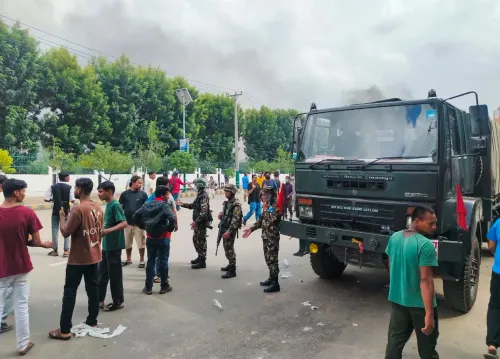
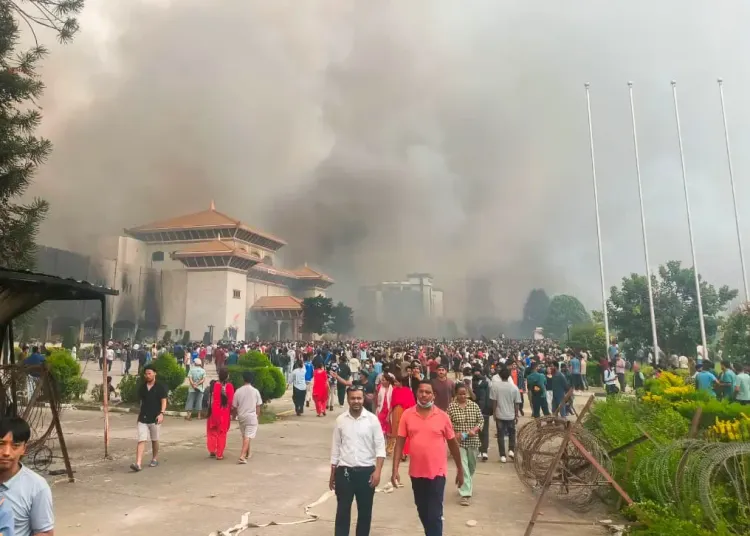
New Delhi, March 17 (NationPress) Activists associated with Nepal’s Gen-Z movement are actively protesting, according to reports from Kathmandu. They are urging the government to release a report from the commission established to investigate the tragic events of September 8-9, which resulted in multiple fatalities. However, officials indicate that the findings of the probe panel may only be disclosed after the formation of Nepal’s new government.
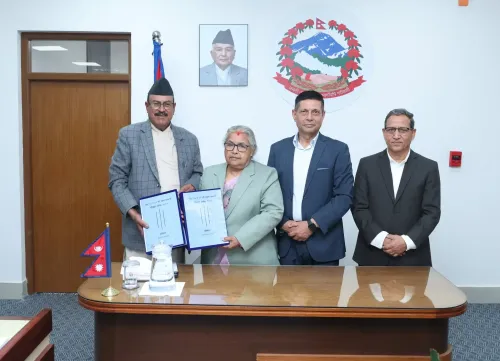
The commission, chaired by former Justice Gauri Bahadur Karki, delivered its report on March 8 to the interim government led by Prime Minister Sushila Karki.
The activists have intensified their protests, insisting on the release of the highly awaited Karki Commission report—a document that many believe could redefine the nation’s accountability landscape.
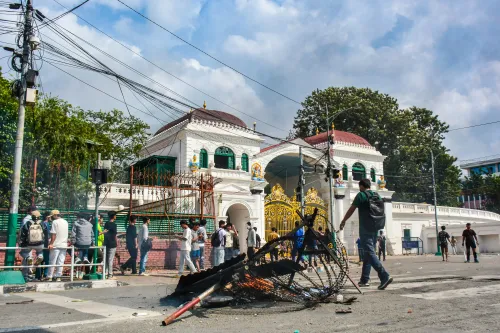
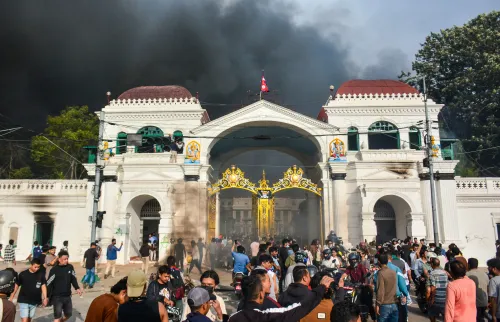
Established on September 21, 2025, the commission was tasked with examining the crackdown on the Gen-Z protests on September 8, 2025, along with the incidents of vandalism and arson that occurred the following day, as reported by the Kathmandu Post.
The investigation faced several delays, as the commission struggled to complete its work within the original three-month timeframe. The deadline was first extended by one month on December 18, 2025, followed by an additional 20 days on January 22, 2026, and another extension of 25 days on February 9, 2026.
Due to the sensitive nature of the findings and concerns over national security, the interim government is not expected to release the report quickly.
This decision has sparked a surge of activism, especially among the youth of Nepal, who view the report's suppression as a reluctance from the state to address its own missteps.
A senior government official, wishing to remain anonymous, informed IANS that the report is likely to be handed over to the new government once it is in place, which is anticipated to happen soon.
In the elections held on March 5, Nepal’s relatively new political party, the Rastriya Swatantra Party (RSP), gained significant victory, presenting engineer-rapper Balendra Shah as its candidate for Prime Minister.
Balendra Shah, who enjoys a substantial social media following, resigned from his position as mayor of Kathmandu to join the RSP and successfully contested against former Prime Minister K.P. Sharma Oli in the latter's stronghold of Jhapa-5 constituency.
His social media posts are believed to have inspired the Gen-Z protestors, who took to the streets last year out of frustration over unemployment, corruption, and the perceived ineffectiveness of political elites in enacting reforms.
The new government is expected to determine the future actions regarding the probe report, which is thought to implicate high-ranking politicians and officials in authorizing excessive force.
The reluctance of the interim government to release the report stems from fears that doing so could destabilize what many consider a fragile peace.
Officials contend that making the sensitive details public could exacerbate tensions and be manipulated by adversarial actors. Critics, however, dismiss this reasoning as an excuse to shield the state from accountability.
Protestors continue their demands for the report's release at the Maitighar Mandala monument in central Kathmandu.
On Monday, many participants wore blindfolds and held placards reading “Error 404: Justice Not Found”, “Where is the complete report of the Karki Commission?”, “Don’t let the weight of the state crush the truth of the pen”, among other slogans.
The protests have garnered support from civil society groups, legal professionals, and scholars, who assert that withholding the report undermines democratic accountability.
The controversy has also drawn international concern, with human rights organizations urging the government to publish the report, warning that failure to do so could tarnish Nepal’s democratic standing.
For many in the Himalayan nation, the Karki Commission report has transcended its bureaucratic nature, representing a crucial test of the state’s ability to address its own shortcomings.
The delay has turned the report into a rallying point, uniting various groups under the cause of transparency.
Point of View
The ongoing protests and demands for the Karki Commission report represent a critical moment in Nepal's struggle for transparency and accountability. The new government's approach to this issue will significantly impact the nation's political landscape and the trust of its citizens in democracy.
NationPress
23 Sept 2026
Frequently Asked Questions
What is the Karki Commission report?
The Karki Commission report investigates the crackdown on the Gen-Z protests in Nepal that occurred on September 8-9, 2025, leading to several deaths.
Why are activists protesting?
Activists are protesting to demand the public release of the Karki Commission report, which they believe is crucial for accountability in Nepal.
When was the Karki Commission report submitted?
The report was submitted to the interim government on March 8, 2026.
Who is leading the Karki Commission?
The Karki Commission is led by former Justice Gauri Bahadur Karki.
What political changes are occurring in Nepal?
Nepal recently conducted elections, resulting in the Rastriya Swatantra Party (RSP) gaining power, with Balendra Shah as the anticipated Prime Minister.