Nepal-India power deal: Up to 1,650 MW export capacity via 2 transmission lines
Synopsis
Nepal and India have more than tripled the ambition of their cross-border power framework in a single JSC meeting — raising Nepal's export ceiling from 1,100 MW to 1,650 MW, clearing multiple DPRs, and locking in a joint venture for two major new 400 kV corridors. With the Dhalkebar–Sitamarhi line near completion and MCC-funded infrastructure on track, this is the most consequential bilateral energy session the two neighbours have held in years.
Key Takeaways
Nepal can now export up to 1,650 MW and import up to 1,400 MW from India under the revised agreement — up from earlier caps of 1,100 MW and 1,000 MW .
The two corridors are the Dhalkebar–Muzaffarpur (operational since 2016 ) and the near-complete Dhalkebar–Sitamarhi 400 kV transmission lines.
DPRs approved for the Chameliya–Jauljibi 220 kV line (target: December 2028 ) and the Motihari–Nijgadh 400 kV line (target: 2034–35 ).
NEA and PGCIL to expedite a joint venture for the Inaruwa–New Purnea and Dododhara–Bareilly 400 kV projects; agreements already signed.
The New Butwal–Gorakhpur line will operate temporarily at 220 kV from August 2026 , handling up to 200 MW of exports and 130 MW of imports, until the substation is ready by December 2027 .
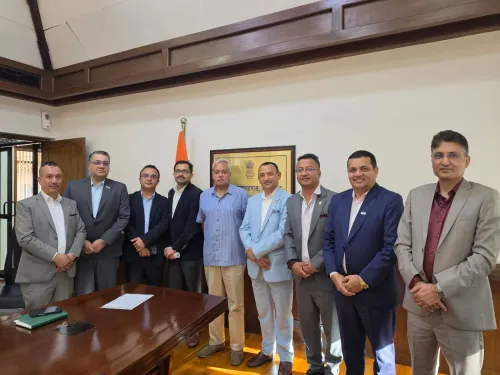
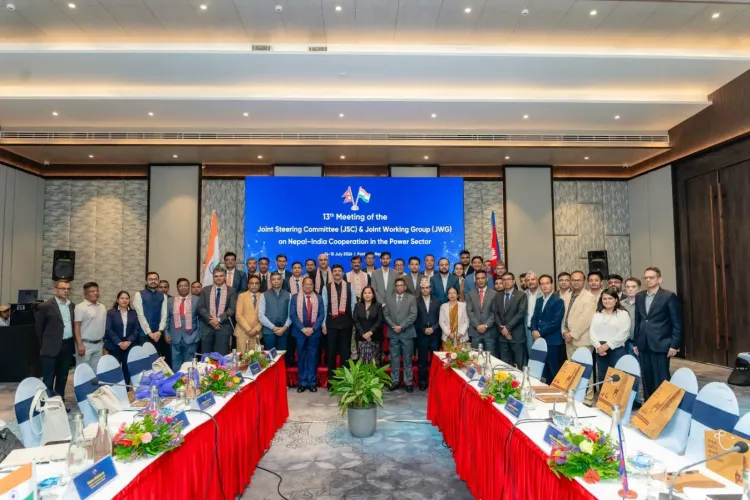
Nepal and India have agreed to significantly expand bilateral electricity trade, with Nepal now permitted to export up to 1,650 MW and import up to 1,400 MW through two 400 kV cross-border transmission lines. The agreement was reached on 15 July during the 13th meeting of the Nepal–India Joint Steering Committee (JSC), held in Pokhara, western Nepal.
The Two Transmission Lines at the Centre of the Deal
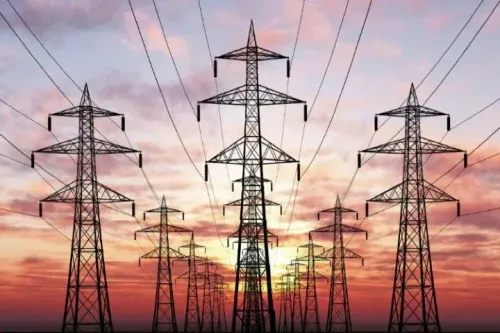
The two corridors enabling this expanded trade are the Dhalkebar–Muzaffarpur and Dhalkebar–Sitamarhi 400 kV cross-border transmission lines. The Dhalkebar–Muzaffarpur line has been operational since 2016, while the Dhalkebar–Sitamarhi line is nearing completion. The latter is being constructed by SJVN Arun-3 Power Development Company, a subsidiary of India's state-owned SJVN Limited, which is also developing the 900 MW Arun III Hydropower Project in eastern Nepal.
Previously, the two countries had capped cross-border trade at 1,100 MW of exports from Nepal and 1,000 MW of imports — limits set exclusively through the Dhalkebar–Muzaffarpur corridor. The addition of the near-complete Sitamarhi line has enabled both sides to revise these thresholds upward.
Who Led the Talks
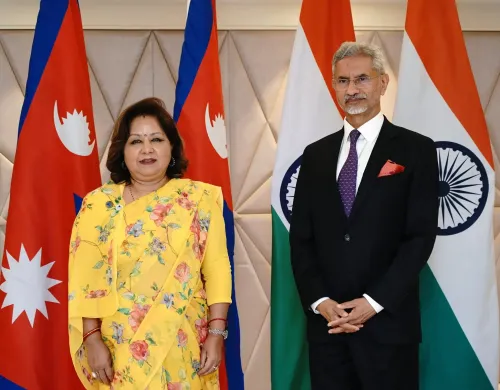
The JSC meeting was co-chaired by Sarita Dawadi, Secretary at Nepal's Ministry of Energy, Water Resources and Irrigation, and Pankaj Kumar, Secretary at India's Ministry of Power. A preparatory session of the Joint Working Group (JWG) at the Joint Secretary level was held on Tuesday, ahead of the main JSC meeting.
New Projects Approved and Expedited
Beyond the revised trade limits, the meeting cleared a series of forward-looking infrastructure decisions. The Detailed Project Report (DPR) for the Chameliya (Nepal)–Jauljibi (India) 220 kV double-circuit transmission line was approved, with a construction deadline set for December 2028.
Both sides also agreed to accelerate the formation of a joint venture between the Nepal Electricity Authority (NEA) and Power Grid Corporation of India Limited (PGCIL) to develop the Inaruwa–New Purnea and Dododhara (New Lamki)–Bareilly 400 kV transmission line projects. The Shareholders' Agreement and Joint Venture Agreement for these projects have already been signed.
The DPR for the Motihari–Nijgadh 400 kV double-circuit line was also approved; it is expected to facilitate additional Nepali electricity exports to India by 2034–35. Additionally, the meeting cleared a DPR to upgrade the existing Muzaffarpur–Dhalkebar 400 kV line by replacing its conductor with a High Temperature Low Sag (HTLS) conductor, which would increase the line's transfer capacity.
Additional technical studies are to be conducted before finalising the proposed Lucknow–Kohalpur (Lamahi) 400 kV transmission line project.
New Butwal–Gorakhpur Line: Interim 220 kV Operation
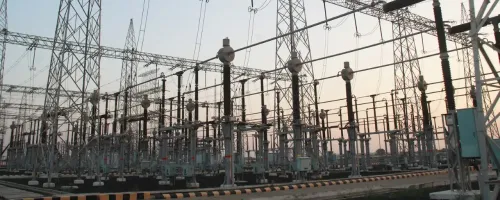
The meeting also reached an understanding on the New Butwal–Gorakhpur 400 kV cross-border transmission line. Since the Nepal section is expected to be ready by August 2026 but the New Butwal 400 kV substation is not scheduled for completion until December 2027, the line will temporarily operate at 220 kV during the intervening period. Under this interim arrangement, the line will be capable of importing up to 130 MW from India and exporting up to 200 MW from Nepal, according to Nepal's Energy Ministry. The Nepal section of this project is being funded by the Millennium Challenge Corporation (MCC), an aid agency of the US government.
What This Means for the Region
The expanded framework represents a material deepening of Nepal–India energy ties at a time when Nepal is aggressively developing its hydropower potential and India is seeking to diversify its clean energy sources. Notably, this is the 13th such JSC meeting, reflecting a long-standing bilateral mechanism — but the scale of commitments made this round is considerably larger than in previous sessions. With multiple DPRs approved and JV structures already in place, the pathway from agreement to infrastructure is more advanced than it has been in prior rounds.
Point of View
100 MW to a 1,650 MW export ceiling is significant on paper, but the real story is the pipeline behind it — multiple DPRs cleared, a JV structure already signed, and MCC-funded infrastructure moving toward commissioning. Nepal has long had more hydropower potential than domestic demand can absorb; India offers the scale market that makes those projects bankable. The structural risk is execution: cross-border transmission projects between the two countries have a history of timeline slippage, and the New Butwal–Gorakhpur substation gap — a full 16 months between line readiness and substation completion — is an early indicator of that pattern repeating. Whether the 2034–35 Motihari–Nijgadh target holds will be the real test of whether this round of JSC commitments outlasts the press statement.
NationPress
14 Oct 2026
Frequently Asked Questions
What did Nepal and India agree on at the 13th JSC meeting in Pokhara?
The two countries agreed to raise Nepal's electricity export ceiling to 1,650 MW and import capacity to 1,400 MW through two 400 kV cross-border transmission lines — the Dhalkebar–Muzaffarpur and Dhalkebar–Sitamarhi lines. The meeting was held on 15 July in Pokhara and was co-chaired by energy secretaries from both sides.
What are the Dhalkebar–Muzaffarpur and Dhalkebar–Sitamarhi transmission lines?
These are two 400 kV cross-border transmission lines connecting Nepal and India. The Dhalkebar–Muzaffarpur line has been operational since 2016, while the Dhalkebar–Sitamarhi line is nearing completion and is being built by SJVN Arun-3 Power Development Company as part of the 900 MW Arun III Hydropower Project development.
What new transmission line projects were approved at the meeting?
The meeting approved DPRs for the Chameliya–Jauljibi 220 kV line (completion target: December 2028) and the Motihari–Nijgadh 400 kV double-circuit line (expected to be operational by 2034–35). It also agreed to expedite a NEA–PGCIL joint venture for the Inaruwa–New Purnea and Dododhara–Bareilly 400 kV projects.
What is the interim arrangement for the New Butwal–Gorakhpur transmission line?
Since the Nepal section of the New Butwal–Gorakhpur 400 kV line will be ready by August 2026 but the New Butwal substation is not due until December 2027, the line will temporarily operate at 220 kV. Under this arrangement, it can handle up to 200 MW of exports from Nepal and up to 130 MW of imports from India. The Nepal section is funded by the US government's Millennium Challenge Corporation (MCC).
How does the new agreement compare to the previous Nepal–India power trade framework?
Previously, the two countries had agreed to a ceiling of 1,100 MW for Nepali exports and 1,000 MW for imports, routed exclusively through the Dhalkebar–Muzaffarpur line. The new agreement raises those limits to 1,650 MW and 1,400 MW respectively, enabled by the near-completion of the second Dhalkebar–Sitamarhi corridor.