Nepal marijuana fills void left by Northeast security crackdown
Synopsis
India's security push in the Northeast eliminated a major domestic marijuana supply chain — but created a vacuum that Nepal's cultivators and cross-border smugglers have moved to fill. The contraband now flows through Bihar's open border, down to South India, and into international markets, turning India into both a destination and a transit hub.
Key Takeaways
Post- 2014 security tightening collapsed marijuana cultivation in Assam, Tripura, Manipur, Meghalaya , and Mizoram .
Trafficking networks shifted to Nepal , with Sunsari identified as the primary smuggling staging point.
Contraband enters India through Araria and Supaul in Bihar via the 1,751-km open India-Nepal border.
The NCB recently dismantled a cross-border network spanning Nepal, India , and Sri Lanka , uncovering a charas and hashish oil route via the Sonauli border.
Officials say drone-based smuggling from Pakistan remains the single largest drug security threat to India.
The United Nations has flagged the India-Nepal border as vulnerable to drug, arms, and human trafficking.
A tightening security apparatus across India's northeastern states has inadvertently redirected the marijuana trade toward Nepal, with smugglers now funnelling contraband through the open India-Nepal border into domestic markets and onward to international destinations, according to officials tracking the narcotics route.
How the Northeast Crackdown Reshaped the Drug Map
When the Narendra Modi government intensified its security focus on border states after 2014, marijuana cultivation across Assam, Tripura, Manipur, Meghalaya, and Mizoram collapsed sharply. These hilly regions had long supplied high-grade cannabis to American and European markets, where altitude-grown varieties command a premium. With that supply disrupted, trafficking networks pivoted to Nepal, where large-scale cultivation has since filled the gap.
The Bihar Gateway
Officials have identified Sunsari district in Nepal as the primary staging point for cross-border marijuana movement. The contraband enters India through Araria and Supaul districts in Bihar, exploiting the 1,751-kilometre open border governed by the Indo-Nepal Treaty of Peace and Friendship. Smugglers use private cars, motorcycles, and trucks, often aided by local touts who charge a fee to move people and goods across the border while evading detection. Notably, officials say these same networks were previously used by the Indian Mujahideen to bring in individuals who had transited through Nepal from Pakistan.
The Trafficking Chain: Bihar to Sri Lanka
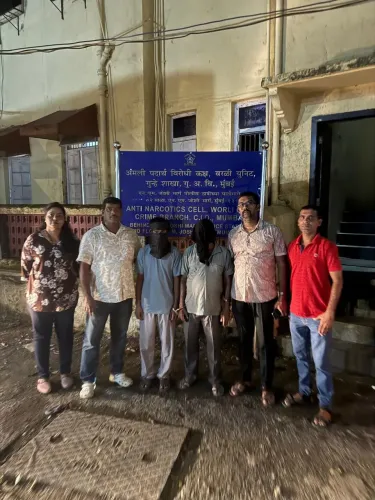
Once inside India, the marijuana moves by road toward southern states, from where it is reportedly pushed into Sri Lanka before entering international markets. This makes India both a consumer market and a transit corridor — a dual role that complicates enforcement. The Narcotics Control Bureau (NCB) recently dismantled an international trafficking network operating across Nepal, India, and Sri Lanka. During that operation, investigators found that charas and hashish oil were being smuggled from Kathmandu through the Sonauli Indo-Nepal border crossing.
The Golden Triangle Shadow and Pakistan Drone Threat
Officials say the NCB and allied central agencies have maintained intensive focus on the India-Pakistan border and northeastern states. A separate but related concern is the Golden Triangle — the confluence of Myanmar, Laos, and Thailand borders, centred on Myanmar's Shan State — which has evolved from a heroin hub into one of the world's largest synthetic drug production zones. Officials caution that while the Nepal route handles comparatively smaller quantities, the frequency of consignments is higher. The largest single threat to India's drug security, according to officials, remains narcotics smuggled from Pakistan via drones.
Policy Context and What Comes Next
Nepal banned marijuana cultivation in 1976, though pressure to lift the ban has persisted. The Nepal government has reportedly resisted, citing concern that legalisation could attract larger criminal players into the market. The United Nations has flagged the India-Nepal border as vulnerable to trafficking of persons, drugs, fake currency, and arms. The Modi government's stated objective of making India drug-free has led to a higher frequency of busts and increased surveillance at major transit points. Central agencies say the Bihar corridor remains the most preferred smuggling route, though the Uttar Pradesh border has also been used. All major transit points are now under active monitoring, officials say.
Point of View
But it is also a persistent enforcement liability — and the NCB's recent bust suggests the trafficking architecture is now sophisticated enough to span three countries. What is missing from the official narrative is a frank accounting of demand-side factors within India. Enforcement alone has not historically suppressed drug markets; without parallel investment in rehabilitation infrastructure, especially in Bihar and the southern transit states, the pipeline will keep finding new entry points.
NationPress
1 Oct 2026
Frequently Asked Questions
Why has marijuana demand shifted from Northeast India to Nepal?
Intensified security measures in northeastern border states after 2014 caused marijuana cultivation in Assam, Tripura, Manipur, Meghalaya, and Mizoram to collapse. Trafficking networks subsequently pivoted to Nepal, where large-scale cultivation has filled the supply gap.
How does Nepal marijuana enter India?
Officials say marijuana is staged in Sunsari, Nepal, and brought into India through Araria and Supaul districts in Bihar, exploiting the 1,751-kilometre open border under the Indo-Nepal Treaty of Peace and Friendship. It is transported in private cars, motorcycles, and trucks, often with the help of local touts.
What did the NCB's recent drug bust reveal?
The Narcotics Control Bureau dismantled an international trafficking network operating across Nepal, India, and Sri Lanka. Investigators found that charas and hashish oil were being smuggled from Kathmandu into India through the Sonauli Indo-Nepal border crossing before being moved toward international markets.
Is Nepal marijuana meant only for Indian consumers?
No. Officials say India functions as both a consumer market and a transit corridor. Marijuana enters through Bihar, moves south by road, crosses into Sri Lanka, and is then pushed into American and European markets, where hilly-region cannabis commands a premium.
What is the Golden Triangle and how does it relate to this issue?
The Golden Triangle is the border confluence of Myanmar, Laos, and Thailand — centred on Myanmar's Shan State — and is one of the world's largest drug production zones. Officials note it has shifted from heroin to synthetic drugs, making the Nepal marijuana route comparatively more significant for cannabis trafficking into India.