Nepal, World Bank sign deal to develop catastrophe bond for disaster risk
Synopsis
Weeks after floods killed nearly 1,500 people and caused $1.66 billion in damage, Nepal has signed a mandate with the World Bank to explore a catastrophe bond — a first-of-its-kind move that would shift the Himalayan nation's disaster risk to global capital markets and pre-arrange emergency funding before the next crisis strikes.
Key Takeaways
Nepal and the World Bank's IBRD signed a mandate agreement on 15 October 2026 to develop a catastrophe bond for disaster financing.
Floods in the Bhotekoshi and Trishuli river basins on 26 August 2026 killed nearly 1,500 people , with over 5,000 still unaccounted for.
Physical damage from the floods is estimated at $1.66 billion , per the World Bank's rapid damage assessment.
A catastrophe bond transfers disaster risk to investors, who lose principal if a specified trigger event occurs, freeing funds for emergency response.
The World Bank Group Treasury will work with the Nepal government and market participants to assess feasibility — the mandate does not yet guarantee bond issuance.
Nepal and the International Bank for Reconstruction and Development (IBRD), the lending arm of the World Bank Group, have signed a mandate agreement to explore the creation of a catastrophe bond that would give the Himalayan nation rapid access to funds following a major natural disaster. The pact, announced on 15 October 2026, marks the formal start of a feasibility assessment for a financial instrument that could shift part of Nepal's disaster risk to international capital markets.
What the Agreement Entails
Under the mandate agreement, the World Bank Group Treasury will work alongside the Nepal government and market participants to evaluate the proposed transaction's structure and viability. The collaboration will determine whether Nepal can transfer a defined portion of its natural-disaster exposure to global investors, thereby reducing the fiscal shock that typically follows a catastrophic event.
A catastrophe bond is a financial instrument under which investors risk losing part or all of their principal if a pre-specified disaster trigger is met — with those funds then channelled to the issuing government for emergency response and reconstruction. According to the World Bank, such instruments 'can provide an alternative source of disaster financing, potentially enabling governments to access funds more quickly than relying solely on budget reallocations or post-disaster assistance.'
Backdrop: Nepal's Devastating 2026 Floods
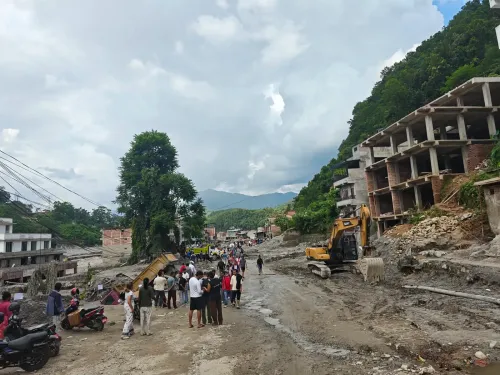
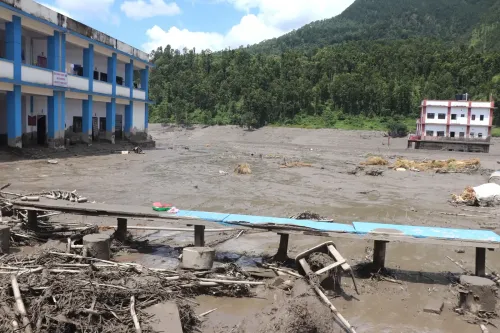
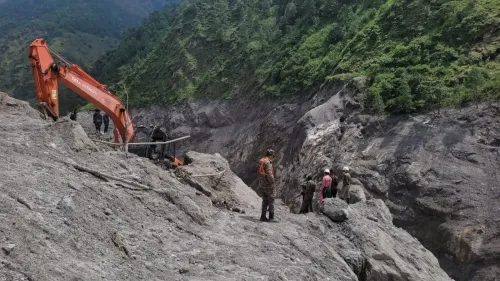
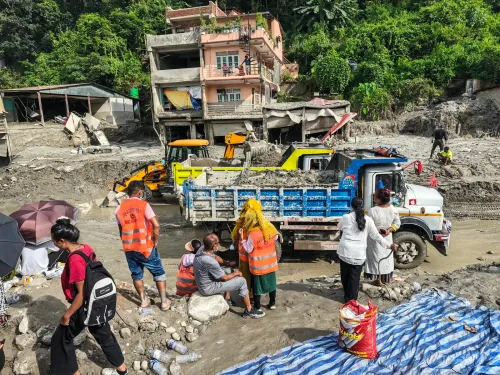
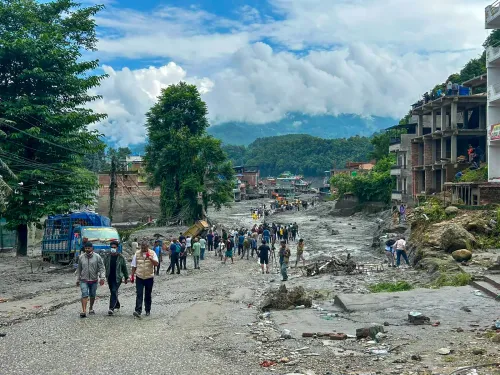
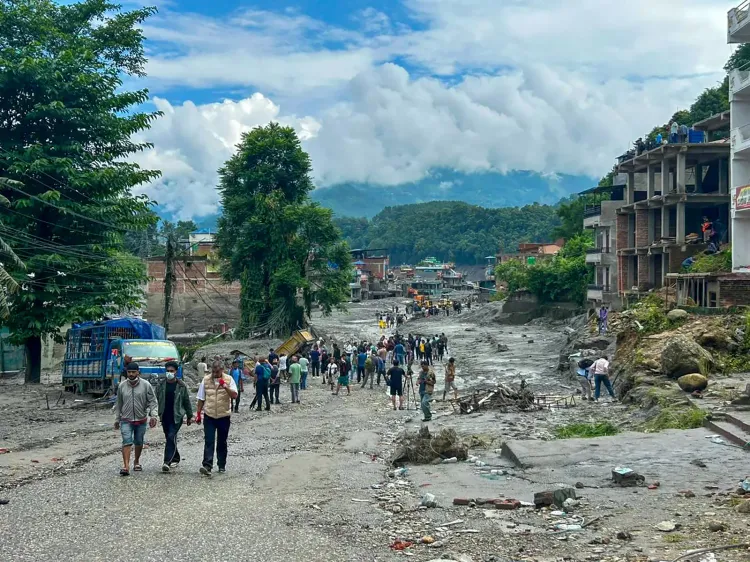
The initiative comes directly in the wake of catastrophic flooding that struck the Bhotekoshi and downstream Trishuli river basins on 26 August 2026. The floods — triggered by an avalanche near the Nepal-China border that blocked river flow — swept away human settlements, a dozen hydropower projects, a solar plant, and multiple roads and bridges across the affected corridor.
According to the National Disaster Risk Reduction and Management Authority, the floods killed nearly 1,500 people, while more than 5,000 remain unaccounted for. Physical damage has been estimated at $1.66 billion, according to the World Bank's Global Rapid Post-Disaster Damage Estimation report. This is among the worst flood disasters in Nepal's recent history and has placed acute pressure on the country's public finances.
Nepal's Vulnerability and the Case for Risk Transfer
Nepal faces a compounding risk landscape: it sits on one of the world's most seismically active zones and is acutely exposed to floods, landslides, glacial lake outburst floods, and other climate-related hazards. The World Bank notes that these disasters can 'cause extensive damage to infrastructure, disrupt economic activities and place considerable pressure on public finances.'
Developing countries like Nepal are especially vulnerable because of gaps in insurance coverage, inadequate infrastructure resilience, and the concentration of populations in disaster-exposed areas. Following major events, governments are frequently forced to redirect development budgets toward emergency relief — a fiscal trade-off that stalls long-term growth priorities.
The Broader World Bank Catastrophe Bond Programme
This initiative is part of the World Bank Group's established catastrophe bond programme, which has assisted several countries in accessing international capital markets to transfer disaster risk. The World Bank also offers a range of complementary tools — contingent financing, insurance solutions, and comprehensive disaster risk financing strategies — designed to help governments strike an optimal balance between retaining and transferring risk.
A risk financing strategy, according to the World Bank, 'helps clients determine a balance between retaining risk, for example, through a contingent financing product, and transferring risk, for example, through an insurance product.' The optimal mix depends on the nature, frequency, and severity of the hazards a country faces.
What Comes Next
The mandate agreement is a preliminary step; it does not guarantee the bond will be issued. The feasibility study and market assessment will determine whether the transaction is viable and what specific disaster triggers — such as earthquake magnitude thresholds or rainfall-based flood indices — would be embedded in the bond's terms. If Nepal proceeds, it would join a small but growing group of sovereign governments that have used catastrophe bonds to pre-arrange disaster financing, reducing dependence on slower post-disaster aid flows.
Point of View
Low-income economies in South Asia. The August floods exposed a structural problem: Nepal's disaster financing relies heavily on post-event budget reallocation and aid flows, both of which arrive too slowly to save lives and infrastructure in the critical first weeks. The mandate agreement is a start, but the harder work — agreeing on parametric triggers that actually pay out quickly without over-insuring or under-insuring — lies ahead. Catastrophe bonds have a patchy track record on payout speed in sovereign contexts; Nepal will need robust trigger design, not just headline capital market access.
NationPress
15 Oct 2026
Frequently Asked Questions
What is the catastrophe bond Nepal is exploring with the World Bank?
It is a financial instrument under which Nepal would transfer a defined portion of its natural-disaster risk to international investors, who would lose part or all of their principal if a specified disaster trigger is met. The funds would then flow rapidly to Nepal for emergency response and reconstruction, reducing reliance on slower budget reallocations or post-disaster aid.
Why is Nepal pursuing disaster risk financing now?
The initiative follows devastating floods in the Bhotekoshi and Trishuli river basins on 26 August 2026, which killed nearly 1,500 people, left over 5,000 unaccounted for, and caused an estimated $1.66 billion in physical damage. The scale of the crisis highlighted Nepal's vulnerability and the inadequacy of existing financing mechanisms.
What does the mandate agreement actually commit Nepal and the World Bank to?
The agreement commits the World Bank Group Treasury to work with the Nepal government and market participants to assess the feasibility and potential structure of the bond. It is a preliminary step — it does not guarantee issuance. The outcome will depend on whether viable disaster triggers and investor appetite can be established.
How does Nepal's disaster vulnerability compare with other countries?
Nepal is highly exposed to earthquakes, floods, landslides, and glacial lake outburst floods, according to the World Bank. Like many developing countries, it faces gaps in insurance coverage, inadequate infrastructure resilience, and a concentration of population in exposed areas — all of which amplify the fiscal impact of disasters.
Has the World Bank done catastrophe bonds for other countries?
Yes. The World Bank Group runs an established catastrophe bond programme that has helped multiple countries access international capital markets to transfer disaster risks. Nepal would join a growing, if still small, group of sovereign governments that use these instruments to pre-arrange emergency financing.