Nepal floods 2024: Himalayan nations urged to forge disaster diplomacy pact
Synopsis
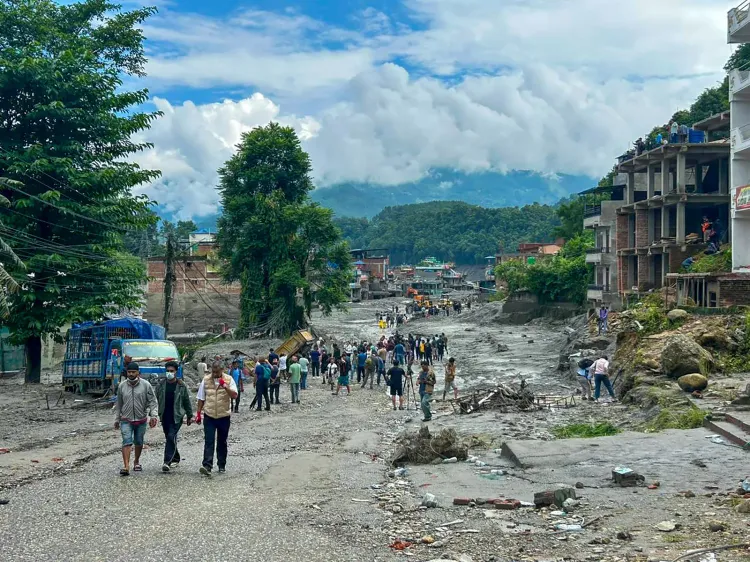
A glacier didn't just collapse into a Nepali river — it collapsed the fiction that Himalayan nations can manage climate risk alone. With no China-Nepal data-sharing pact signed, no early warning for downstream communities, and glacial instability accelerating, the 2024 Nepal floods are a stress test that the region's diplomatic architecture visibly failed.
Key Takeaways
Nepal's 2024 flash floods were caused by a glacial collapse and debris flow on the Tibet-Nepal border , not an earthquake, per a revised USGS determination.
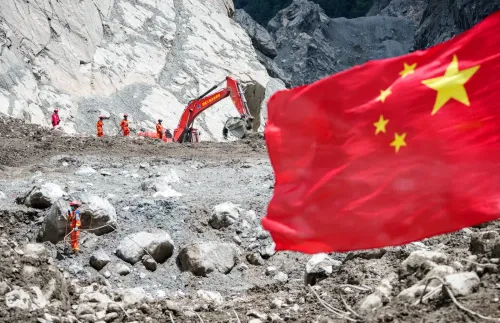
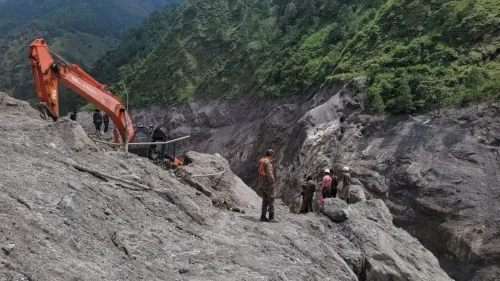
ICIMOD satellite imagery confirmed a 'massive rock-ice avalanche' blocked the Lhende River , triggering cascading floods from approximately 3,000 metres above.
China and Nepal had agreed in principle to share real-time cross-border flood data, but no formal agreement has been signed despite Nepal FM Shisir Khanal raising it during his May China visit.
Parliamentarians from 8 HKH nations meeting in Thimphu called for stronger regional cooperation and climate resilience frameworks.
Experts say comprehensive mapping of ice-bound slopes and predictive modelling are essential to manage future glacial collapse risks.
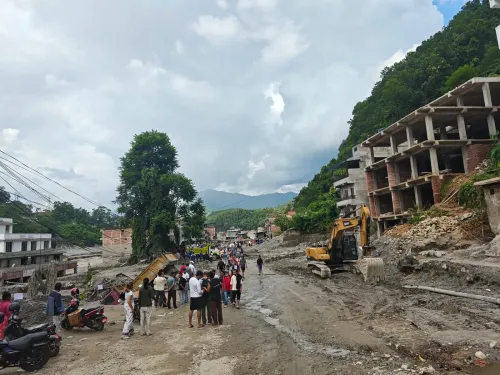
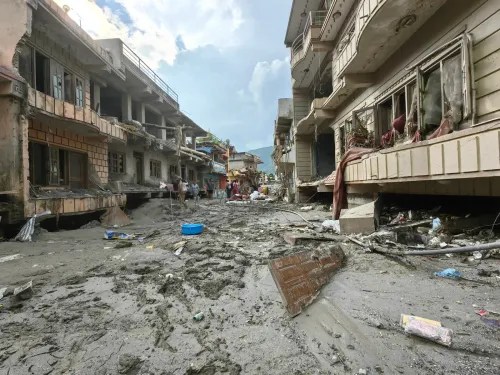
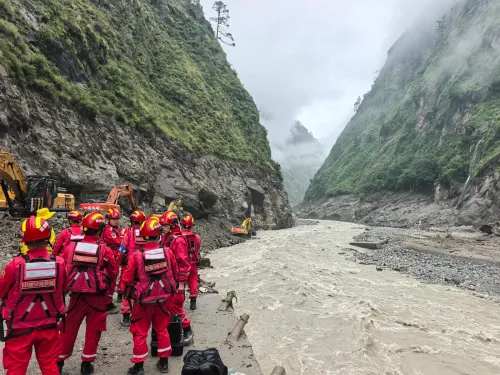
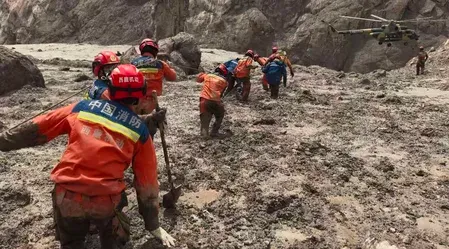
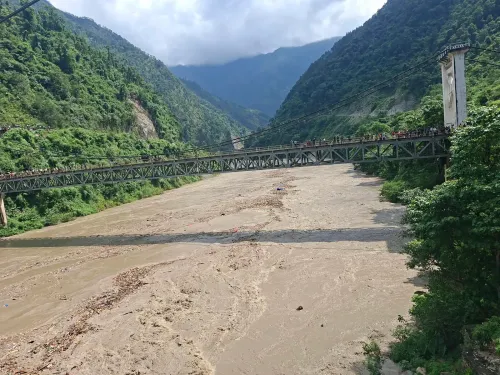
Nepal's catastrophic flash floods, triggered by a glacial collapse and debris flow on the Tibet-Nepal border, have intensified calls for urgent regional cooperation among Hindu Kush Himalaya (HKH) nations, with experts and parliamentarians warning that climate-driven glacial instability now poses a systemic threat that no single country can manage alone.
What Triggered the Disaster
Initial assessments by the US Geological Survey (USGS) classified the event as an earthquake, but a revised determination — based on further analysis of seismic waves and satellite imagery — confirmed that the seismic signal was in fact a glacial collapse and debris flow, and that no earthquake had occurred. The International Centre for Integrated Mountain Development (ICIMOD), an intergovernmental body based in Kathmandu, examined satellite imagery and concluded that 'a massive rock–ice avalanche occurred in Nepal, blocking the Lhende River and triggering cascading floods downstream.' The avalanche reportedly sent an entire mountainside — including a glacier clinging to it — crashing into a river approximately 3,000 metres below. Global warming and construction activity in nearby areas are reportedly being considered as primary causes, though a definitive determination is expected to take more time.
The Push for Disaster Diplomacy
Popular Nepali newspaper Kantipur on Friday called on Kathmandu to immediately pursue disaster diplomacy and push Beijing on the 'implementation modality' and 'framework' of a pending cross-border flood-information agreement. China and Nepal had previously agreed in principle to share real-time cross-border data on floods, landslides, and glacial lake outburst flood (GLOF) risks. However, no formal agreement has been signed to operationalise the mechanism, despite Nepal Foreign Minister Shisir Khanal having raised the issue during his China visit in May. Analysts argue that the absence of a binding data-sharing framework leaves downstream communities exposed to risks that could, in theory, be flagged hours in advance.
Regional Parliamentarians Sound the Alarm
Parliamentarians from across the HKH region, gathered for the two-day 2nd Hindu Kush Himalaya Parliamentarians' Meet in Thimphu, observed a moment of silence for the victims on Wednesday as news of the devastation emerged. Participants stated that the disaster underscored the urgent need for stronger regional cooperation to address climate risks that transcend national boundaries. They called for collective action, stronger preparedness, and sustained coordination to build resilience across the HKH region. ICIMOD works on behalf of eight regional member countries: Afghanistan, Bangladesh, Bhutan, China, India, Myanmar, Nepal, and Pakistan.
The Science of Glacial Risk
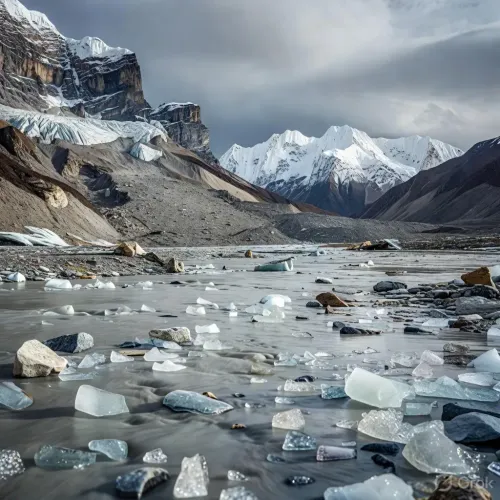
Some experts have likened glaciers on high-altitude slopes to cement holding a structure together — once the binding ice weakens, the entire mass becomes vulnerable. US-based conservation and environmental science platform Mongabay reported that the floods were triggered by a glacier collapse and landslide into a river on the Tibet-Nepal border, attributing the loosening of ice to climate change. Notably, experts point out that no early warning system would have protected those immediately downstream when the debris fell. The longer-term solution, according to reports, is the ability to predict such events with a credible probability level — requiring governments to comprehensively map all ice-bound slopes above a certain gradient.
What Needs to Happen Next
Reports from across the region emphasise that HKH countries must step up research, share real-time data, and coordinate seamlessly to prepare for future calamities. Long-term climate risk must also be factored into the construction of strategic infrastructure — roads, bridges, and hydropower projects — near international borders. The tragedy, analysts argue, makes the case for embedding ecological security as a formal pillar of regional diplomatic frameworks, not an afterthought.
Point of View
Not an outlier. Glacial instability across the Hindu Kush Himalaya is accelerating, yet the diplomatic architecture to manage it remains unbuilt — China and Nepal cannot even finalise a data-sharing framework that both sides have nominally accepted. The gap between scientific consensus and political action is widest precisely where the risk is highest: cross-border river systems where upstream events can kill people downstream within hours. Embedding ecological security into bilateral and regional agreements is not an idealist position — it is the minimum viable response to a threat that is already arriving.
NationPress
14 Oct 2026
Frequently Asked Questions
What caused the Nepal flash floods in 2024?
The floods were caused by a glacial collapse and debris flow on the Tibet-Nepal border, not an earthquake. The USGS revised its initial assessment after additional seismic wave and satellite imagery analysis, and ICIMOD confirmed a massive rock-ice avalanche blocked the Lhende River, triggering cascading floods downstream.
Why is regional cooperation important after the Nepal floods?
The disaster exposed critical gaps in cross-border data sharing and early warning systems among Himalayan nations. Climate-driven glacial instability affects multiple countries simultaneously, meaning no single nation can predict or respond to such events effectively without coordinated regional frameworks.
What is the status of the China-Nepal flood data-sharing agreement?
China and Nepal agreed in principle to share real-time cross-border information on floods, landslides, and glacial lake outburst flood risks, but no formal agreement has been signed. Nepal Foreign Minister Shisir Khanal raised the issue during his China visit in May, but the implementation modality and framework remain pending.
What is ICIMOD and what role did it play?
ICIMOD, the International Centre for Integrated Mountain Development, is an intergovernmental knowledge centre based in Kathmandu that works for eight HKH member countries. It analysed satellite imagery after the Nepal floods and confirmed the event was a rock-ice avalanche, not tectonic activity.
How can future Himalayan glacial disasters be prevented?
Experts say governments need to comprehensively map all ice-bound slopes above a certain gradient and develop predictive models capable of flagging risks with credible probability. Long-term risk assessment must also be incorporated into infrastructure construction — roads, bridges, and hydropower projects — near international borders.