NGT orders fresh J&K wetlands report on shrinkage and pollution
Synopsis
A wetland recorded in official revenue documents no longer physically exists on the ground in Baramulla — that single finding encapsulates the NGT's concern as it orders the J&K Pollution Control Committee to map the gap between what the records say and what is actually left. With most sampled sites failing water quality standards, the tribunal's next hearing in February 2027 will be a reckoning for wetland governance in the valley.
Key Takeaways
The NGT has ordered the JKPCC to submit a fresh report comparing the recorded revenue area of wetlands with their actual existing area in Jammu and Kashmir .
The JKPCC had identified 27 wetlands over one hectare outside forest areas, but the report was found incomplete due to missing data from Jammu and Kupwara districts.
The wetland Rakh-i-Dastipora in Baramulla was reportedly not found to exist at its recorded site, with the land used for paddy cultivation.
Water quality tests at 19 locations showed widespread failures — all three Jammu samples and four of six Kupwara sites failed Class B standards, primarily due to high BOD levels.
The JKPCC is pursuing identification of agencies and persons responsible for environmental violations for corrective and punitive action.
The matters are next listed before the NGT on 26 February 2027 .
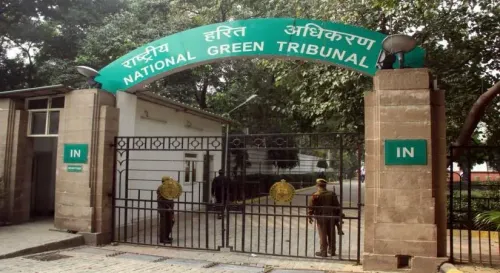
The National Green Tribunal (NGT) has directed the Jammu and Kashmir Pollution Control Committee (JKPCC) to submit a comprehensive fresh report on the status of wetlands across the union territory, specifically detailing their actual existing area alongside a comparison with their officially recorded revenue area. The order was passed by a Bench headed by NGT Chairperson Justice Prakash Shrivastava, with Expert Members Dr A. Senthil Vel and Dr Afroz Ahmad, at a hearing in New Delhi.
Background and Suo Motu Action
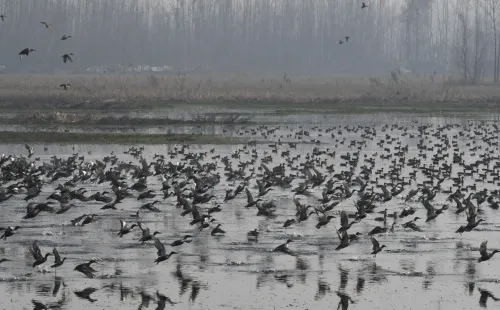
The Bench was hearing two matters related to wetland protection in Kashmir, one of which is a suo motu case registered by the tribunal after a news report raised concerns about the disappearance and progressive shrinking of lakes in Jammu and Kashmir. The JKPCC had filed a status report before the tribunal identifying 27 wetlands measuring more than one hectare and situated outside forest areas.
However, the NGT found the report incomplete, noting that crucial information from the Deputy Commissioners of Jammu and Kupwara districts was still awaited. The JKPCC had sought details from district administrations on the revenue area of wetlands, sources of pollution, and the extent of encroachments.
Key Findings on Ground-Level Status
District-level findings presented before the tribunal revealed a troubling picture. The Deputy Commissioner of Baramulla reported that the wetland known as Rakh-i-Dastipora could not be found to exist at its recorded site, with the proprietary land in the estate reportedly being used for paddy cultivation. In Kathua district, the Janglote wetland showed no encroachment or pollution source. No encroachment was reported in wetlands surveyed in Samba district either, though domestic effluent was identified as a pollution source at Mawa Sar.
Water Quality Analysis: Most Sites Fail Standards
Water quality analysis conducted at 19 locations across Jammu, Kathua, Samba, Kupwara and Baramulla painted a concerning picture. All three samples from Jammu failed to meet the Class B primary water quality criteria for outdoor bathing. In Samba, only two of nine samples met prescribed standards. In Kupwara, four of six wetlands tested failed, primarily due to high biochemical oxygen demand (BOD). The Rakh-i-Dastipora wetland in Baramulla also failed Class B criteria for BOD and dissolved oxygen levels. Only the sample from the Kathua wetland met the prescribed standards.
NGT Order and What Happens Next
The Justice Shrivastava-led Bench observed that the JKPCC had disclosed the revenue area of the identified wetlands but had failed to provide details of their actual existing area. The tribunal ordered: 'Therefore, the J&KPCC will obtain the details concerning the existing area of the wetland also and will give the comparative position of the revenue area and the existing area of the wetland.'
The JKPCC's Member Secretary indicated that an updated report would be filed after receiving the pending information from the Deputy Commissioners of Jammu and Kupwara. The tribunal directed the fresh report to be submitted at least one day before the next hearing. The matters have been listed for further hearing on 26 February 2027. The JKPCC has also written to its regional directors to identify persons, agencies, or departments responsible for environmental norm violations so that corrective and punitive action can be initiated.
Point of View
Replaced by agricultural use. This is not an isolated anomaly — it is symptomatic of decades of encroachment, revenue record neglect, and weak enforcement in J&K's ecologically sensitive water bodies. The water quality data is equally damning: the majority of tested sites fail basic bathing standards, suggesting that even the wetlands that survive on paper are functionally degraded. The gap between revenue records and ground reality is exactly the kind of accountability blind spot that allows encroachment to proceed unchallenged, and the NGT's insistence on a comparative area report is a step toward closing it — but only if district administrations respond with candour rather than delay.
NationPress
9 Nov 2026
Frequently Asked Questions
What has the NGT directed the JKPCC to do?
The NGT has directed the Jammu and Kashmir Pollution Control Committee to file a fresh report detailing the actual existing area of wetlands in J&K alongside their officially recorded revenue area, so the tribunal can assess how much wetland has been lost or encroached upon. The report must be submitted at least one day before the next hearing on 26 February 2027.
Why is the current JKPCC wetlands report considered incomplete?
The report filed by the JKPCC was found incomplete because information from the Deputy Commissioners of Jammu and Kupwara districts was still pending. The tribunal also noted that while revenue area figures were provided, the actual existing area of each wetland was not included.
What happened to the Rakh-i-Dastipora wetland in Baramulla?
According to information submitted to the NGT from the Deputy Commissioner of Baramulla, the wetland known as Rakh-i-Dastipora was not found to exist at its recorded site. The proprietary land in the estate is reportedly being used for paddy cultivation.
How did the wetlands perform on water quality tests?
Water quality tests at 19 locations showed widespread non-compliance — all three samples from Jammu, four of six wetlands in Kupwara, and several in Samba failed Class B primary water quality standards, mainly due to high biochemical oxygen demand (BOD). Only the Kathua wetland sample met the prescribed standards.
What action is being taken against those responsible for violations?
The JKPCC has written to its regional directors seeking identification of persons, agencies, or departments responsible for violations of environmental norms at the affected wetlands, so that both corrective and punitive action can be initiated.