Women safety central to Viksit Bharat 2047, says Panchayati Raj Secy Vivek Bharadwaj
Synopsis
India's Panchayati Raj Ministry is building a cadre of 28,500 master trainers to sensitise over 17.5 lakh male elected representatives on women's safety — a structural bet that changing attitudes at the village level is the missing link in the Viksit Bharat@2047 promise.
Key Takeaways
Panchayati Raj Secretary Vivek Bharadwaj stated that Viksit Bharat@2047 cannot be realised without ensuring women's safety, dignity, and equal participation.
Nirbhay Chetna , held 17–19 June in New Delhi , targets sensitisation of male elected representatives in Panchayati Raj Institutions.
The programme is part of the Nirbhay Raho initiative launched on 11 March 2026 , comprising three components: Nirbhay Netri , Nirbhay Chetna , and Nirbhay Drishti .
A cadre of 28,500 Master Trainers is being developed to reach over 17.5 lakh male elected representatives nationwide.
The pilot batch of 40 master trainers was drawn from 6 states : Assam, Chhattisgarh, Himachal Pradesh, Maharashtra, Odisha, and Uttarakhand.
The Nirbhay Chetna training module was developed by Transform Rural India and formally launched at the event.
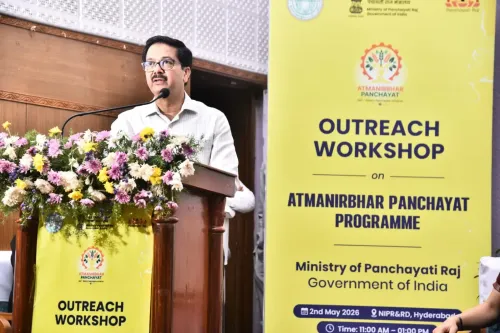
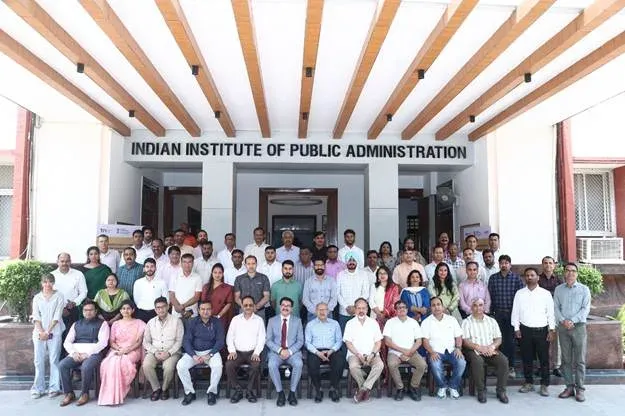
Panchayati Raj Secretary Vivek Bharadwaj on Friday, 20 June 2025, asserted that the vision of Viksit Bharat@2047 cannot be achieved without guaranteeing the safety, dignity, and equal participation of women at every level of governance. He was addressing participants at the Nirbhay Chetna initiative in New Delhi, a programme designed to sensitise male elected representatives on women-related issues.
What Nirbhay Chetna Aims to Achieve
Bharadwaj underscored the pivotal role of Panchayati Raj Institutions (PRIs) as engines of social and democratic transformation, capable of shifting attitudes and behaviours at the grassroots level. He noted that Nirbhay Chetna — held from 17 to 19 June — seeks to foster gender-sensitive leadership by positioning women's dignity, safety, and opportunity as non-negotiable pillars of development.
Sushil Kumar Lohani, Additional Secretary, Ministry of Panchayati Raj, reinforced that ensuring the safety and dignity of women is a collective societal responsibility, not merely a policy target. He highlighted the critical role Panchayats must play in building gender-responsive governance and creating safer, more enabling environments for women and girls across rural India.
The Nirbhay Raho Framework
Nirbhay Chetna is one of three complementary components under the broader Nirbhay Raho initiative, launched on 11 March 2026. The three pillars are:
Nirbhay Netri focuses on capacity-building and legal awareness among elected women representatives. Nirbhay Chetna targets elected male representatives, building sensitivity around gender equality and women's safety. Nirbhay Drishti envisages the installation of CCTV cameras at strategic rural locations to strengthen technology-enabled safety infrastructure within Panchayats.
Scale and Reach of the Programme
Under Nirbhay Chetna, a cadre of 28,500 Master Trainers is being developed at the state, district, and block levels. These trainers are expected to reach over 17.5 lakh male elected representatives across the country through a cascading training model.
The three-day programme also marked the formal launch of the Nirbhay Chetna training module, developed by Transform Rural India. The pilot batch comprised around 40 master trainers drawn from Assam, Chhattisgarh, Himachal Pradesh, Maharashtra, Odisha, and Uttarakhand — six states that will serve as the foundation before the model is expanded to all states and Union Territories.
Why This Matters for Rural Governance
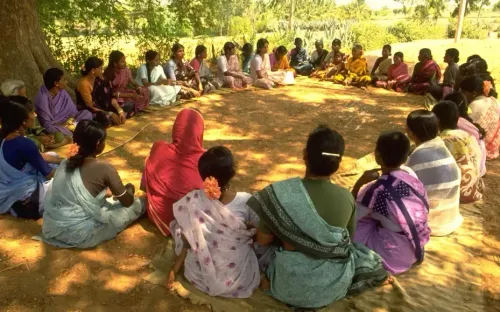
India's Panchayati Raj system encompasses millions of elected representatives, a significant share of whom are men who hold decisive influence over village-level resource allocation, dispute resolution, and social norms. Sensitising this cohort on gender equality is widely seen as a structural lever for reducing rural violence against women and enabling female leaders to function without intimidation. This initiative comes amid persistent data showing that elected women representatives in several states continue to face proxy governance — where male family members exercise power on their behalf — undermining the intent of reservation policies.
With the Nirbhay Raho framework now operationalised and a national rollout planned, the government's next steps will determine whether the programme translates into measurable change in rural women's safety outcomes.
Point of View
Male sensitisation, and surveillance infrastructure. But the real test is implementation fidelity. India has a long history of cascading training programmes that dilute sharply as they move from state to block to village level. The pilot covering just six states and 40 trainers is a modest start against a target of 17.5 lakh representatives. More critically, the proxy governance problem — where male relatives exercise power on behalf of elected women — requires enforcement action, not just sensitisation. Training without accountability mechanisms risks becoming a numbers exercise rather than a safety outcome.
NationPress
19 Sept 2026
Frequently Asked Questions
What is the Nirbhay Chetna initiative?
Nirbhay Chetna is a government programme under the Ministry of Panchayati Raj that sensitises male elected representatives on gender equality, women's safety, rights, and leadership. It is one of three components of the broader Nirbhay Raho initiative, launched on 11 March 2026.
What is the Nirbhay Raho initiative and what does it include?
Nirbhay Raho is a Ministry of Panchayati Raj initiative launched on 11 March 2026 to strengthen women's safety in rural India. It comprises Nirbhay Netri (capacity-building for elected women representatives), Nirbhay Chetna (gender sensitisation for male representatives), and Nirbhay Drishti (CCTV installation at strategic rural locations).
How many people will Nirbhay Chetna reach?
The programme aims to develop 28,500 Master Trainers at the state, district, and block levels, who will collectively reach over 17.5 lakh male elected representatives across India through a cascading training model.
Which states participated in the Nirbhay Chetna pilot?
The pilot batch of around 40 master trainers was drawn from six states: Assam, Chhattisgarh, Himachal Pradesh, Maharashtra, Odisha, and Uttarakhand. The model is to be expanded to all states and Union Territories subsequently.
Why is women's safety linked to Viksit Bharat@2047?
Panchayati Raj Secretary Vivek Bharadwaj stated that the Viksit Bharat@2047 vision — India's development goal for its centenary of independence — cannot be realised without ensuring women's safety, dignity, and equal participation. Officials argue that gender-responsive governance at the grassroots is a prerequisite for inclusive national development.