Why Did Odisha Congress Chief Criticise the Union Budget?
Synopsis
In a bold statement, Odisha Congress President Bhakta Charan Das condemns the 2026-27 Union Budget as 'anti-people.' He claims it favors a select few while neglecting crucial sectors. Discover his insights on how this budget impacts ordinary citizens and the future of Odisha.
Key Takeaways
Bhakta Charan Das labels the Union Budget as ‘anti-people’ .
Focus on corporate interests over public welfare.
Concern over rising national debt affecting future generations.
Critical sectors like education and healthcare ignored.
Call for inclusive growth and equitable development.
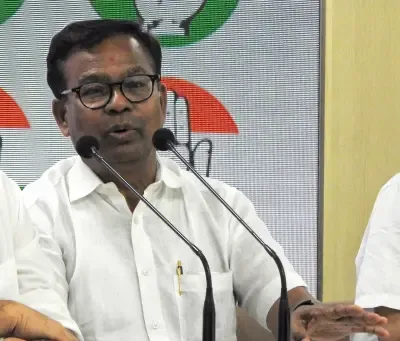
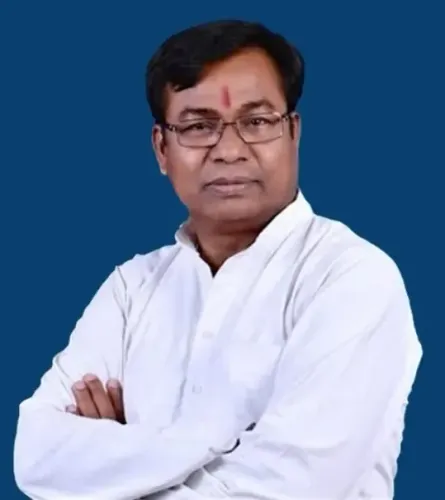
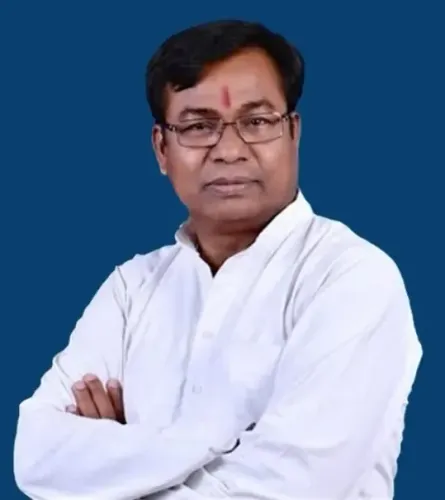
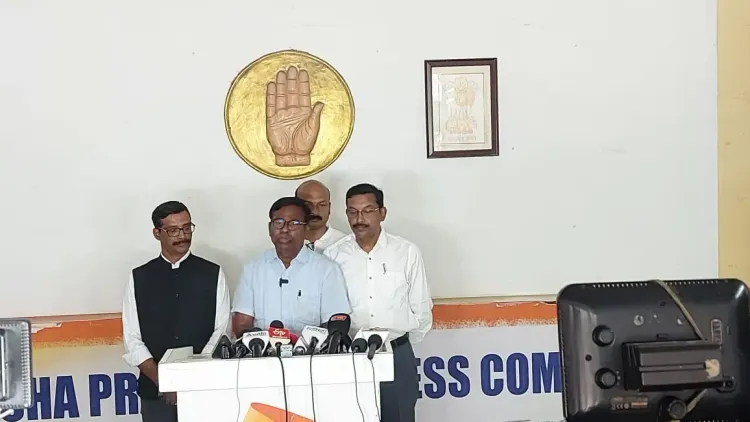
Bhubaneswar, Feb 1 (NationPress) The President of the Odisha Pradesh Congress Committee, Bhakta Charan Das, has expressed strong disapproval of the Union Budget for the financial year 2026–27, which was presented in Parliament, labeling it as ‘anti-people’ and ‘directionless’.
In a media briefing, Das alleged that the Union Budget introduced by Finance Minister Nirmala Sitharaman caters mainly to a “select group of industrialists” while failing to address the essential needs of farmers, women, youth, the economically disadvantaged, and the middle class.
He asserted that the budget offers advantages and incentives primarily to certain “capitalists”, thus leaving the broader population feeling “unresolved and disappointed”.
Critical sectors such as education, healthcare, employment generation, agriculture, and women's welfare, he claimed, have been neglected in the budget. The PCC president also raised alarms over the escalating national debt, arguing that the country has seen record borrowing in recent years under the leadership of Prime Minister Narendra Modi.
He pointed out that while past governments managed national development with limited borrowing, the current administration has accumulated enormous debt, amounting to roughly Rs 200 lakh crore, which includes an estimated borrowing of Rs 17.2 lakh crore for the financial year 2026-27. He noted that at the end of the UPA's tenure, the total national debt stood at Rs 55 lakh crore. This massive debt, he stated, represents a “burden on future generations of India.”
“This level of debt constitutes an assault on the nation’s 140 crore citizens and jeopardizes India's future,” Das added, highlighting that public savings have declined significantly while production and employment opportunities have not improved as promised.
According to Das, household savings have seen a dramatic drop, attributing this to the government's focus on corporate growth rather than public welfare. He claimed that during the UPA administration, household savings constituted 7.4 percent of GDP, whereas it has now decreased to 5.3 percent.
“Though the government speaks of growth, resource distribution is tilted towards large capitalists, sidelining the development of ordinary citizens,” he remarked. With a focus on Odisha, Das argued that the state has not received sufficient attention in the budget.
He commented on infrastructure projects such as freight corridors, asserting that these initiatives mainly serve to enhance the transportation of coal and industrial goods, rather than benefiting end consumers and local communities.
In wrapping up his statements, Das stated, “Had this Budget been genuinely for the people, it would have received favorable feedback. Instead, due to its opposition to public interest, I rate it negatively.” He called on the government to reassess its priorities and emphasize inclusive growth, social welfare, and equitable development, particularly for states like Odisha and marginalized segments of society.
Point of View
It's crucial to analyze the criticisms posed by Bhakta Charan Das regarding the Union Budget. While his concerns reflect the sentiments of many citizens, it's essential to consider the broader economic context and the government's rationale behind its allocations. A balanced discussion is necessary to understand both the challenges and the potential avenues for growth.
NationPress
2 Oct 2026
Frequently Asked Questions
What is the main criticism of the Union Budget by Bhakta Charan Das?
Bhakta Charan Das criticizes the Union Budget for 2026-27 as being 'anti-people' and 'directionless,' claiming it primarily benefits industrialists while neglecting the needs of farmers, women, youth, and the middle class.
How does Das view the impact of the national debt?
Das expresses concern over the rising national debt, stating it represents a burden on future generations and has escalated significantly under the current government.
What sectors does Das believe have been neglected in the Budget?
He argues that key sectors such as education, healthcare, employment generation, agriculture, and women's welfare have been largely ignored.
What does Das suggest the government should focus on?
Das urges the government to prioritize inclusive growth, social welfare, and equitable development, particularly for vulnerable communities and states like Odisha.
What is the significance of household savings in Das's argument?
Das highlights a significant decline in household savings, arguing that this shift indicates a problematic focus on corporate development over public welfare.