Odisha's New Guidelines Aim to Protect Labourers from Heatstroke

Synopsis
As temperatures rise in Odisha, the state government has implemented new guidelines to safeguard outdoor labourers from heat-related illnesses. This initiative, effective from April to June, aims to prevent heatstroke and ensure worker safety during the intense summer months.
Key Takeaways
Guidelines effective from April 1 to June 15.
Outdoor work prohibited between 11 a.m. and 3 p.m.
Employers must provide safe drinking water and shaded rest areas.
Medical personnel to be on alert for heat-related illnesses.
Aimed at protecting vulnerable outdoor workers.
Bhubaneswar, March 23 (NationPress) The government of Odisha has released a comprehensive set of guidelines on Monday to mitigate the risk of heatstroke among labourers as temperatures rise with the onset of summer. With expectations of extreme weather conditions in April and beyond, the Labour and Employees’ State Insurance Department has introduced various preventive strategies to protect workers, especially those engaged in outdoor jobs.
The directives will be in effect from April 1 to June 15. During this timeframe, employers must refrain from assigning any outdoor work between 11 a.m. and 3 p.m., the hottest part of the day.
This advisory has been disseminated to all state government departments, as well as Central government offices in Odisha, private employers, industrial sectors, business owners, and contractors.
Officials have emphasized the importance of modifying work schedules to prevent exposure of labourers to the harshest heat conditions.
In scenarios where outdoor work is necessary due to essential services or urgent tasks, employers are required to implement safeguards to protect workers' health.
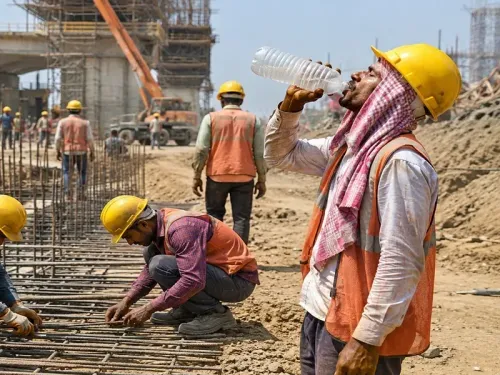
These safeguards include providing cool and safe drinking water at work sites, establishing shaded rest areas, ensuring access to basic medical facilities, and distributing oral rehydration solution (ORS) packets to the workforce.
This initiative aims to lower the frequency of heat exhaustion and heatstroke, which can pose serious health threats if not treated promptly. Furthermore, Chief District Medical Officers (CDMOs), Sub-Divisional Medical Officers (SDMOs), and medical staff at Primary Health Centres (PHCs), Community Health Centres (CHCs), and Employees’ State Insurance hospitals have been instructed to stay vigilant and ready to address heat-related health issues and provide timely care to those affected.
This proactive measure by the government reflects growing concerns regarding the effects of extreme weather on vulnerable groups, particularly outdoor workers and daily wage earners.
Point of View
Prioritizing the health and safety of labourers. This approach underscores the need for protective measures in the face of climate challenges, particularly for those in vulnerable occupations.
NationPress
22 Sept 2026
Frequently Asked Questions
What are the new guidelines for labourers in Odisha?
The guidelines include avoiding outdoor work from 11 a.m. to 3 p.m. and ensuring access to cool drinking water, shaded rest areas, and basic medical facilities.
How long will these guidelines be in effect?
The guidelines will be enforced from April 1 to June 15.
Who does the advisory apply to?
The advisory applies to all state and Central government departments, private employers, and various commercial establishments.
What measures are recommended for essential outdoor work?
Employers must implement safeguards like providing drinking water and shaded areas to protect workers.
Why is this initiative important?
This initiative aims to reduce heat-related illnesses among vulnerable populations, particularly daily wage earners and outdoor workers.