Om Birla backs 33% women's quota in Lok Sabha, state assemblies at Bengaluru CWP conference
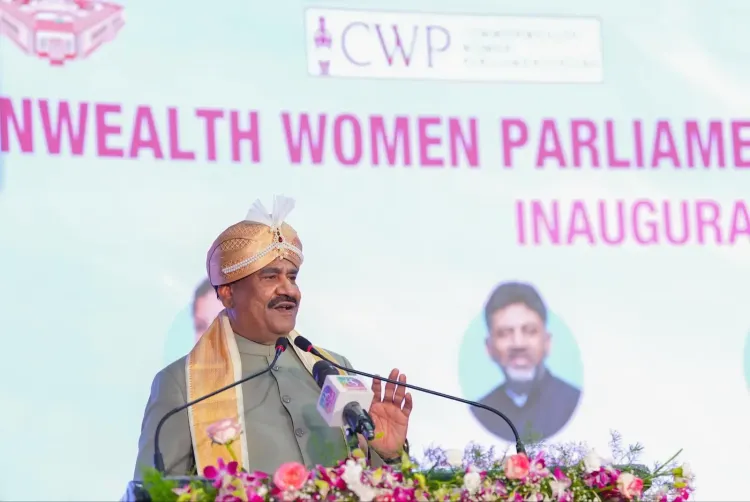
Synopsis
Lok Sabha Speaker Om Birla used the inaugural CWP India Region conference in Bengaluru to press the case for the long-pending 33 per cent women's reservation in Parliament and state assemblies — a law already passed in 2023 but yet to be enacted, its trigger tied to delimitation. With 150 countries represented at the same venue, the optics were global, but the accountability question remains domestic.
Key Takeaways
Lok Sabha Speaker Om Birla on 17 November 2026 expressed hope for implementation of 33 per cent women's reservation in the Lok Sabha and state assemblies under the Nari Shakti Vandan Adhiniyam, 2023 .
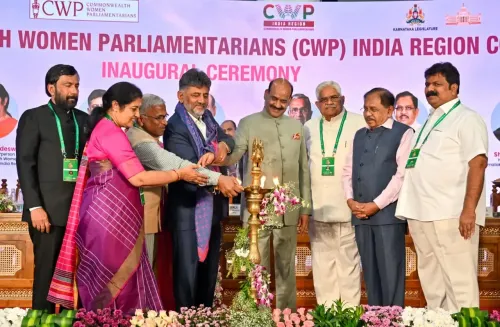
He addressed the first CWP India Region Conference at Vidhana Soudha Banquet Hall, Bengaluru , held alongside the Bengaluru Tech Summit .
Several states have already provided 33–50 per cent reservation for women in panchayats and local bodies .
Women officers in Parliament's administration have grown from one to 34–42 per cent , Birla noted.
Birla called for training all elected representatives, including at panchayat level, in AI and digital platforms .
Representatives from around 150 countries were present in Bengaluru for the concurrent Bengaluru Tech Summit .
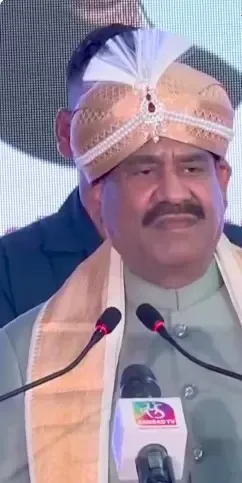
Lok Sabha Speaker Om Birla on Tuesday, 17 November 2026, expressed strong hope that India would move ahead with implementing 33 per cent reservation for women in the Lok Sabha and State Legislative Assemblies under the Nari Shakti Vandan Adhiniyam, 2023, calling for women's leadership to be strengthened across every democratic institution, from panchayats to Parliament. He made the remarks while addressing the inaugural session of the first Conference of Commonwealth Women Parliamentarians (CWP) India Region, held at the Vidhana Soudha Banquet Hall in Bengaluru.
Key Remarks at the CWP India Region Conference
Birla said women were no longer simply participants in public life but were increasingly taking the lead across policy-making, legislation, science, technology, and the armed forces. He noted that several states had already extended 33 per cent or 50 per cent reservation for women in panchayats and local bodies, and expressed hope that similar representation at the national and state legislative level would deepen democratic accountability.
'Greater women's participation in democratic institutions, policy formulation and law-making would make governance more empowered and effective,' Birla said, adding that women brought sensitivity and responsibility to democratic processes.
Women's Representation in Parliament's Administration
Birla cited internal progress within Parliament itself, noting that women's representation among officers in the Indian Parliament's administration had grown from just one earlier to between 34 and 42 per cent. He said parliamentary committees had functioned like mini-Parliaments and had made significant recommendations that brought measurable changes to the social and economic conditions of women.
Technology, AI and Women's Empowerment
Highlighting the transformative potential of technology, Birla called for greater use of artificial intelligence and digital platforms to help women elected representatives interact more effectively with constituents, address public grievances, and improve accountability. He proposed organising a dedicated event to discuss how AI could strengthen women's leadership in governance, and stressed that elected representatives at every level — including panchayats — should be trained in AI and digital tools to ensure transparency.
'These tools could also help elected representatives interact more effectively with citizens, understand their problems and find solutions to public grievances and crises,' he said.
Historical and Cultural Context
Describing Karnataka as a land of rich cultural and democratic heritage, Birla traced women's participation in public life to the 12th-century Anubhava Mantapa associated with Bhagwan Basaveshwara, citing it as an early example of democratic debate and inclusion. He also recalled the contributions of Kittur Rani Chennamma to the freedom struggle and Rani Lakshmibai of Jhansi, who led the 1857 uprising. He welcomed delegates and noted that representatives from around 150 countries had arrived in Bengaluru for the Bengaluru Tech Summit, being held alongside the conference.
What Comes Next
Birla congratulated D. Purandeswari for organising the conference, recalling that its first edition was held in Tirupati, with Bengaluru now hosting the second. He thanked Karnataka Chief Minister D.K. Shivakumar for organising the event and urging women legislators to mentor emerging leaders and share best practices. The ultimate objective, Birla said, was to ensure that the benefits of technology and democratic participation reached 'the last woman in society.' With the Nari Shakti Vandan Adhiniyam already on the books, the question of a delimitation-linked timeline for its implementation remains a key unresolved item on India's democratic agenda.
Point of View
But the Nari Shakti Vandan Adhiniyam is already law — passed in 2023 — and what it lacks is not political will on a dais but a delimitation exercise that successive governments have deferred. Speaking at a Commonwealth forum gives the remarks international optics, yet the domestic implementation clock has not moved. The real story is not whether the Speaker hopes for women's reservation, but when — and whether — the delimitation precondition will be satisfied. That question went unaddressed at the podium.
NationPress
17 Nov 2026
Frequently Asked Questions
What is the Nari Shakti Vandan Adhiniyam, 2023?
The Nari Shakti Vandan Adhiniyam, 2023 is a constitutional amendment that reserves 33 per cent of seats in the Lok Sabha and state legislative assemblies for women. Its implementation is linked to the completion of a delimitation exercise, which has not yet taken place.
What did Lok Sabha Speaker Om Birla say at the Bengaluru CWP conference?
Birla expressed hope that India would move forward with implementing the 33 per cent women's reservation in Parliament and state assemblies, and called for strengthening women's leadership across all democratic institutions from panchayats to Parliament. He also urged greater use of AI and digital tools by women elected representatives.
Where and when was the CWP India Region Conference held?
The first Conference of Commonwealth Women Parliamentarians India Region was held on 17 November 2026 at the Vidhana Soudha Banquet Hall in Bengaluru, alongside the Bengaluru Tech Summit.
What is the current status of women's reservation in India's panchayats?
Several Indian states have already implemented 33 per cent or 50 per cent reservation for women in panchayats and local bodies. The pending step is extending similar quotas to the Lok Sabha and state legislative assemblies under the 2023 law.
Who organised the CWP India Region Conference in Bengaluru?
The conference was organised by D. Purandeswari. Karnataka Chief Minister D.K. Shivakumar hosted the event and invited dignitaries from across the country. The second edition of the conference, its first was held in Tirupati.