Female Professionals Applaud Women's Reservation Bill for Gender Equality
Synopsis
Women professionals across India are celebrating the Women's Reservation Bill, which aims to secure 33% representation for women in Parliament. This landmark legislation promises to boost morale and enhance opportunities for women leaders, paving the way for greater gender equality in governance.
Key Takeaways
The Women's Reservation Bill allocates 33% of seats for women in Parliament.
Support from various women professionals highlights the importance of representation.
Concerns exist regarding the implementation process without a completed Census.
Women believe this will empower them and lead to societal improvements.
The bill is a significant move towards gender equality in governance.
New Delhi, April 7 (NationPress) Women professionals from diverse sectors across India expressed their support for the Women's Reservation Bill, which aims to allocate 33 percent of seats for women in the Lok Sabha and state Assemblies. As the Parliament's Budget Session is set to reconvene on April 16, the main focus will be on discussing potential amendments to the Women's Reservation Act, 2023 (Nari Shakti Vandan Adhiniyam), officially recognized as the Constitution (One Hundred and Sixth Amendment) Act.
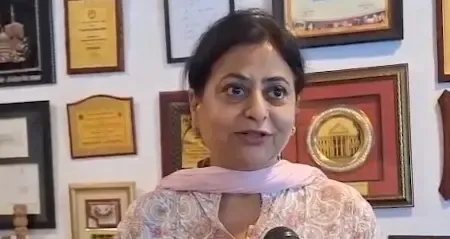
In backing the government's proposal to extend the Parliament session by three days for discussions regarding the amendments, Padma Shri awardee and Kajli singer Urmila Srivastava remarked, "An increase in the number of seats for women in the Lok Sabha and Assemblies will significantly enhance their morale and present them with improved opportunities to contribute.”
She expressed optimism that the Women's Reservation Act's implementation would greatly benefit women. "This will further empower women in contributing to the nation’s and society’s development. Historically, women have often been overlooked, but with additional seats, they will gain equal opportunities. It fills us with pride and joy,” Srivastava shared with IANS.
Business Consultant Anuradha Sharma stated, "The positive aspect of the Women's Reservation Bill is that previously, women held only 13 percent reservation in the Lok Sabha and Rajya Sabha, which was minimal. This Bill will increase that to 33 percent, marking a significant improvement.”
She anticipates that this change will positively affect women in various aspects, whether economic, physical, or mental. Expressing gratitude towards Prime Minister Narendra Modi, Sharma added, "Historically, there has been little emphasis on women's issues. We appreciate PM Modi for acknowledging our needs.”
Sharma emphasized that safety remains a paramount concern for women everywhere and asserted that female representatives in Parliament will be able to advocate for the challenges women face, as they are likely to experience similar issues.
She also called for the swift enactment of the Bill.
In agreement, former Civil Surgeon Dr. Chetna noted, "It is commendable that women are receiving recognition and advancement across all fields. Their 33 percent representation in Parliament is a remarkable step forward.”
An advocate from Hisar, Haryana, mentioned that while she was initially skeptical about reservation, she recognized the need for this Bill in today’s patriarchal society.
Praising PM Modi, she stated, "PM Modi has devised a way for women to have a voice in Parliament. This reservation is a commendable step towards achieving gender equality in society.”
She believes that reservation is necessary to challenge the prevailing patriarchal mindset.
"With this, women will gain awareness of their identity, venture out of their homes, and inspire many others to join them,” she affirmed.
Conversely, another advocate, Monica, expressed concerns about implementing 33 percent reservation, an increase from the previous 15 percent, without completing the Census.
She remarked that the Act should have been enacted much earlier.
Social worker Preeti Gupta commented, "In the past, only men contested and led in the Cabinet, but now women will also have the chance to participate. If a woman can manage a household, she can certainly govern a nation. This vision of PM Modi has propelled us forward.”
Highlighting the importance of women’s voices in education, social worker Sangeeta Tiwari added, "Women will now be able to advocate for educational matters in both the Assembly and Lok Sabha.”
Tiwari expressed hope for a decline in domestic violence incidents, believing that "women will now have a platform to address their concerns in both Lok Sabha and State Assemblies.”
Addressing the alarming rise in crimes against women, she stated, "Women will now have the opportunity to speak out, from the Vidhan Sabha to the Lok Sabha.”
"Seventy-seven years post-independence, we are finally receiving this respect, and I extend my gratitude to PM Modi for this,” Tiwari concluded.
Point of View
Concerns regarding its implementation without completing the Census persist. The national discourse emphasizes the need for inclusive representation in governance, reflecting a society where women's voices are valued and heard.
NationPress
7 Oct 2026
Frequently Asked Questions
What is the Women's Reservation Bill?
The Women's Reservation Bill proposes to reserve 33% of seats for women in the Lok Sabha and state Assemblies to enhance their political representation.
Why do women support this bill?
Women professionals believe the bill will boost their morale, provide greater opportunities, and strengthen their role in national development.
What are the expected outcomes of the bill?
The implementation of the bill is anticipated to lead to improved representation, reduced domestic violence, and increased advocacy for women's issues.
What concerns have been raised about the bill?
Some advocates question the feasibility of implementing the 33% reservation without completing the Census, arguing that it should have been enacted earlier.
How will this bill impact women's safety and issues?
Women leaders in Parliament will have a platform to raise important issues related to women's safety and rights, leading to more focused discussions and potential policy changes.