Pakistan minister Malik sidesteps terrorism questions at SCO meet in Delhi

Synopsis
Pakistan's Climate Minister Musadik Masood Malik — in New Delhi for the first time a Pakistani minister has visited India since 2023 — repeatedly sidestepped direct questions on cross-border terrorism, insisting the SCO forum was not the place for bilateral confrontation. With the Pahalgam attack still fresh and India's MEA maintaining a hardline stance, Malik's visit is as much a study in diplomatic evasion as it is a rare moment of face-to-face engagement.
Key Takeaways
Pakistan's Federal Minister Musadik Masood Malik visited New Delhi on 20 November 2026 for the first SCO Civilisational Dialogue Forum .
Malik repeatedly deflected questions on Pakistan's role in cross-border terrorism, calling the multilateral forum the wrong setting for such a discussion.
He cited Pakistan's own civilian and security losses to terrorism, claiming thousands had been killed over the past one to two years.
His visit is the first by a Pakistani minister to India since the SCO Foreign Ministers' Meeting in Goa in 2023 .
India's MEA reiterated on 13 November that New Delhi's position on Pakistan following the Pahalgam terror attack remains unchanged.
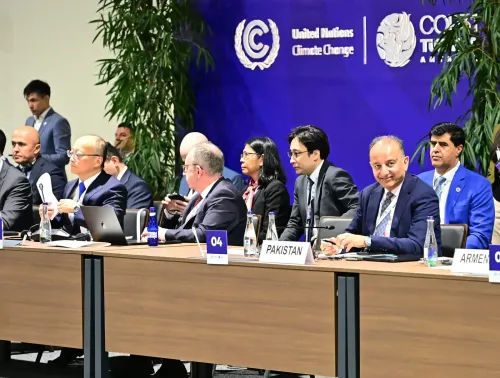
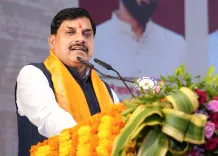
Pakistan's Federal Minister for Climate Change and Environmental Coordination, Musadik Masood Malik, on Friday, 20 November 2026, repeatedly deflected questions on Islamabad's alleged role in cross-border terrorism while speaking to Indian media on the sidelines of the first Shanghai Cooperation Organisation (SCO) Civilisational Dialogue Forum being held in New Delhi. Malik, who is in India for the multilateral event, said he did not want 'such a big discussion' to be held at a bilateral level.
What Malik Said on Terrorism
When pressed on the action Pakistan has taken regarding terrorism, the minister deflected to the broader regional context. 'I have come here on a multilateral forum and I want a good multilateral forum to be held... These issues are very wide. You just saw some issues of Iran in our neighbourhood, many issues in Central Asia, many issues in Afghanistan,' Malik said.
Notably, he sought to draw a parallel with Pakistan's own losses. 'Many incidents have occurred in your country as well, however, if you look at us, thousands of people, over the past one, one-and-a-half, or two years, thousands of people, have been martyred. And every day, we have to carry their coffins on our shoulders. So, we also want a lasting solution to be found for all these issues,' he added. Critics are likely to point out that this framing avoids direct accountability for cross-border attacks targeting India.
He argued that instead of 'pointing fingers at one another' in a bilateral setting, the challenges of the entire region should be discussed collectively at forums like the SCO.
Significance of the Visit
Malik's presence in New Delhi marks the first visit by a Pakistani minister to India since the SCO Foreign Ministers' Meeting in Goa in 2023, which was attended by Pakistan's then Foreign Minister Bilawal Bhutto. The visit is therefore being closely watched as a diplomatic signal, even as substantive bilateral engagement remains frozen.
This comes amid a sharply strained India-Pakistan relationship following the Pahalgam terror attack. On 13 November, Ministry of External Affairs (MEA) spokesperson Randhir Jaiswal stated: 'As far as our position on Pakistan after the Pahalgam terror attack is concerned, it should be amply clear to all as to where we stand.' New Delhi has not signalled any softening of its stance.
Malik's Take on the SCO Forum
The minister was more forthcoming in his praise of the multilateral event itself. 'Yes, it is very good. We just had a very good conversation, and we are very pleased to be here. There are many of our neighbours whom we don't get the opportunity to meet together, to have a conversation with, to listen to their point of view, and more importantly than just listening, to understand it,' he said.
When asked about exploring India during his visit, Malik acknowledged that his schedule left little room. 'However, whatever opportunity I do get, I would want to meet people, see different places, and be able to understand them a bit, to understand the place as well as the people. People and places are one and the same,' he said.
India-Pakistan Ties: The Wider Context
The SCO framework has become one of the few channels through which Indian and Pakistani officials find themselves in the same room, given the near-total breakdown of bilateral diplomacy. The 2023 Goa meeting and now the 2026 New Delhi forum follow that pattern — multilateral necessity, not bilateral thaw. Analysts note that Malik's deliberate avoidance of terrorism-related questions is consistent with Islamabad's standard posture at multilateral venues: deflect specifics, invoke shared regional suffering, and resist bilateral accountability frameworks. India's position, by contrast, has been to insist that terrorism remains the core obstacle to any normalisation.
How the two sides navigate future SCO engagements — including whether the dialogue produces any behind-the-scenes contact — will be closely monitored in the weeks ahead.
Point of View
Bilateral accountability declined, and the SCO's collective framework offered as a shield. What is striking is not just what he avoided saying, but that he was in New Delhi at all: the visit itself is the diplomatic signal, however thin. India's MEA has refused to dress this up as a thaw, and rightly so. The core problem — cross-border terrorism — went unaddressed, which means the SCO is functioning as a pressure valve rather than a resolution mechanism. Until Islamabad engages directly on specific incidents rather than framing every question as a regional grievance, these encounters will remain photo opportunities, not turning points.
NationPress
21 Nov 2026
Frequently Asked Questions
Why is Pakistan's minister Musadik Masood Malik in India?
Malik is in New Delhi to attend the first SCO Civilisational Dialogue Forum, a multilateral event hosted in the Indian capital. His visit is the first by a Pakistani minister to India since the SCO Foreign Ministers' Meeting in Goa in 2023.
What did Malik say when asked about Pakistan's role in cross-border terrorism?
Malik repeatedly deflected the question, saying the SCO forum was a multilateral platform and not the place for bilateral confrontations. He cited Pakistan's own losses to terrorism, claiming thousands of people had been killed over the past one to two years.
What is India's current position on Pakistan following the Pahalgam terror attack?
The Ministry of External Affairs, through spokesperson Randhir Jaiswal on 13 November, stated that India's position on Pakistan after the Pahalgam terror attack is 'amply clear.' New Delhi has not signalled any change in its hardline stance.
What is the SCO Civilisational Dialogue Forum being held in New Delhi?
It is a multilateral forum under the Shanghai Cooperation Organisation (SCO) framework, being held in New Delhi in November 2026. It has brought together representatives from SCO member states, including Pakistan, to discuss regional civilisational and cultural themes.
How significant is Malik's visit to India diplomatically?
The visit is diplomatically notable as the first by a Pakistani minister to India in over two years, since Bilawal Bhutto attended the SCO Foreign Ministers' Meeting in Goa in 2023. However, it has taken place in a multilateral context, not a bilateral one, and India-Pakistan relations remain severely strained.