Pakistan school collapse kills 35, seventh polio case in 2026 exposes child safety crisis

Synopsis
A school roof that killed 35 in Peshawar and a polio case in Karachi — both in the same week — have forced a reckoning with how Pakistan protects its children. With over 4,000 government schools declared structurally unsafe and wild poliovirus still circulating, these are not isolated incidents but symptoms of deeper institutional neglect.
Key Takeaways
A private school building in Dir Colony, Peshawar collapsed on 15 October 2026 , killing 34 children and one female teacher ; most victims were aged 13 and below .
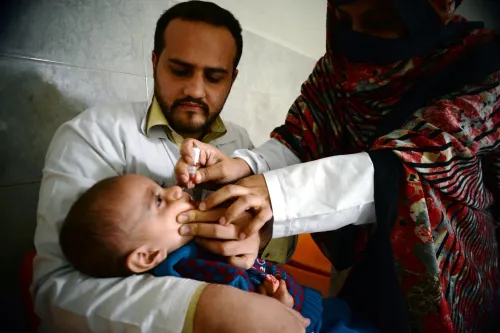
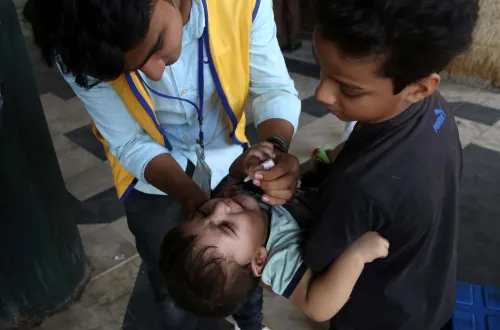
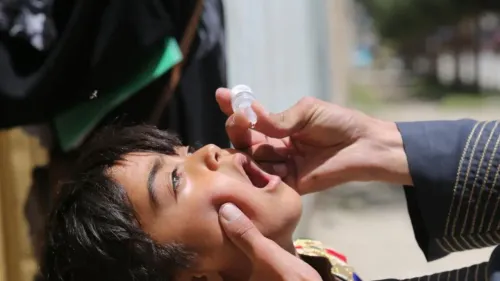
Pakistan recorded its seventh polio case of 2026 on 19 October — a six-month-old boy in Karachi testing positive for wild poliovirus.
The Peshawar High Court demanded explanations from the provincial government on 21 October 2026 over the school collapse.
Khyber Pakhtunkhwa's education department has declared 4,049 government schools 'dilapidated', requiring PKR 16.2 billion for reconstruction and repairs.
Pakistan and Afghanistan remain the only two countries where wild poliovirus is still endemic, despite cases falling from around 20,000 in the early 1990s to seven in 2026.
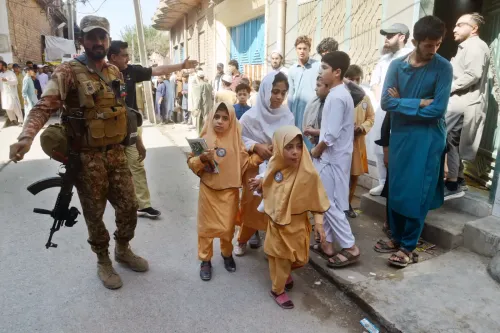
Two separate crises — a deadly school building collapse in Peshawar and a fresh wild poliovirus detection in Karachi — have converged to lay bare the acute vulnerability of children in Pakistan, according to a report by Pressenza International News Agency. Together, the incidents paint a troubling picture of institutional failure, weak oversight, and unfinished public health battles.
The Peshawar School Collapse: What Happened
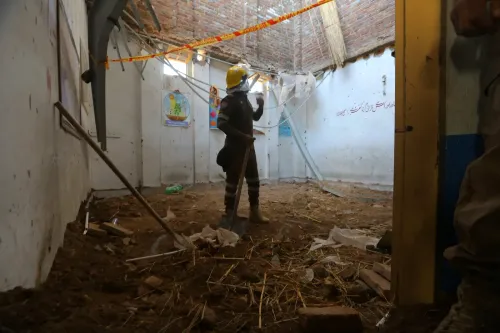
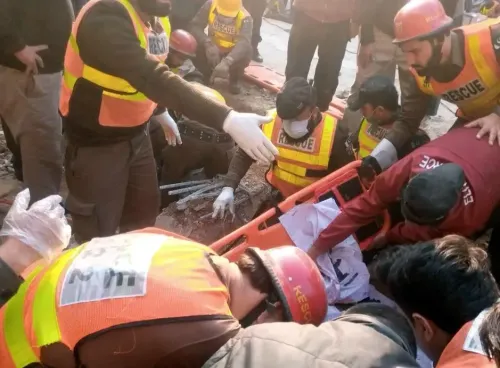
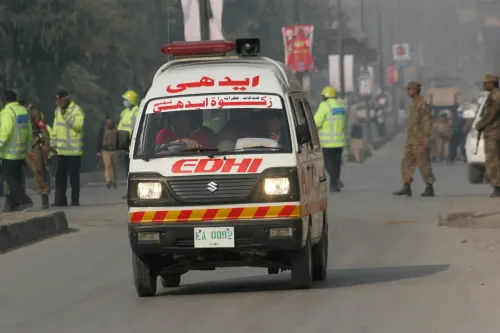
On 15 October 2026, the roof of a private education centre in Dir Colony, Peshawar, caved in during classes, killing 34 school children and one female teacher and injuring dozens more. Rescue teams spent hours sifting through rubble as parents waited desperately outside. The majority of the children who died were aged 13 years and below, according to the report.
Preliminary police assessments revealed that the building had structural weaknesses, and that additional construction weight above the classrooms may have contributed to the collapse. Authorities arrested the owner of the school and launched an investigation. Families of the victims stated that concerns about the safety of the building had been raised previously, raising questions of prior negligence.
On 21 October 2026, the Peshawar High Court demanded explanations from the provincial government and relevant officials. The court's intervention followed petitions from victims' families and legal representatives seeking a transparent probe.
The Polio Setback: Seventh Case of 2026
Just days after the Peshawar tragedy, the National Emergency Operations Centre for Polio Eradication confirmed on 19 October 2026 that a six-month-old boy in Karachi had tested positive for wild poliovirus — Pakistan's seventh polio case of the year. Pakistan and Afghanistan remain the only two countries in the world where wild poliovirus is still endemic.
The broader trajectory does show progress: from approximately 20,000 polio cases in the early 1990s, the number has fallen to seven as of 19 October 2026. However, as the Karachi case underlines, progress does not equal eradication, and gaps in vaccination coverage continue to leave children exposed.
4,049 Government Schools in KP Declared 'Dilapidated'
The Peshawar collapse appears to have prompted a broader reckoning. Initial estimates from Khyber Pakhtunkhwa's elementary and secondary education department revealed that 4,049 government schools across the province have been declared in a 'dilapidated' condition and require immediate reconstruction or rehabilitation. The structures needing attention include 8,088 classrooms, 2,949 group latrines, and 48 examination halls.
The total cost of reconstruction and repair is estimated at PKR 16.2 billion, according to the department's own assessment, reported in the Pakistani daily Dawn. The government has also directed the Elementary and Secondary Education Authority (ESEA) to conduct inspections of private school buildings across Khyber Pakhtunkhwa. This survey was conducted specifically in response to the Dir Colony collapse.
What Connects the Two Crises
Social worker Chrysoula Asteriadou, cited in the Pressenza report, drew a direct line between the two episodes: 'A collapsing school and a new polio case are not the same kind of crisis. The first raises questions about construction safety, oversight and possible negligence. The second concerns public health, vaccination coverage and the difficulties of eradicating a virus. What connects them is the vulnerability of children.'
Asteriadou also highlighted a structural inequity in the school collapse: for families with limited financial resources, affordable private schools may be among the very few available educational options. 'That social necessity, however, cannot justify lower safety standards,' she noted, adding that the Peshawar High Court's intervention brought a wider institutional question into focus — who is responsible for overseeing the conditions under which educational facilities operate, and how effectively safety regulations are being enforced.
What Comes Next
The investigation into the Peshawar collapse remains ongoing, with the school owner in custody and court-mandated accountability proceedings underway. The ESEA inspection of private schools across Khyber Pakhtunkhwa is expected to widen the picture of structural risk. On the polio front, health authorities will need to examine vaccination coverage gaps in Karachi following the latest detection. Both developments are likely to intensify pressure on Pakistan's provincial and federal authorities to move from survey to action on child safety.
Point of View
Both underfunded and under-monitored at the provincial level. The Khyber Pakhtunkhwa survey finding 4,049 unsafe government schools is, if anything, a conservative floor — it covers only state schools and was only triggered by a catastrophe. Private schools serving low-income families have historically operated in a regulatory grey zone, and the ESEA inspections now ordered will test whether this moment produces genuine enforcement or another round of paperwork. On polio, seven cases in 2026 may look like progress against 20,000 in the 1990s, but each new case signals a localised breakdown in vaccination reach — and Karachi, with its dense, mobile population, is precisely the kind of setting where chains of transmission are hardest to break. The deeper accountability question is systemic: who is held responsible between a school registration window and a roof that falls in?
NationPress
30 Oct 2026
Frequently Asked Questions
What happened in the Peshawar school building collapse?
On 15 October 2026, the roof of a private education centre in Dir Colony, Peshawar, collapsed during classes, killing 34 children and one female teacher and injuring dozens more. Preliminary police assessments pointed to structural weaknesses in the building, and the school's owner was arrested as an investigation was launched.
What is Pakistan's seventh polio case of 2026?
On 19 October 2026, the National Emergency Operations Centre for Polio Eradication confirmed that a six-month-old boy in Karachi had tested positive for wild poliovirus — Pakistan's seventh such case in 2026. Pakistan and Afghanistan are the only two countries in the world where wild poliovirus remains endemic.
How many schools in Khyber Pakhtunkhwa are considered unsafe?
The Khyber Pakhtunkhwa elementary and secondary education department's initial estimates have identified 4,049 government schools in the province as 'dilapidated', requiring immediate reconstruction or rehabilitation at an estimated cost of PKR 16.2 billion. The structures needing attention include 8,088 classrooms, 2,949 group latrines, and 48 examination halls.
What action did the Peshawar High Court take after the school collapse?
On 21 October 2026, the Peshawar High Court demanded explanations from the provincial government and relevant officials regarding the collapse. The court acted following petitions from victims' families and legal representatives who sought a transparent and independent investigation.
Why does Pakistan still have polio cases despite decades of vaccination drives?
While polio cases in Pakistan have fallen dramatically — from around 20,000 in the early 1990s to seven as of 19 October 2026 — gaps in vaccination coverage, difficult terrain, and population mobility continue to allow the wild poliovirus to persist. Pakistan and Afghanistan remain the only two countries where the virus is still endemic, highlighting that sustained last-mile outreach remains unfinished.