Pakistan school collapses: 31 kids dead in Peshawar, 4,049 schools unsafe
Synopsis
Two school collapses — a boundary wall in Karachi and a roof in Peshawar — killed at least 36 people, including 31 children, within weeks of each other. A government survey that followed found 4,049 schools in Khyber Pakhtunkhwa are in 'dilapidated' condition, with repair costs estimated at PKR 16.2 billion. Pakistan's education infrastructure crisis, long ignored, has been laid bare.
Key Takeaways
A private school roof collapse in Peshawar on 15 October killed at least 31 children and 2 female teachers , injuring over 50 others.
A separate boundary wall collapse at a government school in Orangi town, Karachi , on 11 September killed 5 men .
A government survey found 4,049 schools in Khyber Pakhtunkhwa are in 'dilapidated' condition requiring immediate reconstruction.
Estimated repair and reconstruction cost is PKR 16.2 billion , covering 8,088 classrooms , 2,949 group toilets , and 48 examination halls .
The ESEA has been directed to inspect private school buildings in Khyber Pakhtunkhwa following the Peshawar collapse.
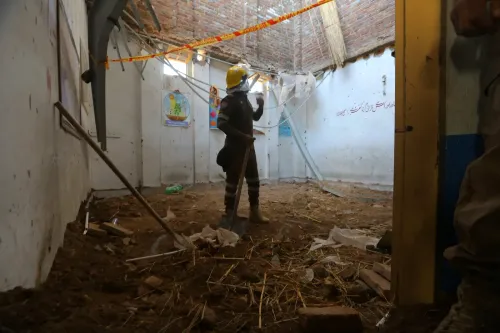
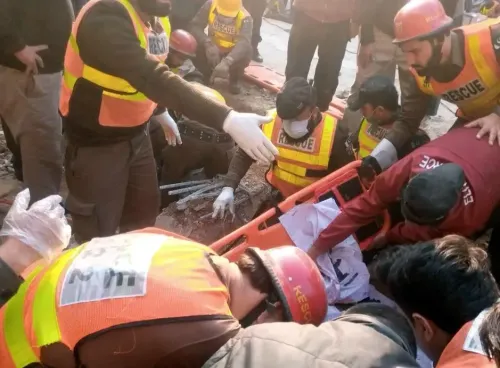
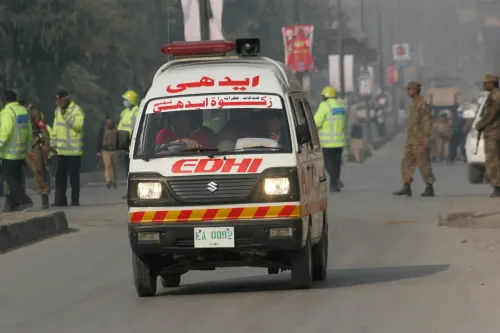
At least 31 children and two female teachers were killed and more than 50 others injured when the roof of a private school collapsed in Dir Colony, Peshawar, on 15 October 2026, according to the Lady Reading Hospital (LRH). The tragedy followed a separate incident on 11 September in which five men died after a boundary wall of a government school in Orangi town, Karachi, caved in. Together, the two collapses have thrust the deteriorating physical condition of Pakistan's educational infrastructure into urgent public debate.
Two Incidents, One Systemic Crisis
The circumstances of the Karachi and Peshawar collapses differ significantly. In Karachi, the boundary wall of the government school was already widely known to be in a dilapidated state when it gave way during off-hours; the school was shut at the time. According to police accounts, several individuals had reportedly gathered near the premises to consume narcotics, and some were allegedly attempting to extract steel rebar from the wall when it fell.
The Peshawar incident was far deadlier and struck during active school hours. Authorities determined that the private school building collapsed due to a weak structural foundation and construction work that had placed additional load on an already fragile roof — a catastrophic combination that left children with no warning and no escape.
A report by Kathmandu-based publication 'Nepal Aaja', citing Dawn, noted: 'The Karachi and Peshawar incidents differ in their immediate circumstances, but both have brought the physical condition of educational premises into public scrutiny. In one case, a deteriorating wall collapsed outside school hours; in the other, a roof gave way while children were attending classes. Together, they illustrate how neglected structural hazards can have devastating consequences.'
Scale of the Problem in Khyber Pakhtunkhwa
In the immediate aftermath of the Peshawar collapse, the Khyber Pakhtunkhwa elementary and secondary education department conducted a survey of government schools across the province. The findings were alarming: an estimated 4,049 government schools in Khyber Pakhtunkhwa are currently in a 'dilapidated' condition and require immediate reconstruction or rehabilitation to safeguard students and teachers, according to local media reports.
The department's initial estimates place the cost of reconstruction and repair at PKR 16.2 billion. The structures identified as requiring intervention include 8,088 classrooms, 2,949 group toilets, and 48 examination halls, according to a report in Dawn.
Regulatory Response and Private School Inspections
Following the Peshawar roof collapse, the Khyber Pakhtunkhwa government directed the Elementary and Secondary Education Authority (ESEA) to extend inspections to private school buildings across the province as well — a notable expansion of scrutiny beyond government-owned premises. The move signals an acknowledgement that structural negligence is not confined to state-run institutions.
This is not an isolated concern. Critics argue that inadequate building safety regulations and lax enforcement have long enabled construction shortcuts in both public and private educational facilities across Pakistan, with catastrophic consequences that recur each time a structure reaches a breaking point.
What Comes Next
The Khyber Pakhtunkhwa government's survey and cost estimates are described as initial, suggesting the final tally of unsafe schools — and the funds required — could be higher. Whether federal and provincial budgets will mobilise the PKR 16.2 billion needed, or whether institutional attention will fade once media pressure eases, remains to be seen. Advocates for child safety and education rights argue that systematic, independent audits of school infrastructure — both government and private — are the minimum credible response to prevent the next preventable collapse.
Point of View
Including private institutions and other provinces, is almost certainly far larger. Without a mandatory, independently verified national audit of school infrastructure — and legal accountability for those who approved unsafe buildings — the survey risks being another data point that produces reports rather than rebuilt classrooms.
NationPress
29 Oct 2026
Frequently Asked Questions
What happened in the Peshawar school collapse?
On 15 October, the roof of a private school in Dir Colony, Peshawar, collapsed while children were attending classes, killing at least 31 children and 2 female teachers and injuring more than 50 others. Authorities attributed the collapse to a weak building structure and additional construction weight placed on an already fragile roof.
What happened in the Karachi school wall collapse?
On 11 September, a boundary wall of a government school in Orangi town, Karachi, collapsed and killed five men. The school was closed at the time; police accounts indicate those who died had gathered near the premises, with some reportedly attempting to extract steel from the wall when it gave way.
How many schools in Pakistan are unsafe?
Initial estimates by the Khyber Pakhtunkhwa elementary and secondary education department found 4,049 government schools in the province alone are in a dilapidated condition requiring immediate reconstruction or rehabilitation. The survey was triggered by the Peshawar collapse and does not yet cover all provinces or private institutions.
How much will it cost to repair unsafe schools in Khyber Pakhtunkhwa?
The department's initial estimates put the cost at PKR 16.2 billion, covering reconstruction and repair of 8,088 classrooms, 2,949 group toilets, and 48 examination halls across the province's government schools.
What steps has the government taken after the Peshawar collapse?
Following the Peshawar roof collapse, the Khyber Pakhtunkhwa government directed the Elementary and Secondary Education Authority (ESEA) to conduct structural inspections of private school buildings across the province in addition to surveying government schools. Whether these inspections will lead to mandatory closures or enforced repairs remains to be confirmed.