Pakistan's economy 'stabilisation' leaves ordinary citizens worse off: Report
Synopsis
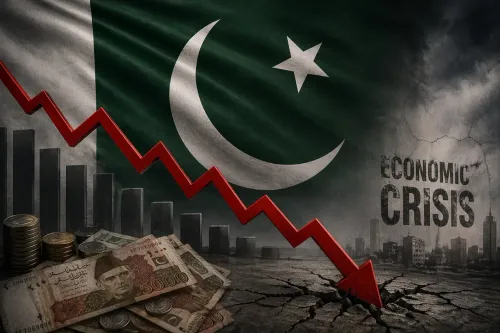
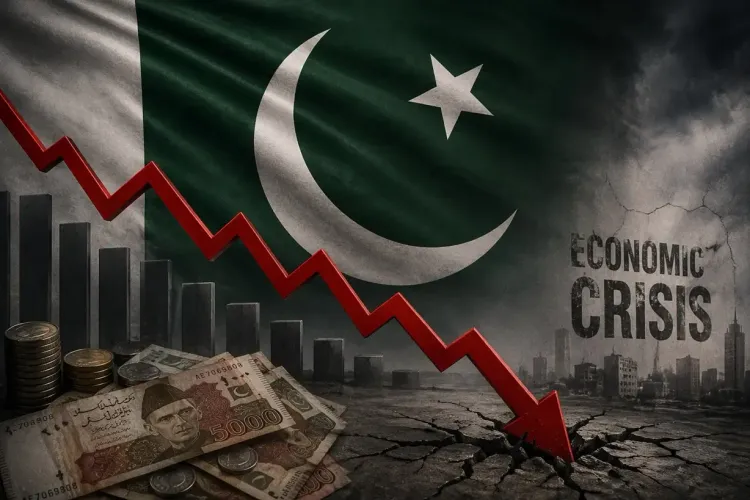
Pakistan's government has spent four years calling its economy 'stabilised' — but a new report reveals that stabilisation meant stopping the freefall, not lifting living standards. With just 4.6% of Rs 90 trillion in public spending reaching development, and government debt nearly doubling from Rs 47 trillion to Rs 83 trillion, ordinary Pakistanis have seen little benefit from the IMF-backed strategy.
Key Takeaways
Pakistan's 'stabilisation' over four years halted economic decline but did not improve incomes, jobs, or public services, according to a report by Asian News Post .
Total public expenditure over the period reached Rs 90 trillion , with 33% consumed by debt servicing alone.
Only 4.6% of total spending went to the Public Sector Development Programme (PSDP) , the primary vehicle for development investment.
Government debt nearly doubled, rising from approximately Rs 47 trillion in 2022 to roughly Rs 83 trillion by 2026 .
State-owned enterprise losses and a faulty taxation policy are cited as compounding factors in Pakistan's fiscal crisis.
Pakistan's much-touted economic 'stabilisation' over the past four years has largely meant the economy stopped contracting — not that incomes rose, jobs were created, or public services improved, according to a new report by Colombo-based publication Asian News Post. The findings, published on 9 October 2026, offer a sharp critique of the economic strategy pursued under Prime Minister Shehbaz Sharif's government.
Stabilisation vs Prosperity: A Critical Distinction
The report draws a pointed distinction between economic stabilisation and genuine recovery. According to its findings, the Sharif government prioritised avoiding sovereign default through IMF-backed programmes, a strategy that ensured short-term fiscal order but at the cost of long-term investment and growth. The majority of public expenditure, the report argues, went toward maintaining the existing administrative and financial system rather than building future economic capacity.
'Most spending was consumed by routine operations, debt obligations, transfers, and subsidies, while very little was invested in infrastructure, human capital, or long-term development,' the publication noted. Many ordinary Pakistanis, it added, mistook the word 'stability' to mean that economic conditions had materially improved — a perception the data does not support.
Where Pakistan's Money Actually Went
Over the last four years, total public expenditure reached Rs 90 trillion. The breakdown reveals a structural imbalance: roughly 33% went to debt servicing, 28.2% was transferred to provinces under the NFC award, 9.1% was allocated to defence, 7.4% to pensions, 10% covered losses of state-owned enterprises, 3.4% was directed to energy subsidies, and 2.9% went to the Benazir Income Support Programme.
Critically, only around 4.6% was channelled through the Public Sector Development Programme (PSDP) — the government's primary mechanism for development spending. This is a strikingly small share for a country with a rapidly growing population that requires new schools, hospitals, roads, water systems, public transportation, and energy infrastructure.
Debt Surge Compounds the Crisis
Government debt has ballooned significantly over the period under review, rising from approximately Rs 47 trillion in 2022 to roughly Rs 83 trillion by 2026, according to the report. As borrowing surged, so did interest payments, which now consume ever-larger portions of government revenue — leaving fewer resources available for productive development spending.
The report also flags persistent losses at state-owned enterprises and a faulty taxation policy as factors compounding Pakistan's fiscal bind. This combination of high debt servicing costs and structurally weak revenue generation has, critics argue, trapped the economy in a cycle where stabilisation programmes repeatedly rescue it from default without addressing the underlying conditions that make default a recurring risk.
What This Means for Pakistan's Future
This comes amid growing concern among economists that successive stabilisation programmes were designed to keep Pakistan's economy afloat rather than to deliver prosperity. Notably, the pattern of IMF-backed austerity followed by fiscal slippage has repeated itself several times since the 1980s, raising questions about whether the current programme breaks that cycle.
With Pakistan's population growing and infrastructure needs compounding, the gap between what a stabilised economy promises and what it delivers for ordinary citizens is likely to remain a flashpoint — both politically and economically — in the years ahead.
Point of View
Not a citizen-first one. With debt servicing alone absorbing a third of all public spending and development investment at just 4.6%, the structural priorities are unmistakable. What's missing from mainstream coverage is the political economy of why this pattern repeats — each stabilisation round reduces the pressure to reform taxation, privatise loss-making SOEs, or widen the revenue base, ensuring the next crisis is only a few years away. Until Pakistan's leadership treats fiscal reform as a political imperative rather than an IMF condition, 'stabilisation' will remain a word that reassures bond markets while leaving citizens behind.
NationPress
9 Oct 2026
Frequently Asked Questions
What does Pakistan's economic 'stabilisation' actually mean for ordinary citizens?
According to the report, 'stabilisation' meant the economy stopped contracting — not that living conditions improved. Incomes, employment, and public services have seen little to no meaningful improvement for ordinary Pakistanis despite years of government claims of economic progress.
How much has Pakistan's government debt grown in recent years?
Pakistan's government debt rose from approximately Rs 47 trillion in 2022 to roughly Rs 83 trillion by 2026, nearly doubling in four years. Rising interest payments on this debt have consumed an increasing share of government revenue, crowding out development spending.
How much of Pakistan's public spending went to development?
Only around 4.6% of total public expenditure over the four-year period was channelled through the Public Sector Development Programme (PSDP), Pakistan's main development spending mechanism. The bulk went to debt servicing (33%), provincial transfers (28.2%), defence (9.1%), and pensions (7.4%).
What role has the IMF played in Pakistan's economic strategy?
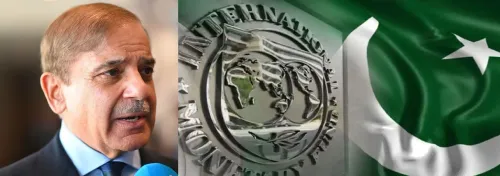
The Shehbaz Sharif government has relied on IMF-backed programmes primarily to avoid sovereign default, according to the report. Critics argue this approach prioritised short-term fiscal order over long-term investment, keeping the economy viable for creditors but not delivering growth or improved services for citizens.
Why do successive Pakistani stabilisation programmes fail to deliver prosperity?
The report argues that Pakistan's stabilisation programmes were designed to keep the economy afloat rather than to deliver prosperity. Structural issues — including state-owned enterprise losses, a faulty taxation policy, and ballooning debt obligations — have repeatedly diverted public resources away from infrastructure, human capital, and long-term development.