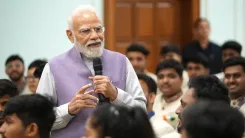
Tharoor backs SC order on Delhi protest curbs
Synopsis
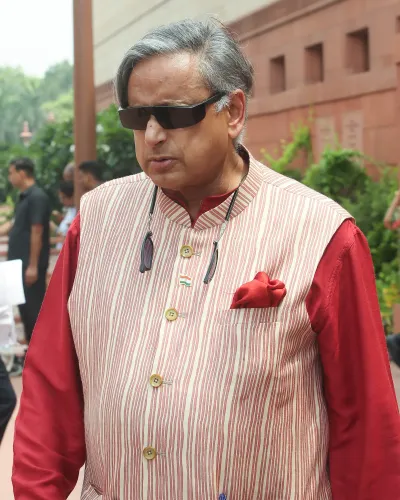
Congress MP Dr. Shashi Tharoor backed the Supreme Court's directive telling the Centre it cannot shut Delhi's Metro and trains to pre-empt the October 10 protest, quoting the Chief Justice's warning that 'law and order is your responsibility — it's not state property only.'
Key Takeaways
The Supreme Court directed the Centre to allow Delhi Metro and train services to run in a regulated — not suspended — manner ahead of the October 10 protest.
The Chief Justice stated: 'Law and order is your responsibility.
It's not state property only' — a direct caution against using transit shutdowns as crowd control.
Shashi Tharoor framed the court's intervention as proof that 'regulation cannot become prohibition' under the Modi government .
Tharoor argued that disrupting millions of commuters to suppress dissent signals governmental insecurity, not confidence.
The dispute centres on Article 19(1)(b) — the constitutional right to peaceful assembly — and its limits under state power.
The Congress party used the judicial check to reinforce its broader positioning as a defender of fundamental rights and democratic dissent.
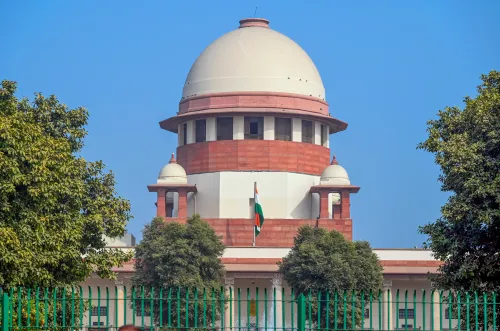
The Supreme Court of India drew a sharp constitutional line on Friday, October 9, 2026 — telling the Centre it cannot shut down Delhi's trains and Metro to choke off a planned protest, and Congress MP Dr. Shashi Tharoor was quick to amplify the message. 'Regulation cannot become prohibition,' Tharoor wrote on X, invoking the Chief Justice's words from the bench as a direct rebuke to the Modi government.
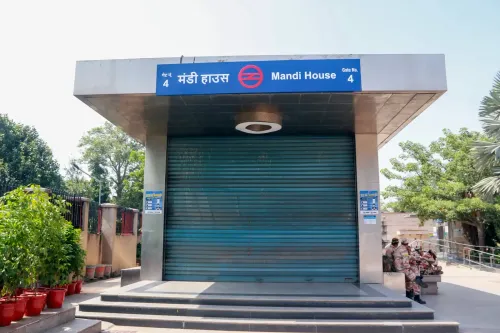
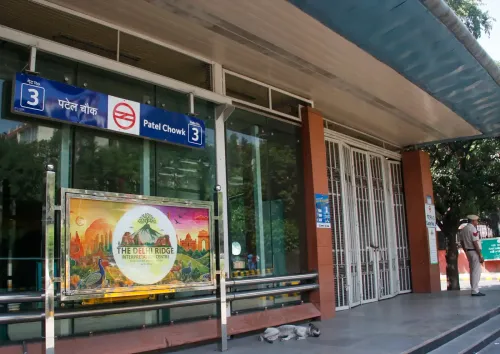
The court's intervention came ahead of the October 10 protest, when authorities had sought to restrict rail and Metro services across the capital — a move the bench swiftly challenged. Quoting the Chief Justice directly, Tharoor wrote: 'Law and order is your responsibility. It's not state property only.' The judicial caution lands precisely on the fault line between maintaining public order and preserving the fundamental right to peaceful assembly.What the Supreme Court actually said
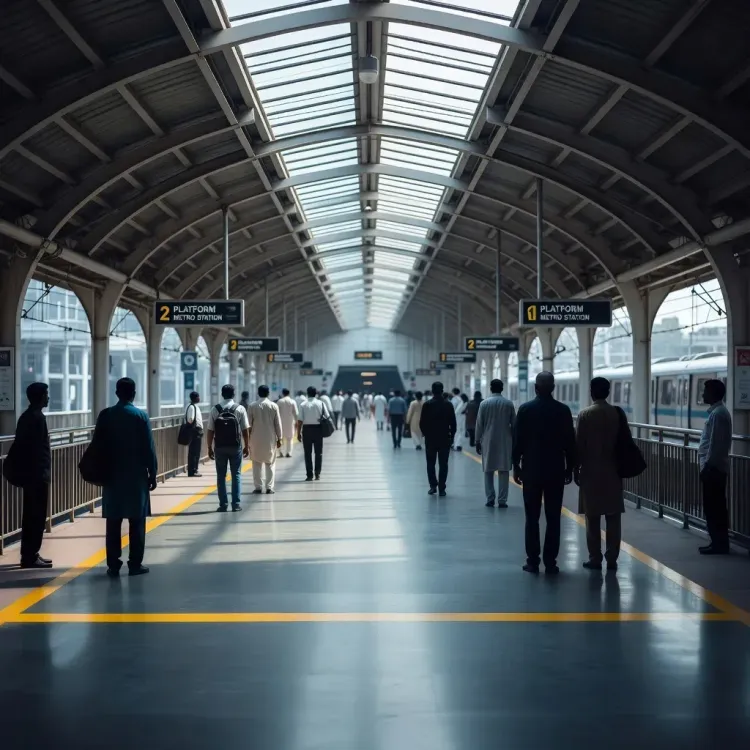
The bench's direction was unambiguous: allow Metro and train services to run in a 'regulated manner' rather than suspending them wholesale. The distinction matters enormously in a city of Delhi's scale, where millions of ordinary commuters — workers, students, patients — depend on public transit every single day, irrespective of any political demonstration. Cutting off transit, the court signalled, punishes the public, not the protesters. This is not the first time Indian courts have had to draw this line. The judiciary has a long record of insisting that the state's power to manage crowds cannot be weaponised into a blanket veto over the constitutional right to assemble peacefully — a right guaranteed under Article 19(1)(b) of the Constitution.Tharoor's Congress frame: dissent as democracy
For Tharoor and the Indian National Congress, the court's intervention is political ammunition with a principled edge. 'A confident government respects dissent; it does not inconvenience millions to suppress it,' he wrote — a formulation that ties civic inconvenience directly to governmental insecurity. The Congress has consistently positioned itself as the defender of protest rights during the current political cycle, and Tharoor, with his international human-rights fluency and legal vocabulary, is particularly effective at framing such clashes in constitutional language that travels. The October 10 protest — whose organisers and demands are not specified in Tharoor's post — has now become something larger than its immediate cause. The Supreme Court's real-time check on executive overreach, broadcast from the bench and instantly amplified by the Opposition, turns a logistical dispute over Metro timetables into a live seminar on where state power ends and citizens' rights begin.When the highest court in the land has to remind the government that public infrastructure is not 'state property only,' the answer to the question — who owns this democracy? — is already resonating far beyond New Delhi's courtrooms.
Point of View
He insulates the critique from being dismissed as partisan noise. The deeper pattern is significant — courts stepping in to police the boundary between order and overreach has become a recurring feature of Indian democratic life, and each such episode strengthens the Opposition's 'democratic backsliding' narrative ahead of future electoral cycles. Whether the government reads the bench's rebuke as a course-correction or a nuisance will itself become a marker of institutional health.
NationPress
9 Oct 2026
Frequently Asked Questions
Why did the Supreme Court intervene on Delhi Metro and trains before the October 10 protest?
The Supreme Court stepped in because the Centre sought to restrict or suspend Delhi Metro and train services ahead of the October 10 protest. The bench ruled that services must run in a regulated manner, holding that shutting public transit entirely crosses the line from law-and-order management into denial of citizens' fundamental rights.
What did the Chief Justice say about the Delhi protest restrictions?
The Chief Justice stated: 'Law and order is your responsibility. It's not state property only' — signalling that the government's duty to maintain order does not give it the right to treat public infrastructure as a tool to prevent lawful assembly.
What is Shashi Tharoor's position on the October 10 Delhi protest?
Dr. Shashi Tharoor, Congress MP from Thiruvananthapuram, backed the Supreme Court's direction, arguing that peaceful protest is a fundamental right and that a confident government respects dissent rather than inconveniencing millions of commuters to suppress it.
Which fundamental right is at the centre of the Delhi protest dispute?
Article 19(1)(b) of the Indian Constitution, which guarantees citizens the right to assemble peaceably and without arms, is the core right at issue. The Supreme Court's intervention reinforces that this right cannot be nullified through administrative measures like transit shutdowns.
How has Congress responded to the Supreme Court's ruling on the Delhi protest?
The Indian National Congress, through Tharoor's post, welcomed the Supreme Court's intervention as a timely check on executive overreach, framing it as evidence that 'regulation cannot become prohibition' and that democracy requires both public safety and the protection of citizens' rights.