26/11 attacks: Pakistan's terror patronage under global fire
Synopsis
Seventeen years on from 26/11, the global record on Pakistan is blunt: bin Laden was found on its soil, LeT and JeM were treated as useful proxies, and tens of billions in US aid did not change the military's calculations. Cosmetic crackdowns still sit beside a good-Taliban, bad-Taliban split.
Key Takeaways
The 26/11 anniversary has again put Pakistan's double-edged terror policy under global scrutiny.
Osama bin Laden was killed in Pakistan in May 2011 , undermining claims that Islamabad was rebuilding its counterterror image.
Groups such as Lashkar-e-Taiba and Jaish-e-Mohammed have been treated as ‘good’ militants unless they turn on the Pakistani state.
A US general told the Senate in 2017 that seven of 20 US-designated terrorist organisations in the Afghanistan-Pakistan subregion were in Pakistan.
President Donald Trump in 2018 said the US had given Pakistan more than 33 billion dollars in aid and received ‘lies and deceit’.
Over a dozen Pakistani military operations in two decades have not, according to this assessment, reduced terrorist violence in Pakistan or Afghanistan.
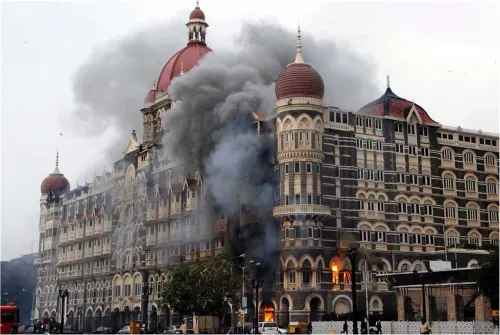
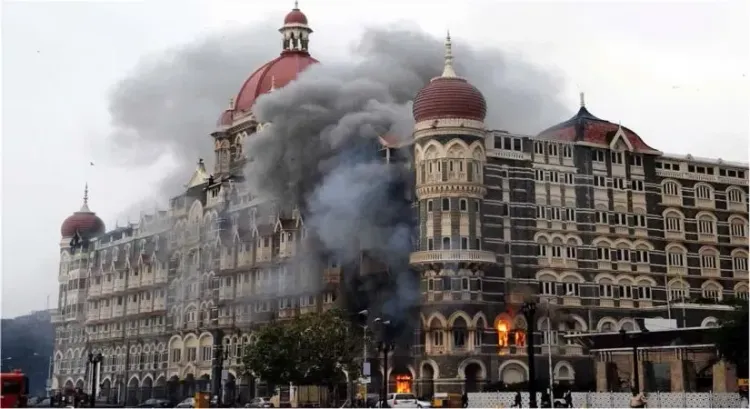
As India marks the anniversary of the 26/11 Mumbai attacks, Pakistan remains the country most widely criticised worldwide for a double-edged policy of patronising terrorism while claiming to fight it. From the killing of Osama bin Laden in May 2011 on Pakistani soil to the continued utility of groups such as Lashkar-e-Taiba and Jaish-e-Mohammed, Islamabad has stayed at the centre of global debates on state-backed terror.
No other country, according to this assessment, has been chastised as consistently for creating ambiguity around the definition of terrorism and for trying to delink violence in one theatre from violence in another. This comes amid another 26/11 remembrance in which the question of accountability for India-facing proxies remains unfinished international business.
How Pakistan split ‘good’ militants from ‘bad’
A commentator writing in the country's leading English daily, Dawn, argued after bin Laden's death that whatever efforts Pakistan was making to rebuild its image—as a nation that both suffered from and fought terrorism—were undermined by the presence of the world's most dangerous terrorist in one of its most secure and sensitive areas. The handling of that episode, the commentator said, would decide whether Pakistan restored its image or harmed it further. Subsequent policy, the analysis notes, showed that the lesson was not absorbed.
Support for the Afghan Taliban and affiliates such as the Haqqani Network and Al-Qaeda was framed as backing groups fighting foreign troops rather than spreading terrorism, even though Al-Qaeda was present in Afghanistan and working closely with that network. The same taxonomy has been applied at home. As an expert on terrorism in the country observed of one militant faction: “Once lauded as the ‘good Taliban’ for refraining from carrying out attacks against Pakistan's security forces, Bahadur's group finds itself labelled ‘bad Taliban’ due to its role in the recent terror attacks in Khyber Pakhtunkhwa's southern region.”
Groups that do not act inside Pakistan or target the state retain utility for the establishment. Organisations such as Lashkar-e-Taiba and Jaish-e-Mohammed are therefore treated as ‘good’ militants as long as they serve the military establishment's purposes, becoming ‘bad’ only if they turn their guns toward Pakistan.
Selective force by the military and ISI
Scholars have long argued that Pakistan's approach to fighting terrorism is neither honest nor trustworthy, but calculated. The country's military and the powerful Inter-Services Intelligence (ISI) have, on this reading, selectively acted only against groups they failed to co-opt for use in Afghanistan or against India.
As a researcher on Pakistan's military argues: “It first hopes to flip militants to fight in Afghanistan or in India and then, only when these efforts fail, eliminate them through military force.” Consequently, military operations launched to combat terrorism are not directed at all armed groups; they are launched selectively against those that have turned on their former patrons.
That posture is tied to a long-standing reliance on militant proxies. One former Prime Minister of Pakistan admitted in an interview that militants were trained and sent to carry out attacks in neighbouring countries. The international community has also struggled to overlook that another Pakistani Prime Minister referred to Osama bin Laden as a “martyr” in the country's National Assembly.
Why US pressure and aid did not change behaviour
This reality was not lost on Washington. The Obama administration spent billions in an effort to compel Pakistan's ruling elite to act against terrorists, but those efforts failed. As experts noted in a 2015 article: “Past attempts to induce Pakistan to change its behaviour have largely failed, and there is little reason to believe that a course change is imminent.” Financial aid and defence equipment from the United States could not alter the core strategic calculations of the country's ruling elite.
Calling Pakistan a “geopolitical monster,” one commentator cited a US military general's 2017 testimony before the Senate Armed Services Committee stating that “twenty U.S.-designated terrorist organisations operate in the Afghanistan-Pakistan subregion; seven of the twenty organisations are in Pakistan.” The same commentator argued that Afghan forces were unable to defeat the Taliban because the group continued to benefit from sanctuary and support from Pakistan's security establishment. The primary rationale, the analysis says, has been the military establishment's reliance on non-state actors as proxies for strategic leverage in adversarial territory.
After entering the White House, President Donald Trump took a hard line, accusing Pakistan of playing a double game with the United States. In a 2018 New Year's Day message, Trump said: “The United States has foolishly given Pakistan more than 33 billion dollars in aid over the last 15 years, and they have given us nothing but lies & deceit, thinking of our leaders as fools. They give haven to the terrorists we hunt in Afghanistan, with little help. No more!”
The unanswered questions after two decades of operations
Pakistan refused to bow to that pressure, maintaining that it had already done more than enough and had paid a heavy price. The analysis poses a direct challenge to that claim: if it is true, why is terrorism at an all-time high in Pakistan and along its border with Afghanistan? If over a dozen military operations over the last two decades were celebrated as successes, why has terrorist violence not decreased in Pakistan or Afghanistan?
Notably, giving up such proxies remains difficult and falls outside Islamabad's strategic calculations. By arguing that its role is essential in combating these groups, Pakistan has retained relevance for countries such as the United States that are keen to fight terrorism. By convincing US officials of a willingness to cooperate, it has continued to secure financial aid and defence equipment.
The record described is one of occasional cosmetic military actions designed to project a cooperative image, while subversive activities and backing for proxy groups continue—including the rebranding of existing outfits and the cultivation of new ones—to gain strategic leverage against adversarial states. Until that incentive structure changes, critics argue, global censure will not by itself close the 26/11 file.
Point of View
Which tells you the issue was never only money. Islamabad's good-militant, bad-militant split is not a failure of capacity—it is a doctrine that treats India-facing groups as assets until they rebel. India's case is strongest when it is specific, documented and relentlessly internationalised, not when it is reduced to seasonal outrage.
NationPress
25 Nov 2026
Frequently Asked Questions
What is Pakistan's double-edged policy on terrorism?
It is a calculated approach that treats some militant groups as useful proxies against Afghanistan or India while acting only against those that attack the Pakistani state. Scholars argue this good-Taliban, bad-Taliban split has long defined the military and ISI's posture.
Why does Osama bin Laden's killing in Pakistan still matter for 26/11 debates?
Bin Laden was killed in Pakistan in May 2011, in one of its most secure areas, which commentators said undermined Islamabad's claim to be both a victim and a fighter of terrorism. The episode is cited as evidence that the country did not mend a policy of harbouring or tolerating high-value terrorists.
How does Pakistan treat Lashkar-e-Taiba and Jaish-e-Mohammed?
According to this analysis, Lashkar-e-Taiba and Jaish-e-Mohammed are treated as ‘good’ militants so long as they serve the military establishment's purposes and do not target the Pakistani state. They are labelled ‘bad’ only if they turn their guns inward.
Did US aid change Pakistan's behaviour on terror?
No. The Obama administration spent billions trying to compel action against terrorists, and experts wrote in 2015 that past attempts had largely failed. President Donald Trump in 2018 said more than 33 billion dollars in US aid over 15 years had yielded lies, deceit and terrorist havens.
Why has terrorist violence not fallen despite Pakistani military operations?
The analysis argues operations have been selective—aimed at groups that turned on their former patrons rather than at all armed outfits. Occasional cosmetic campaigns project cooperation while proxy groups are rebranded or newly cultivated for leverage against adversarial states.