Does Pakistan's Self-Determination Rhetoric Overlook Oppression in PoK and PoGB?
Synopsis
A recent report critiques Pakistan's narrative on self-determination, arguing it distracts from the realities in PoK and PoGB. While Pakistan celebrates its claims over Jammu and Kashmir, it overlooks the living conditions and governance challenges faced by residents in these regions, raising questions about its credibility.
Key Takeaways
Pakistan's self-determination claims are questioned.
Limited local governance in PoK and PoGB.
Positive developments in Jammu and Kashmir since 2019.
Contradictions in Pakistan's political stance.
Residents prioritize stability and development.
Dhaka, Jan 8 (NationPress) Pakistan's yearly declarations on “self-determination” represent a selective interpretation of history, diverting attention from the ongoing issues in its occupied regions, according to a report released on Thursday. The report emphasized that genuine self-determination is demonstrated through the quality of life and civic engagement of individuals, rather than through annual proclamations.
Each January 5, Pakistan observes what it designates as “Right to Self-Determination Day”, reinforcing its claim over India's Jammu and Kashmir.
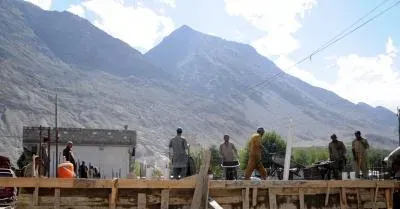
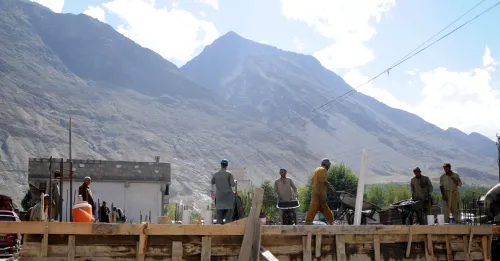
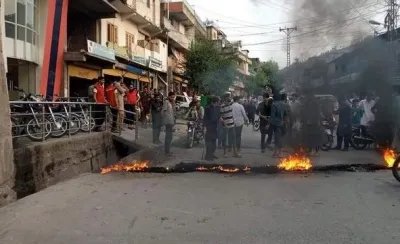
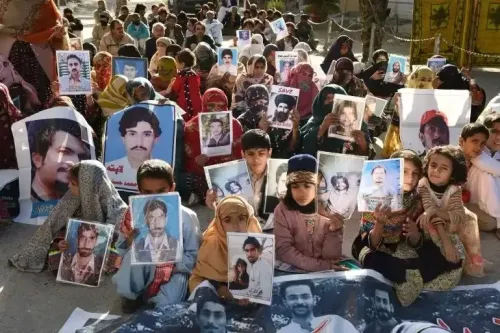
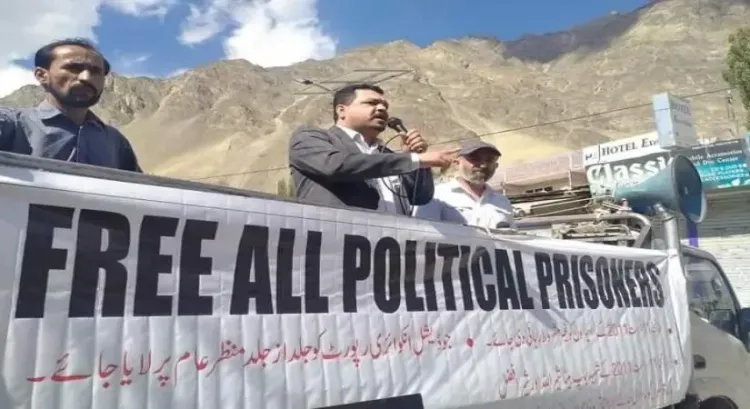
As highlighted in a report by Eurasia Review, Pakistan's assertions neglect the realities within the territories under its control, including Pakistan-occupied Kashmir (PoK) and Pakistan-occupied Gilgit-Baltistan (PoGB), where actual decision-making authority is centralized with the federal government in Islamabad. The report noted that the local governance in these areas has limited authority, pro-independence factions face oppression, media freedoms are curtailed, and constitutional frameworks restrict self-governance.
Since 2019, initiatives by the Indian government in Jammu and Kashmir have reportedly improved daily life, with enhanced investments in infrastructure such as roads, railways, electricity, healthcare, and education.
“Travel and trade connections have been strengthened. Tourism has flourished, creating employment opportunities. Welfare programs are now reaching a broader audience. Direct benefit transfers have improved access to government assistance. Legislative changes have bolstered property rights for women and marginalized communities. Local elections have taken place,” the report stated.
In contrast, the report noted that similar advancements are lacking in the areas occupied by Pakistan, where development is sluggish and local leadership is constrained.
“There exists a stark inconsistency in Pakistan's stance. While it calls for international intervention in Kashmir, it resists examination of its own governance. It raises human rights issues concerning India while restricting political freedoms in its controlled regions. It condemns militarization yet continues to depend on armed groups that serve its interests,” the report asserted.
The report reiterated that Jammu and Kashmir is an integral part of India, which enjoys constitutional recognition, electoral representation, and operational political institutions.
“Elections and local governance persist. Since 2019, voter turnout, economic activity, and tourism statistics indicate that a significant number of people prioritize stability and improved living conditions. Residents are increasingly focused on education, employment, and development rather than ongoing conflicts. Their aspirations distinctly reflect an Indian identity, rooted in a desire for stability and future prospects rather than lingering grievances,” it concluded.
Narratives emerging from Pakistan, the report cautioned, which “glorify violence or portray Kashmir solely as a place of grievance, fail to address these priorities” and instead “contribute to instability rather than alleviating everyday issues.”
Point of View
I believe it is crucial to present an unbiased perspective on these complex issues. Acknowledging the struggles faced by people in both Indian-administered and Pakistani-controlled regions is vital. We must focus on fostering dialogue that prioritizes the aspirations of individuals striving for stability and development, rather than getting lost in political rhetoric.
NationPress
29 Sept 2026
Frequently Asked Questions
What does Pakistan claim about Kashmir?
Pakistan asserts that Kashmir is a disputed territory and emphasizes its right to self-determination, particularly in the context of Jammu and Kashmir.
How does the situation differ in PoK and PoGB?
In PoK and PoGB, local governance is limited, and there are significant restrictions on political freedoms and media, contrasting with developments in Indian-administered Jammu and Kashmir.
What improvements have been noted in Jammu and Kashmir since 2019?
Since 2019, improvements in Jammu and Kashmir include investments in infrastructure, increased economic activity, and better access to welfare programs.
Why is Pakistan criticized regarding its governance?
Pakistan is criticized for calling for international scrutiny of India's governance while resisting examination of its own political practices in its controlled regions.
What are the aspirations of residents in these regions?
Residents in both Indian-administered and Pakistani-controlled areas largely seek stability, development, and better livelihoods, rather than continuing conflict.