Palaniswami slams TN govt over ₹35/unit power purchase, calls it 'mega corruption'
Synopsis
AIADMK General Secretary Edappadi K. Palaniswami has called Tamil Nadu's ₹35-per-unit electricity purchase a 'mega corruption scheme' — pointing out that Andhra Pradesh bought power at half that rate in the same month, and reminding voters that CM Vijay himself once labelled a ₹20/unit purchase corrupt. The broadside, delivered in Salem, spans power pricing, bye-election conduct, food inflation, and dam water distribution.
Key Takeaways
AIADMK General Secretary Edappadi K.
Palaniswami on 14 October accused the Tamil Nadu government of creating an artificial power shortage to justify buying electricity at ₹35 per unit .
He termed the procurement a 'mega corruption scheme' , alleging no other Indian state had purchased power at such a high rate.
Andhra Pradesh reportedly bought electricity at ₹15–₹20 per unit in October , according to Palaniswami.
He recalled that CM Vijay had previously criticised a ₹20/unit purchase under the DMK government as corruption.
Palaniswami also alleged TVK bye-election victories were secured through money and official machinery, not democratic campaigning.
He flagged rising food prices, alleged government inaction on rice and vegetable costs, and claimed Mettur dam water was not reaching farmers.
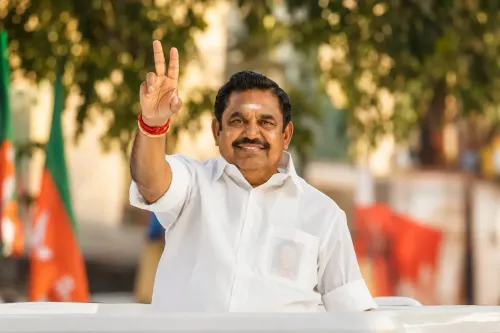
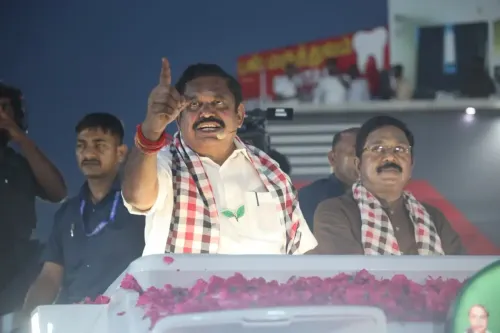
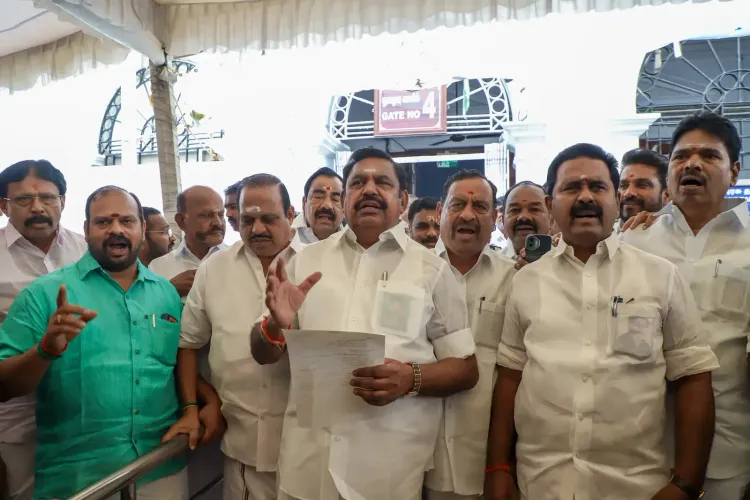
AIADMK General Secretary Edappadi K. Palaniswami on Wednesday, 14 October accused the Tamil Nadu government of deliberately engineering an artificial electricity shortage to justify purchasing power at the inflated rate of ₹35 per unit, calling it a 'mega corruption scheme' under Chief Minister Vijay. Palaniswami made the allegations while speaking to reporters at Omalur in Salem district.
The Power Purchase Allegation
Palaniswami claimed that no other Indian state had procured electricity at such a high rate. He cited Andhra Pradesh as a comparison, stating it had purchased power at prices ranging from ₹15 to ₹20 per unit in October. He questioned why the present Tamil Nadu government was buying electricity at nearly double that rate when the state's power sector was already burdened by debt.
The AIADMK leader also recalled that Chief Minister Vijay had previously criticised electricity purchases at ₹20 per unit during the earlier Dravida Munnetra Kazhagam (DMK) administration, labelling those transactions as corruption. 'The government is creating an artificial shortage and buying electricity at excessive prices,' Palaniswami alleged.
Bye-Election Results Disputed
Turning to the recently concluded Assembly bye-elections, Palaniswami disputed the significance of the Tamilaga Vettri Kazhagam (TVK)'s victories, arguing that the ruling party had not secured overwhelming margins. He alleged that the TVK had won through the use of money and official machinery rather than through a campaign conducted along democratic lines.
Palaniswami pointed out that Communist leaders had themselves alleged the distribution of money during the campaign. He also noted that Communist parties, which had backed the TVK alliance going into the bye-elections, ultimately contested against it — a contradiction he said exposed the fragility of that alliance.
Rising Prices and Irrigation Concerns
The AIADMK chief criticised the state government's handling of escalating food prices, alleging it had taken no effective steps to contain the rising cost of rice and vegetables. He accused the Food Minister of continuing to deny any price increases despite on-ground reality, and described the administration as lacking planning.
On irrigation, Palaniswami alleged that water released from the Mettur dam had failed to reach farmers, leaving them without the benefits it was intended to provide.
Political Contradictions Highlighted
Palaniswami also took aim at the TVK's efforts to attract members from other parties and questioned its dependence on political allies. He noted that Chief Minister Vijay had criticised the DMK alliance during the election campaign, yet the present government, he claimed, was surviving with support from the very same political grouping it had attacked. He accused the ruling party of being primarily focused on retaining power rather than governing effectively.
With the Tamil Nadu Assembly elections on the horizon, the opposition's sustained salvo on electricity pricing, food inflation, and governance credibility signals an intensifying political battle for the state's narrative.
Point of View
Making procurement pricing a genuine governance vulnerability, not just an opposition talking point. That said, Palaniswami's framing conflates spot-market purchases — which can spike during peak demand — with systemic corruption, a distinction the government will likely exploit in its counter. The wider pattern here is classic Tamil Nadu opposition playbook: hit governance failures on utilities, food prices, and water — essentials that cut across caste and class — ahead of a state election cycle.
NationPress
14 Oct 2026
Frequently Asked Questions
What did Edappadi K. Palaniswami allege about Tamil Nadu's electricity purchases?
Palaniswami alleged that the Tamil Nadu government was artificially creating an electricity shortage to justify purchasing power at ₹35 per unit, calling it a 'mega corruption scheme.' He claimed Andhra Pradesh purchased electricity at only ₹15–₹20 per unit in October, making Tamil Nadu's rate an outlier.
Why is the ₹35-per-unit electricity purchase politically significant?
Chief Minister Vijay had previously criticised electricity purchases at ₹20 per unit under the DMK administration as corruption. Palaniswami is using that statement to argue that procurement at ₹35 per unit under Vijay's own government is a more serious offence by the same standard.
What did Palaniswami say about the TVK bye-election victories?
Palaniswami disputed the significance of the TVK's bye-election wins, alleging the party secured victories through money distribution and the use of official machinery rather than democratic campaigning. He cited Communist leaders' own allegations of money distribution as supporting evidence.
What other governance issues did Palaniswami raise at the Salem press meet?
Beyond power pricing, Palaniswami alleged that the government had failed to control rising prices of rice and vegetables, accused the Food Minister of denying price increases, and claimed that water released from the Mettur dam was not reaching farmers as intended.
What is the broader political context of these allegations?
The allegations come from AIADMK, the principal opposition party in Tamil Nadu, against the ruling TVK-led government under CM Vijay. The sustained attacks on electricity pricing, food inflation, bye-election conduct, and water distribution reflect the AIADMK's strategy to build a governance-failure narrative ahead of the next state election cycle.