Congress appointed ECs via PM office till 2023: Patra
Synopsis
In Rajkot, BJP MP Sambit Patra said Congress appointed Election Commissioners through a PM-led panel from 1953 to 2023, and only the 2023 law added the Leader of the Opposition. He defended SIR, citing 12 revisions since 1952 and crore-scale cuts of absent, deceased and duplicate voters amid Opposition vote-theft charges.
Key Takeaways
BJP MP Sambit Patra said in Rajkot that Congress governments appointed Election Commissioners through a Prime Minister-led committee from 1953 to 2023 .
The 2023 law created a three-member panel of the Prime Minister, the Leader of the Opposition in the Lok Sabha, and a Union Cabinet Minister nominated by the PM.
Patra said the BJP won the 2014 , 2019 and 2024 Lok Sabha polls before Gyanesh Kumar became CEC on 19 February 2025 , while Congress had lost 56 elections.
He said SIR has been held 12 times since 1952 , of which 10 were during Congress rule.
He claimed about three crore voters were found absent, 2.8 crore deceased names removed, and one crore duplicate entries identified.
Around 35 lakh Booth Level Agents are at work, including about 20 lakh from parties other than the BJP, he said.
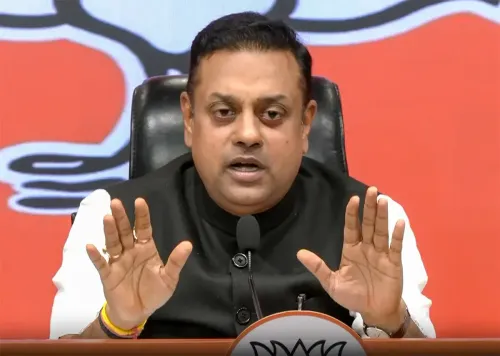
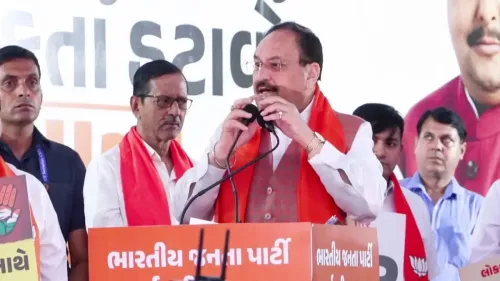
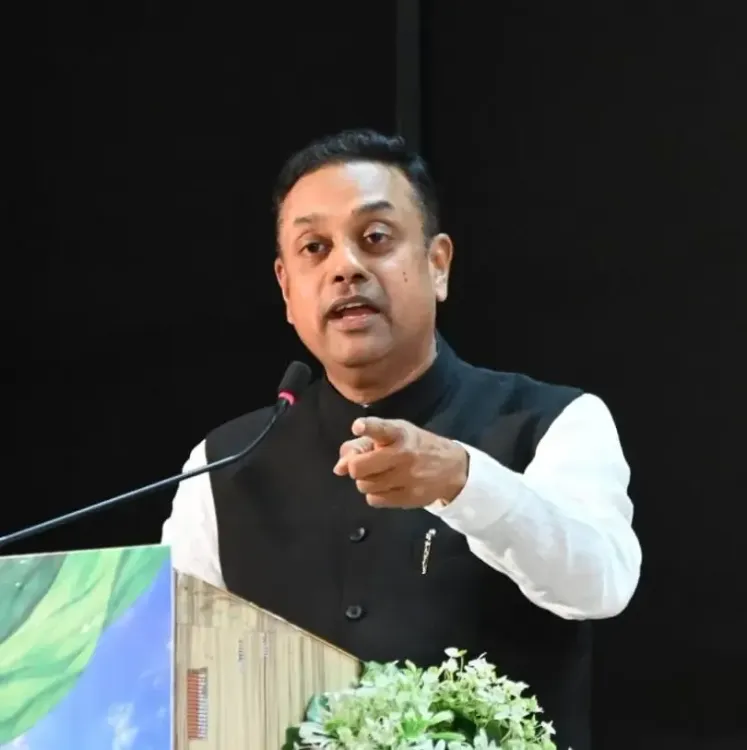
Bharatiya Janata Party (BJP) MP Sambit Patra on Wednesday accused the Congress of appointing Election Commissioners through a Prime Minister-led committee for decades, saying the Narendra Modi government only in 2023 brought the Leader of the Opposition onto the selection panel. Addressing a convention in Rajkot district of Gujarat under the BJP’s ‘Save Democracy, Remove Anarchy’ campaign, Patra said the Prime Minister-led appointment system had remained in place from 1953 to 2023, including during Congress and UPA governments.
How the 2023 selection panel differs
Patra said the Modi-led government changed the arrangement in 2023 by including the Leader of the Opposition in the selection committee. The 2023 law provides for a three-member panel comprising the Prime Minister, the Leader of the Opposition in the Lok Sabha, and a Union Cabinet Minister nominated by the Prime Minister.
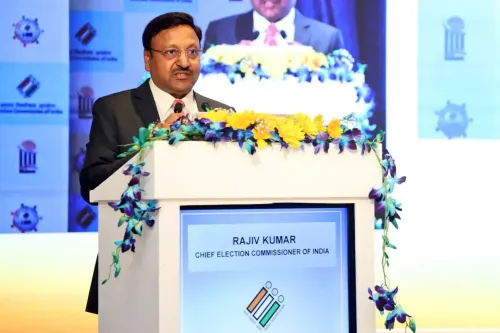
Referring to the appointment of V S Sampath as an Election Commissioner in 2012 during the Congress-led UPA government, he argued that the Congress had lost several elections even before Gyanesh Kumar took charge as Chief Election Commissioner on 19 February 2025. He said the BJP had won the 2014, 2019 and 2024 Lok Sabha elections before Kumar’s appointment, while the Congress had lost 56 elections. “The Opposition had its own political concerns, while Prime Minister Narendra Modi is concerned about the country,” he said.
Congress’s long spell out of power
Patra questioned the Congress for blaming the Election Commission for its electoral defeats, pointing out that the party had been out of power in Tamil Nadu for 59 years, Bihar for 36 years, West Bengal for 49 years, Uttar Pradesh for 37 years, Tripura for 33 years and Odisha for 26 years.
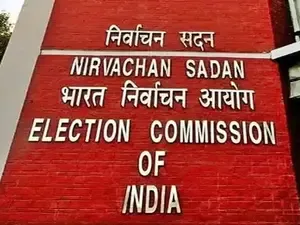
The BJP MP’s remarks came amid the Opposition’s allegations of irregularities in the Special Intensive Revision (SIR) of electoral rolls. Notably, the fight is no longer only over individual results but over who sits on the panel that picks Election Commissioners and over how voter lists are cleaned before polls.
Defence of the SIR voter-list revision
Defending the exercise, Patra said Article 324 of the Constitution empowered the Election Commission to conduct elections and maintain accurate electoral rolls, and that free and fair elections were not possible without a clean voter list. He said SIR is not a new exercise and has been conducted 12 times since 1952, of which 10 exercises took place during Congress rule.
The previous exercises, he said, were held in 1952, 1957, 1961, 1965, 1967, 1984, 1987-89, 1992-93, 1995, 2002-03, 2004 and 2025. “The 2002-04 exercise had begun under a BJP government, although its outcome came during the UPA government’s tenure,” he added.
Questioning the Congress’s opposition to the exercise, he said the identification of absent, shifted, deceased and duplicate voters was necessary to ensure the accuracy of electoral rolls. He claimed that around three crore voters had been found absent, while six crore of the 12 crore shifted voters had submitted Form 6 for registration at their new locations, with the process for the remaining six crore underway.
He further claimed that around 2.8 crore names of deceased voters had been removed and one crore duplicate entries identified, with notices being issued in those cases. The figures, he said, could change after Form 6 and duplicate-name verification were completed. Booth Level Officers were visiting voters’ homes three times, while absent voters could apply for re-registration through Form 6 before the Electoral Registration Officer.
Patra also asked why the Congress’s Booth Level Agents had not raised objections during the revision if large-scale vote theft had taken place. He said around 35 lakh Booth Level Agents representing different political parties were working across the country, including approximately 20 lakh from parties other than the BJP.
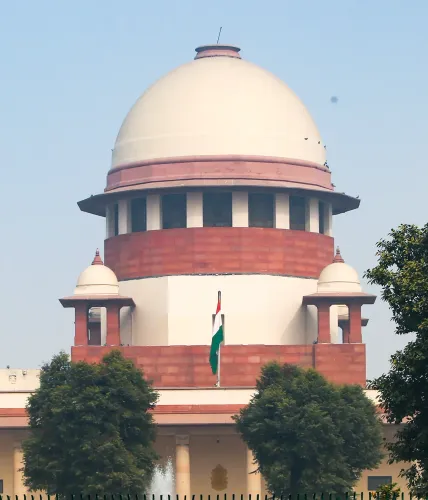
On the controversy over the declaration accompanying Form 6, he said the matter had been examined by courts from the High Court to the Supreme Court. He claimed that the Supreme Court, on 27 May, had upheld the SIR process and the declaration requirement.
Ambedkar, Banerjee and the vote-theft charge
Taking aim at former West Bengal Chief Minister Mamata Banerjee, Patra alleged that efforts were being made to retain the names of deceased voters on electoral rolls and use such votes to influence election results. He said only Indian citizens were entitled to vote and alleged that Bangladeshi infiltrators should not be allowed to influence the democratic process through bogus votes. “As long as the BJP is there, not a single bogus vote by infiltrators will be allowed,” he said.
Patra also invoked BR Ambedkar, accusing the Congress of speaking about the Constitution and respecting its architect despite its role in defeating him in the 1952 Lok Sabha election. He said that, at Jawaharlal Nehru’s insistence, the Congress had fielded Ambedkar’s former assistant Narayan Rao against him from the Bombay North Central constituency in the first Lok Sabha election. Ambedkar secured 1,23,576 votes against Rao’s 1,38,137, losing by 14,561 votes, he said. Patra claimed Ambedkar had subsequently written to the Election Commission alleging irregularities, including the non-counting of 74,000 ballot papers. “The Congress is now misleading the country through its allegations of vote theft despite its own record in the 1952 election,” he said.
Contest over the 2023 selection law and the SIR of rolls is set to continue as remaining Form 6 and duplicate-name cases are processed and parties keep their Booth Level Agents in the field.
Point of View
But a panel of the Prime Minister, a Union minister nominated by the Prime Minister, and the Leader of the Opposition still gives the government a built-in 2-1 edge. That structural majority is the part the BJP underplays when it boasts of having included the Opposition. On SIR, crore-scale claims of absent, deceased and duplicate voters will persuade the public only if the Election Commission puts out auditable, constituency-wise data. Invoking Ambedkar’s 1952 defeat is a historical retort, not an answer to present-day process objections from Booth Level Agents and the courts.
NationPress
25 Nov 2026
Frequently Asked Questions
What did Sambit Patra say about Congress appointing Election Commissioners?
Patra said Congress governments appointed Election Commissioners through a Prime Minister-led committee from 1953 to 2023, including during UPA years. He argued that only the Modi government in 2023 added the Leader of the Opposition to the selection panel.
What is the 2023 selection committee for Election Commissioners?
The 2023 law provides for a three-member committee comprising the Prime Minister, the Leader of the Opposition in the Lok Sabha, and a Union Cabinet Minister nominated by the Prime Minister. Patra presented this as a break from the earlier PM-led appointment system.
What is the Special Intensive Revision of electoral rolls?
SIR is a drive to identify absent, shifted, deceased and duplicate voters so that electoral rolls stay accurate, which Patra linked to Article 324 of the Constitution. He said free and fair elections were not possible without a clean voter list.
How many times has SIR been conducted in India?
Patra said SIR has been conducted 12 times since 1952, of which 10 exercises took place during Congress rule. He listed rounds in 1952, 1957, 1961, 1965, 1967, 1984, 1987-89, 1992-93, 1995, 2002-03, 2004 and 2025, adding that the 2002-04 exercise began under a BJP government though its outcome came during the UPA tenure.
What voter-list figures did Patra cite in Rajkot?
He claimed around three crore voters were found absent, six crore of 12 crore shifted voters had filed Form 6, about 2.8 crore deceased names had been removed, and one crore duplicate entries had been identified. He said the numbers could still change after Form 6 and duplicate-name verification, and that about 35 lakh Booth Level Agents were working nationwide.