Is FairPoint Highlighting the Politics of Selective Secularism?

Synopsis
Explore the paradox of selective secularism in Indian politics, where a cherished Tamil ritual faces scrutiny while divisive narratives are allowed to resurface. This article reveals the complexities and inconsistencies shaping contemporary secularism.
Key Takeaways
Deepam lighting is a significant cultural practice in Tamil Nadu.
The Babri Masjid narrative is politically charged and controversial.
Selective secularism highlights inconsistencies in political responses.
The Constitution guarantees equal treatment of all religions.
Voter awareness of double standards is increasing.
New Delhi, Dec 14 (NationPress) It is impossible to overlook the reality that a centuries-old Deepam lighting tradition in Tamil Nadu is framed as a menace to communal harmony, while political efforts to revive the Babri Masjid narrative in West Bengal go unchallenged. This highlights an uncomfortable truth.
What unfolds is not a defense of secularism, but rather its selective implementation. The differing reactions to these two matters reveal that secularism in modern Indian politics has increasingly become a tool of convenience—invoked, ignored, or weaponized according to electoral necessities.
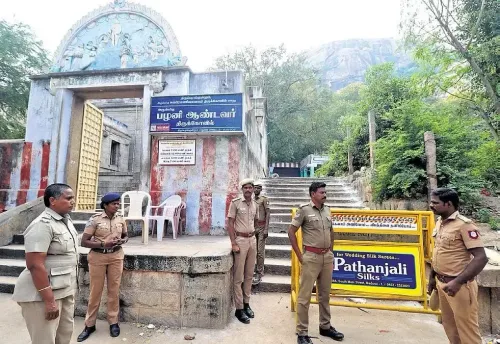
The Deepam lighting debate at Thiruparankundram exemplifies this. Lighting lamps during Karthigai Deepam is a cultural custom deeply rooted in Tamil Hindu life, observed for centuries and referenced since the Sangam era. The ritual represents devotion and collective identity, and Thiruparankundram hill has historically served as a beacon of faith.
Upon the Madurai Bench of the Madras High Court allowing the lighting of the lamp on December 3, the political response was immediate but disproportionate. Rather than facilitating a judicial order, the state machinery appeared hesitant and obstructive. Suddenly, it became framed as an issue of communal discord. The opposition raised concerns, and a sitting judge faced accusations of ideological bias.
Opposition MPs even sought impeachment proceedings, a remarkable reaction to a ruling that merely upheld an established religious practice within legal boundaries.
The message was clear: a Hindu cultural ritual, even one sanctioned by a constitutional body, could be labeled as contentious if it fell outside the opposition's ideological comfort zone. Here, faith becomes suspect not due to its actions but because of its identity.
This reaction is even more revealing when compared to the situation in West Bengal. There, efforts to revive the Babri Masjid narrative—decades after the dispute was definitively resolved through judicial means—have not prompted similar outrage from the same political factions.
A Trinamool Congress legislator's actions resulted in a token suspension, yet the broader political environment around him remained supportive.
The INDIA bloc, typically vocal on matters of communal sensitivity and quick to react to the Deepam lighting issue, opted for silence here. Apparently, reopening a chapter that once deeply divided the nation posed no threat to harmony.
The inconsistency is glaring. If lighting a lamp on a hill can disrupt public order, how does reviving the Babri narrative escape scrutiny? Why does secular sensitivity awaken selectively, favoring certain narratives?
West Bengal illustrates this pattern on a broader scale. Over the years, Hindu festivals like Ram Navami processions or Durga immersion ceremonies have often faced heightened restrictions, rigorous policing, and administrative caution. In contrast, other religious gatherings frequently proceed without hindrance. When tensions arise, responsibility is seldom attributed to administrative bias or political appeasement. Instead, blame is conveniently laid on a notion of "provocation."
The common thread linking the Deepam controversy in Tamil Nadu and the Babri rhetoric in Bengal is not faith—it is about power in the electoral sphere. For various opposition parties, selective secularism has become a familiar political tool. By portraying Hindu cultural expressions as requiring constant regulation, explanation, or restraint, they perpetuate a dated narrative where the majority is expected to repeatedly prove its restraint while minority politics enjoys relative immunity from scrutiny. This approach is less about maintaining harmony and more about sustaining and enhancing vote banks.
The Constitution of India does not endorse such asymmetry. Article 25 guarantees all citizens the freedom of conscience and the right to freely profess, practice, and propagate religion, subject only to considerations of public order, morality, and health. It does not prioritize faiths, nor does it empower the state to interpret "harmony" selectively for political gain.
Dr. B.R. Ambedkar, the principal architect of the Constitution, was clear in his understanding of secularism. He warned against the misuse of constitutional principles for partisan interests.
True secularism, as envisioned by Ambedkar, was never about stifling religious expression but about ensuring the state does not become an instrument of religious favoritism or discrimination. This is precisely what is occurring in West Bengal and Tamil Nadu.
A secular state cannot fear a lamp being lit, nor can it keep historical disputes alive for political leverage. It must treat all religions with equal respect.
Those vocal about the Deepam issue and silent on the Bengal Babri mosque must recognize that cultural practices are not conspiracies, and that the majority faith should not be disproportionately curtailed for harmony to thrive.
Today's voters are much more discerning of double standards than before. They can distinguish between neutrality and bias, between inclusion and appeasement. Efforts to selectively moralize faith are no longer unchallenged; they now invite skepticism and resistance.
The Deepam lighting issue in Tamil Nadu and the Babri Masjid situation in Bengal have unveiled the superficial nature of much contemporary secular rhetoric—and the electorate is beginning to see through it.
(Deepika Bhan can be reached at deepika.b@ians.in)
Point of View
I believe it is crucial to scrutinize the selective application of secularism in our political landscape. Both the Deepam lighting and Babri Masjid narratives illustrate a concerning trend where political convenience trumps genuine secular values. We must advocate for consistent application of constitutional principles that honor all faiths equally.
NationPress
19 Sept 2026
Frequently Asked Questions
What is the significance of the Deepam lighting ritual?
The Deepam lighting ritual is a culturally significant practice for Tamil Hindus, symbolizing devotion and collective identity, with roots tracing back to the Sangam era.
How does the political response vary between the Deepam issue and the Babri Masjid narrative?
The Deepam issue has faced significant political backlash and scrutiny, while the Babri Masjid narrative has not elicited the same level of concern, revealing a pattern of selective secularism.
What does the Constitution say about religious freedom?
The Constitution of India, particularly Article 25 , guarantees the freedom of conscience and the right to practice any religion, ensuring that no faith is prioritized over others.
How can voters recognize double standards in secularism?
Voters today are more discerning and can identify inconsistencies in how secularism is applied, distinguishing between genuine neutrality and selective bias.
What role does political power play in secularism?
Political power often influences the application of secularism, with parties selectively invoking or downplaying issues based on their electoral strategy.