President Murmu Engages with Premanand Maharaj in Vrindavan
Synopsis
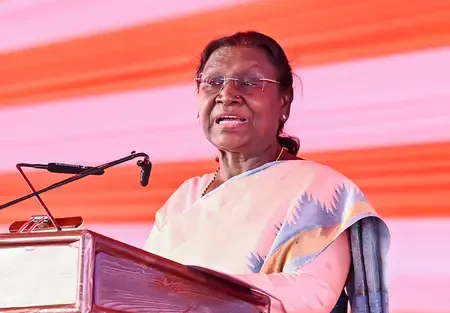
On March 20, President Droupadi Murmu will meet prominent saint Premanand Maharaj in Vrindavan, as part of her significant three-day Uttar Pradesh visit, which includes spiritual engagements and inaugurations aimed at enhancing healthcare.
Key Takeaways
President Murmu's meeting with Premanand Maharaj emphasizes spiritual engagement.
The new Oncology Block at Ramakrishna Mission Sevashram aims to enhance cancer care.
Her visit includes significant religious sites like Ayodhya and Mathura.
Completion of the Shri Ram Yantra installation marks a milestone in temple construction.
The tour concludes with traditional rituals at Govardhan Temple.
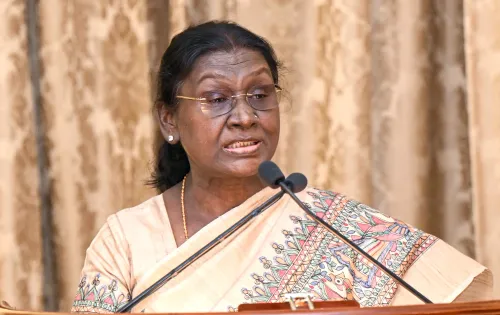
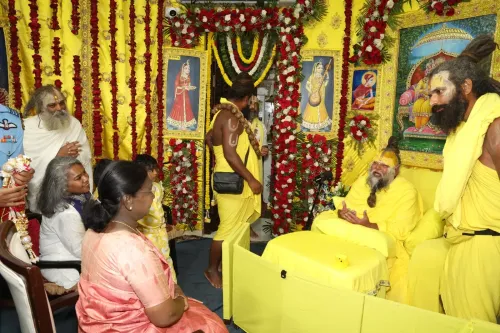
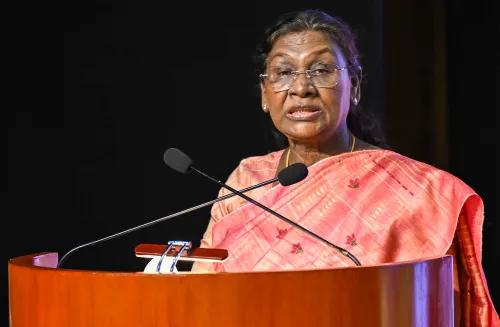
New Delhi, March 20 (NationPress) President Droupadi Murmu is set to meet esteemed saint Premanand Maharaj today at his Shri Hit Radha Keli Kunj Ashram in Vrindavan during her three-day visit to Uttar Pradesh. This meeting aims to allow the President to seek the saint's blessings and engage in a meaningful spiritual dialogue.
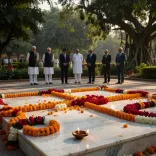
Later, she will pay tribute at the memorial of Neem Karoli Baba. In the evening, she is scheduled to inaugurate a new Oncology Block at the Ramakrishna Mission Sevashram, which aims to improve cancer treatment options available in the area.
The President's itinerary also includes a visit to Vatsalya Gram, an institution established by Sadhvi Ritambhara, recognized for its dedication to caring for the elderly and orphaned children.
Her visit will wrap up on March 21 with prayers at the Danghati Temple in Govardhan, followed by the traditional Govardhan Parikrama, a seven-mile religious circuit, before her return to New Delhi.
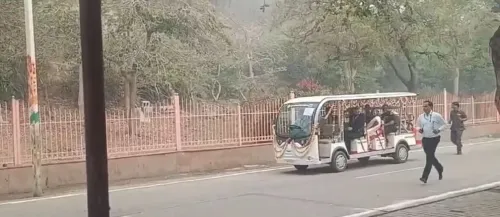
President Murmu arrived in the state on March 19, visiting significant religious locations including Ayodhya, Mathura, and Vrindavan, where she is engaging in various ceremonies and public events.
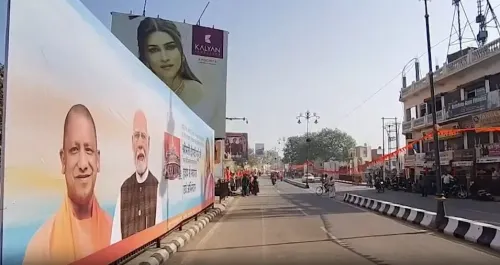
Upon her arrival in Ayodhya, she was greeted by Uttar Pradesh Governor Anandiben Patel, Chief Minister Yogi Adityanath, and Deputy Chief Ministers Keshav Prasad Maurya and Brajesh Pathak.
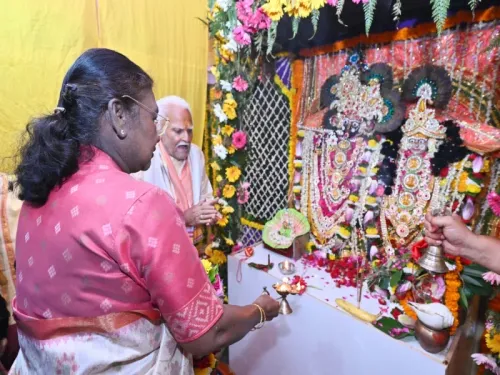
On Thursday evening, President Murmu visited the ISKCON Temple in Mathura, where she offered prayers and participated in the evening 'aarti'. The visit was marked by devotional chanting and rituals, where she paid respects at the samadhi of AC Bhaktivedanta Swami Prabhupada and offered prayers at the Gaur Nitai, Krishna Balaram, and Shyam Sunder shrines.
Earlier that day, she installed the 'Shri Ram Yantra' at the Shri Ram Janmabhoomi Temple in Ayodhya and offered prayers amidst Vedic chants, marking a significant milestone in the temple’s construction.
The 'Shri Ram Yantra' has been positioned on the second and final level of the temple, representing completeness. Its installation signifies that the construction of the temple is now regarded as complete.
The religious ceremonies were conducted by Vedic scholars from southern India, Kashi, and Ayodhya, under the guidance of priest Ganeshwar Shastri.
Point of View
President Murmu's visit to Uttar Pradesh, including her meetings with prominent spiritual leaders and inaugurations, reflects her commitment to enhancing healthcare and engaging in cultural traditions. This initiative not only highlights her role as a unifying figure but also emphasizes the importance of spiritual and social welfare in governance.
NationPress
2 Oct 2026
Frequently Asked Questions
What is the purpose of President Murmu's visit to Vrindavan?
President Murmu's visit aims to meet with saint Premanand Maharaj to seek blessings and engage in a spiritual dialogue, alongside attending other significant religious and healthcare events.
Where will President Murmu be visiting during her Uttar Pradesh tour?
She will visit key religious cities including Ayodhya, Mathura, and Vrindavan, participating in various ceremonies and public engagements.
What significant event is scheduled at Ramakrishna Mission Sevashram?
The President will inaugurate a new Oncology Block at Ramakrishna Mission Sevashram, aimed at improving cancer treatment facilities in the region.
What is the Govardhan Parikrama?
The Govardhan Parikrama is a seven-mile religious circuit that the President will perform as part of her concluding rituals in Govardhan.
Who welcomed President Murmu upon her arrival in Ayodhya?
She was welcomed by Uttar Pradesh Governor Anandiben Patel, Chief Minister Yogi Adityanath, and Deputy Chief Ministers Keshav Prasad Maurya and Brajesh Pathak.